
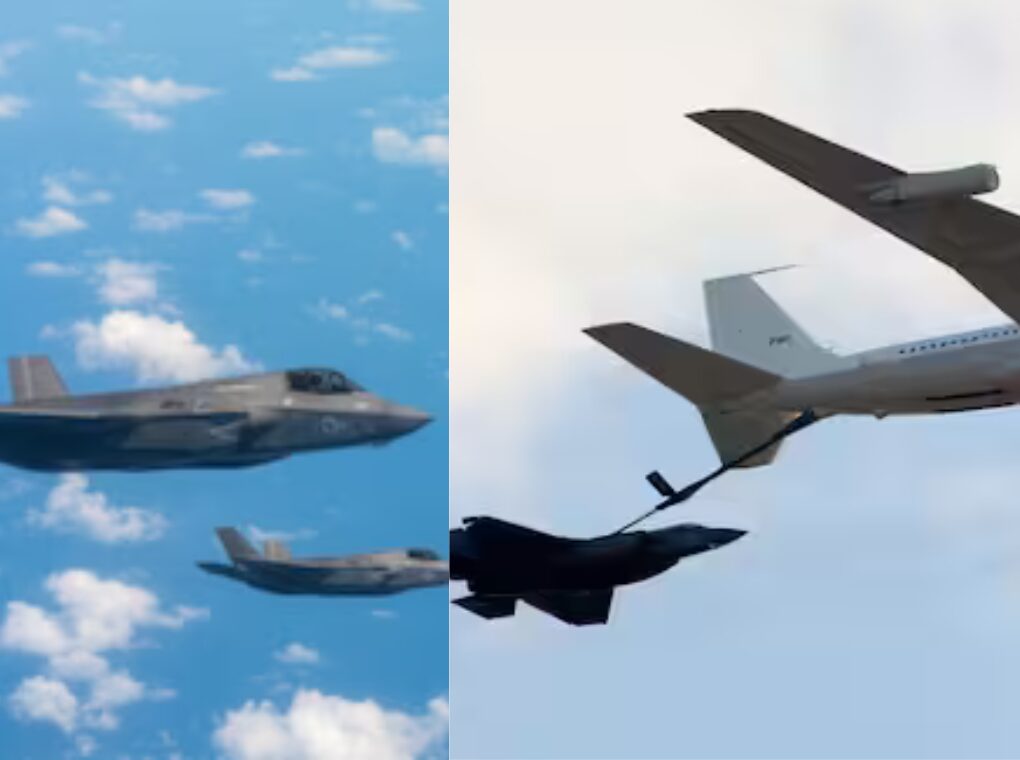
A fresh wave of tension has erupted in the Middle East after a US military aircraft reportedly declared an in-flight emergency over the Gulf of Oman before disappearing from public tracking systems.
Iranian media quickly claimed the aircraft had been struck by Iranian forces, though Washington has not confirmed any attack or loss of aircraft.
The incident comes amid escalating military confrontations between the United States and Iran around the strategically critical Strait of Hormuz, one of the world’s most important oil shipping routes.
US F-35 Sends Emergency Signal Over Gulf
According to flight-tracking data widely circulated online, a US Lockheed Martin F-35 Lightning II fighter jet transmitted squawk code “7700” while flying near the Strait of Hormuz and the Gulf of Oman on Sunday.
In aviation, the 7700 transponder code is an internationally recognized distress signal used by pilots to declare a general emergency. The code can indicate mechanical failure, onboard fire, fuel issues, navigation problems, or other critical situations requiring immediate assistance from air traffic controllers.
The aircraft was later tracked moving toward the UAE airspace before its transponder signal disappeared from public radar systems.
Military aircraft often disable transponders during operational missions or after landing at secure military facilities. However, the timing of the disappearance triggered widespread speculation online, especially as tensions between Tehran and Washington continue to intensify.
Iran Claims F-35 Was Hit
Iranian state-linked media outlets and pro-IRGC social media accounts claimed the F-35 had either been struck or forced down by Iranian air defense systems.
So far, Iran has not released any visual proof, wreckage images, or independent evidence supporting the claim. The United States military has also not confirmed any aircraft loss or hostile engagement involving an F-35 in the region.
Similar claims have surfaced during previous confrontations between Iran and the US, with some later proving exaggerated or unverified.
Still, the reports have added to growing fears that the Gulf region may be moving closer to direct military escalation.
Strait Of Hormuz Tensions Explode
The emergency involving the F-35 comes as Iran and the United States exchange increasingly aggressive threats over maritime security and oil shipments in the Gulf.
Iran’s Islamic Revolutionary Guard Corps (IRGC) recently warned that any attack on Iranian commercial vessels or oil tankers would trigger retaliatory strikes against American military sites and “enemy ships” across the region.
The IRGC statement followed reports that US forces intercepted or disabled Iranian-linked tankers attempting to move through Gulf waters.
Tehran has also tightened security and transit controls around the Strait of Hormuz, a narrow maritime chokepoint through which nearly one-fifth of global oil supplies pass every day.
Any disruption in the area could send shockwaves through global energy markets.
Cargo Ship Hit Near Qatar
The regional crisis deepened further after a commercial cargo vessel was reportedly struck near Qatar’s territorial waters.
Qatar’s Defense Ministry confirmed that a drone attack caused a limited fire aboard the ship northeast of Mesaieed Port. No injuries were reported.
Meanwhile, the United Kingdom Maritime Trade Operations center stated that a bulk carrier northeast of Doha was hit by an “unknown projectile.”
Iranian media later claimed the targeted vessel was linked to the United States, though no independent confirmation has emerged.
UAE And Kuwait Report Drone Activity
The United Arab Emirates said its air defense systems intercepted two drones allegedly launched from Iran.
Kuwait also confirmed hostile drone activity in its airspace during the early morning hours, though officials did not publicly identify the source of the UAVs.
The developments suggest the conflict is rapidly spreading beyond maritime confrontations into broader regional airspace threats.
Earlier KC-135 Emergency Sparked Similar Fears
The latest F-35 incident follows another mysterious military aviation event earlier this month involving a US Boeing KC-135 Stratotanker, often referred to as a “flying gas station.”
The aerial refueling aircraft reportedly transmitted the same 7700 emergency code while operating near Qatar and the Persian Gulf before disappearing from public radar coverage.
Iranian media claimed the aircraft had been targeted, while US officials declined to confirm hostile action.
The KC-135 is a critical part of US military operations because it allows fighter jets and bombers to remain airborne for extended periods through mid-air refueling.
Why The F-35 Matters?
The Lockheed Martin F-35 Lightning II is considered one of the most advanced stealth fighter jets in the world. The aircraft is used extensively by the US Air Force, Navy, and Marine Corps for intelligence gathering, precision strikes, air superiority missions, and electronic warfare.
An actual combat loss involving an F-35 would represent a major geopolitical and military development.
Defense analysts note that while emergency squawk signals are serious, they do not automatically mean an aircraft was shot down. Mechanical issues, navigation failures, electronic interference, or operational security procedures can also explain radar disappearances.
Global Markets Watching Gulf Crisis Closely
The growing military confrontation around the Strait of Hormuz has already begun affecting global shipping security concerns and oil market sentiment.
The Gulf region remains one of the world’s most sensitive geopolitical flashpoints, with any sustained conflict carrying risks for energy prices, international trade, and broader regional stability.
As of now, neither the Pentagon nor US Central Command has officially confirmed whether the F-35 suffered mechanical trouble, combat damage, or safely landed after declaring the emergency.
With Iran continuing to issue warnings and regional militaries on heightened alert, the situation in the Gulf remains highly volatile.