European Commission President Ursula von der Leyen is facing growing criticism from diplomats, lawmakers, and EU officials over what insiders describe as an unprecedented consolidation of power within the European Union’s executive branch.
According to a new Bloomberg report, senior officials across Europe have raised concerns that von der Leyen has become increasingly “obsessed with demonstrating that she’s in charge,” sidelining consultation and expanding her authority far beyond the traditional remit of the European Commission president.
The allegations add to mounting tensions within the EU as debates intensify over democratic accountability, decision-making transparency, and the future direction of European governance.
Growing Concerns Over Centralized Power
Since taking office in 2019 and securing a second term in 2024, von der Leyen has transformed herself into one of Europe’s most dominant political figures. She has played a leading role in shaping the bloc’s response to major crises, including the Covid-19 pandemic, the Ukraine conflict, and evolving trade tensions with the United States under President Donald Trump.
However, critics now argue that her increasingly centralized leadership style is alienating both member states and EU institutions.
According to Bloomberg, diplomats and officials have accused the Commission president of intervening in policy areas beyond her formal authority while neglecting core economic priorities such as improving Europe’s competitiveness and addressing industrial decline.
One cited example involves an internal market reform strategy prepared by European Commission Vice President Stephane Sejourne. The document reportedly remained untouched on von der Leyen’s desk for months and was only shared with member states and the European Parliament shortly before publication, leaving virtually no room for debate or amendments.
Critics say such actions reflect a broader pattern of top-down governance that limits transparency and weakens democratic oversight.
Budget Disputes Fuel Political Frustration
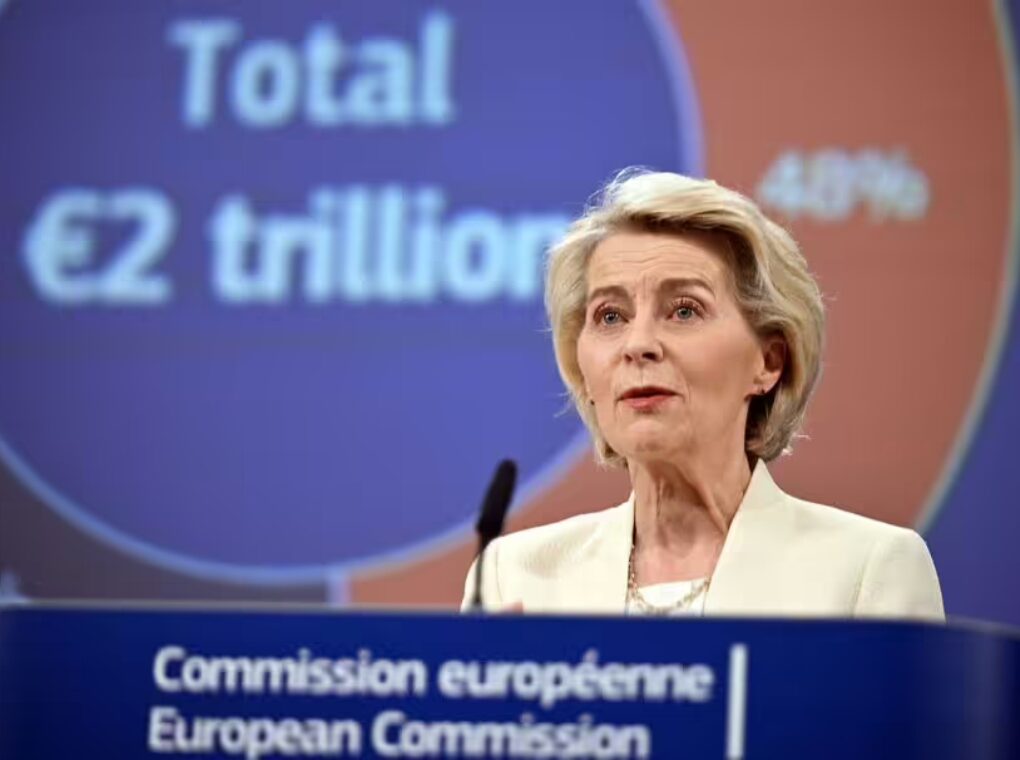
Tensions escalated further last year when von der Leyen reportedly unveiled the EU’s proposed long-term budget—worth a record €2 trillion ($2.4 trillion)—to fellow commissioners and member states at the last minute.
Several governments, including Germany, reacted sharply, complaining that they were being asked to commit to historic levels of spending without sufficient consultation.
Lawmakers from von der Leyen’s own political family, Germany’s Christian Democratic Union (CDU), reportedly demanded stronger institutional checks on her authority.
Business leaders have also expressed frustration, urging the Commission to prioritize economic reforms, industrial competitiveness, and energy affordability. However, Bloomberg sources claim that concerns from outside stakeholders often fail to reach von der Leyen due to what they describe as a “tight-knit” and heavily micromanaged advisory circle.
Push to Reshape EU Decision-Making
Beyond internal management disputes, von der Leyen’s broader political agenda is generating significant controversy.
She has championed efforts to abolish the EU’s unanimity rule on foreign policy decisions, replacing it with qualified majority voting. Supporters argue the change would make the bloc more agile and prevent single countries from blocking urgent decisions.
Critics, however, warn that such reforms could undermine national sovereignty and marginalize dissenting member states.
The proposed change would directly weaken the veto powers used by leaders such as Hungary’s Viktor Orban, who has repeatedly challenged EU policies on Ukraine and Russia. Neutral countries like Austria and Ireland also fear losing influence over major foreign policy decisions.
Von der Leyen has additionally advocated for a “two-speed Europe,” where smaller coalitions of willing member states could move ahead with policies even without full backing from all 27 EU nations.
Opponents argue this could deepen divisions within the bloc and create a hierarchy between larger and smaller member states.
Intelligence Agency Proposal Raises Alarm
Another controversial move involves von der Leyen’s proposal to establish a centralized EU intelligence agency under Commission oversight.
Critics say the plan would transfer strategic authority away from the EU’s diplomatic service currently led by foreign policy chief Kaja Kallas, further concentrating power in Brussels.
Former European Council officials have even described von der Leyen’s leadership style as “super authoritarian,” reflecting broader anxiety over institutional balance inside the EU.
A Defining Moment for EU Leadership
Supporters of von der Leyen argue that Europe needs decisive leadership amid geopolitical instability, economic uncertainty, and security threats from Russia and beyond.
Yet critics warn that efficiency cannot come at the expense of democratic legitimacy.
As the European Union confronts critical questions about governance and unity, the backlash against von der Leyen’s leadership could become a defining political battle—one that shapes not only her future, but the future structure of the EU itself.