As the global race for next-generation air dominance accelerates, India is emerging as a key player in the future of military aviation. New Delhi is reportedly in discussions with two major European defence consortiums developing sixth-generation fighter aircraft — futuristic combat jets expected to define aerial warfare between 2040 and 2050.
The growing interest from Europe reflects a major strategic shift. India is no longer being viewed merely as one of the world’s largest buyers of fighter aircraft, but increasingly as a long-term development, manufacturing, and technology partner in some of the most advanced defence programmes ever conceived.
Europe Sees India as a Strategic Aerospace Partner
European defence groups are keen to bring India into these projects at an early stage for several reasons. One of the biggest factors is economics. Sixth-generation fighter programmes are expected to cost hundreds of billions of dollars over their lifecycle, making international partnerships essential for reducing financial pressure and increasing production scale.
For Europe, India offers both financial participation and a massive future market. The Indian Air Force (IAF), one of the world’s largest air forces, is expected to require large numbers of advanced combat aircraft over the coming decades. An early Indian commitment could provide long-term production certainty, helping European programmes lower costs and strengthen export potential.
Defence analysts believe this could give European aircraft an advantage in future international markets where affordability and production scale are becoming increasingly important.
The Global Shift Toward Sixth-Generation Warfare
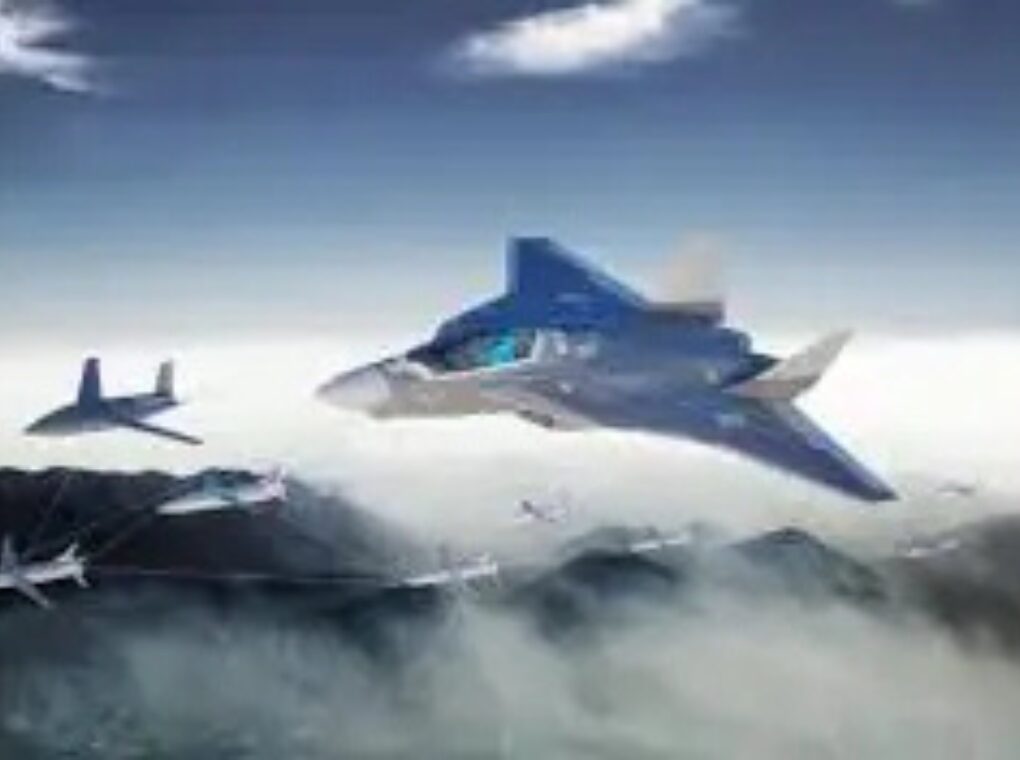
The next generation of fighter aircraft will go far beyond stealth and speed. These future combat systems are expected to integrate artificial intelligence, autonomous drones, advanced electronic warfare systems, and highly networked battlefield operations.
Unlike current fifth-generation aircraft such as the F-35, sixth-generation jets are being designed as “combat ecosystems” capable of managing multiple unmanned systems simultaneously.
Key technologies expected in these programmes include:
- Artificial intelligence-assisted combat systems
- Manned-unmanned teaming (MUM-T)
- “Loyal wingman” drone swarms
- Advanced stealth materials
- Directed energy weapons
- Next-generation propulsion systems
- Integrated cyber and electronic warfare capabilities
Military planners across the world see the 2040–2050 period as the next decisive era of air power competition.
India’s AMCA Programme Changed Global Perceptions
Europe’s growing interest in India is closely linked to the country’s expanding aerospace capabilities, particularly through the Advanced Medium Combat Aircraft (AMCA) programme.
The AMCA project has pushed India deeper into sophisticated technologies such as:
- Stealth aircraft design
- Sensor fusion
- Advanced avionics
- Artificial intelligence integration
- Digital warfare systems
- Indigenous aerospace engineering
For years, India was primarily seen as an importer of advanced defence systems. However, the AMCA programme has demonstrated that Indian scientists, engineers, and private defence firms are increasingly capable of contributing to cutting-edge aerospace development.
This transformation has significantly improved India’s global standing in military aviation.
Europe’s Cost Problem and Why India Matters?
European fighter jet programmes have historically faced one major challenge — high per-aircraft costs due to relatively low production numbers.
In contrast, countries like China benefit from large-scale domestic manufacturing, while American programmes such as the F-35 reduce costs through multinational participation and massive production runs involving allied countries.
Industry experts believe India could become the “scale multiplier” Europe needs.
If India joins a sixth-generation programme early, it could dramatically increase manufacturing volumes, reduce unit costs, and improve overall programme sustainability. This would also make the aircraft more attractive to future export customers.
For Europe, India represents not only a strategic partner but also a long-term industrial stabiliser.
India’s Defence Manufacturing Ecosystem Is Expanding Rapidly
Another major factor driving European interest is India’s rapidly growing defence manufacturing ecosystem.
Indian companies are now active in:
- Aerospace software development
- Avionics integration
- Precision engineering
- Composite materials manufacturing
- Artificial intelligence systems
- Digital combat technologies
The rise of India’s private defence sector under the “Make in India” and “Atmanirbhar Bharat” initiatives has further strengthened confidence among international defence firms.
European aerospace companies see India as a future manufacturing hub capable of supporting complex global supply chains for advanced fighter production.
If Indian firms become integrated into sixth-generation aircraft supply chains, production could be distributed across multiple countries, reducing bottlenecks and improving resilience.
Technology Transfer Could Accelerate India’s Military Aviation Goals
Participation in a sixth-generation fighter programme would provide India with access to some of the most advanced military technologies in the world.
Defence observers believe this could significantly benefit India’s long-term aviation ambitions beyond the AMCA project.
Exposure to international development ecosystems would help Indian engineers and defence firms gain expertise in areas such as:
- AI-driven warfare
- Autonomous systems
- Advanced propulsion
- Electronic warfare
- Drone integration
- Battlefield networking
Such collaboration could also accelerate indigenous research and strengthen India’s goal of becoming a global aerospace power.
Strategic Balance Between Self-Reliance and Global Cooperation
While India continues to prioritise indigenous defence development, particularly through the AMCA programme, international collaboration is increasingly being viewed as complementary rather than contradictory.
New Delhi’s strategy appears focused on balancing self-reliance with selective global partnerships that can speed up technological advancement without compromising strategic autonomy.
Experts say India is moving from a “buyer” model to a “co-developer and manufacturer” model in global defence projects.
This evolution reflects India’s growing confidence and its expanding role in shaping future military technologies.
A Defining Shift in Global Defence Politics
The ongoing discussions between India and European defence groups highlight a broader transformation in global military geopolitics.
For decades, advanced fighter jet development was dominated by a small group of Western nations. Today, India is increasingly being seen as a critical player capable of influencing the future of global aerospace manufacturing and next-generation warfare technologies.
As sixth-generation fighter programmes move closer to reality, India’s role may become one of the most important strategic partnerships shaping the future balance of air power in the 21st century.