
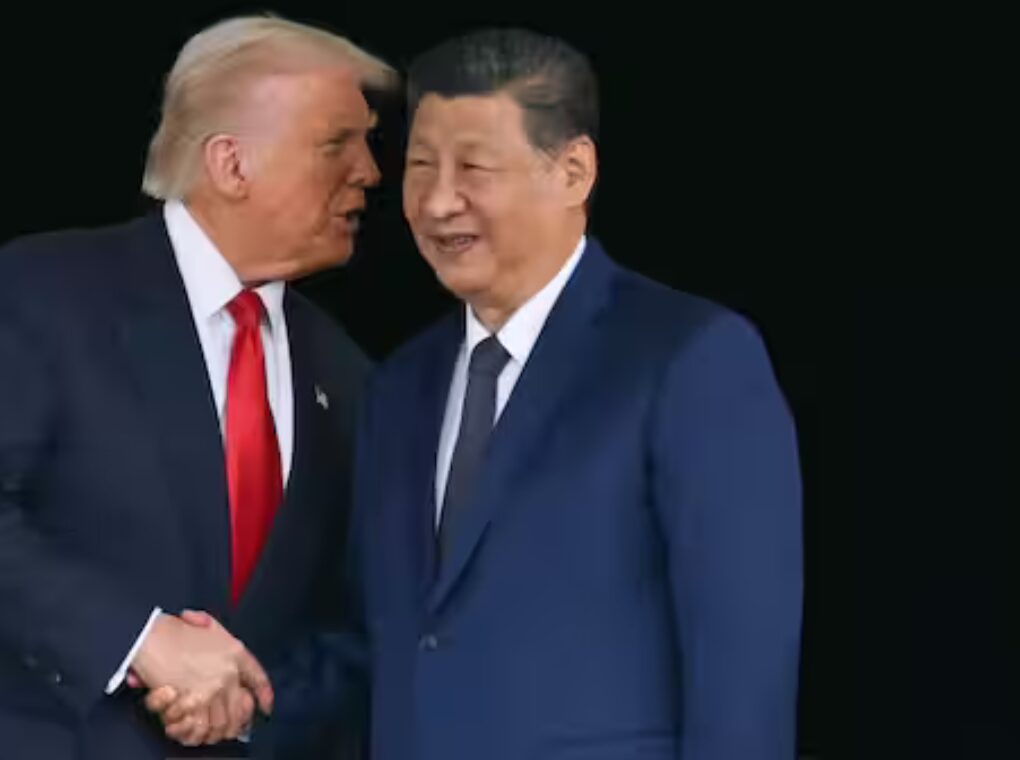
Global attention is fixed on a high-stakes meeting between Donald Trump and Xi Jinping in Beijing tonight, as reports swirl that the two leaders could unveil a major economic and geopolitical breakthrough with far-reaching consequences for global markets, trade, and security.
The summit comes at a time of deep uncertainty in the international system. Years of escalating tariffs, technology restrictions, supply chain disruptions, and military tensions over Taiwan have pushed U.S.-China relations to one of their most fragile points in decades. Yet tonight’s meeting is being viewed by analysts and investors as a potential turning point that could reshape the future of the world’s two largest economies.
Speculation intensified after reports emerged suggesting the discussions may include a broad U.S.-China economic agreement, large-scale Chinese investments into the United States, trade realignment initiatives, and coordinated efforts to stabilize financial markets. Some unconfirmed reports have even claimed Beijing could pledge up to $1 trillion in long-term investment commitments targeting U.S. manufacturing, infrastructure, energy, and technology sectors.
If such a deal materializes, it would represent one of the largest economic cooperation announcements between Washington and Beijing in modern history.
Trump Pushes for Economic Wins Amid Domestic Pressure
Trump arrived in Beijing on Wednesday seeking to secure major agreements that could strengthen his domestic standing ahead of mounting economic and political pressures at home. Rising inflation, slowing consumer confidence, and concerns over global instability have weighed heavily on the administration in recent months.
According to officials familiar with the visit, Trump plans to prioritize trade negotiations and economic cooperation with China, particularly in sectors where the United States seeks export growth. Discussions are expected to include expanded Chinese purchases of American agricultural products, aircraft, energy resources, and industrial goods.
The summit also comes as Wall Street closely watches for signs of easing tensions between the two powers. Markets have experienced repeated volatility due to fears of further trade wars, semiconductor restrictions, and geopolitical conflicts affecting global supply chains.
Technology companies are particularly focused on the outcome of the talks, with firms such as Nvidia viewed as central to ongoing discussions surrounding artificial intelligence, semiconductor exports, and advanced technology competition.
Taiwan Emerges as Key Flashpoint
While economic issues dominate headlines, Taiwan remains one of the most sensitive topics on the summit agenda.
Trump confirmed before the meeting that U.S. arms sales to Taiwan would be discussed directly with Xi, reigniting debate over Washington’s long-term strategy toward the self-governing island. Reports indicate the discussions may involve an $11 billion arms package approved last year, one of the largest military support packages ever authorized for Taiwan.
Meanwhile, several U.S. lawmakers have urged Trump not to soften Washington’s support for Taipei amid speculation that Beijing could seek concessions on Taiwan in exchange for major economic cooperation.
China continues to view Taiwan as part of its territory, while the United States remains legally obligated to support Taiwan’s defense capabilities under existing legislation. The issue has become one of the most dangerous geopolitical flashpoints in Asia.
However, analysts argue that a direct Chinese military invasion of Taiwan remains unlikely in the near term because of the enormous economic consequences it would trigger globally.
Taiwan currently produces the majority of the world’s advanced semiconductors, making it indispensable to global technology supply chains. Any military conflict involving the island could disrupt chip production critical for smartphones, artificial intelligence systems, automobiles, defense systems, and industrial manufacturing worldwide.
China itself also remains deeply dependent on trade with the United States, Japan, South Korea, and Taiwan, making economic stability a key priority for Beijing despite growing strategic competition.
Global Markets Watching for Breakthrough
Investors and political observers are now watching closely to determine whether tonight’s summit produces a genuine diplomatic breakthrough or simply temporary easing of tensions.
Financial markets have already shown cautious optimism amid expectations that both sides may seek stabilization measures to prevent further economic fragmentation. Economists believe any reduction in tariffs or trade restrictions could provide relief to global manufacturing and shipping sectors that have struggled with years of uncertainty.
Some analysts believe Beijing may use investment pledges as a strategic move to improve relations with Washington while protecting Chinese access to global markets and advanced technologies. Others remain skeptical, warning that fundamental disagreements over trade practices, military influence, cybersecurity, and technology dominance remain unresolved.
Still, the symbolism surrounding the meeting is significant.
Trump received a highly ceremonial welcome upon arriving in Beijing, including a red carpet reception and a public display by Chinese youth waving American and Chinese flags. Videos circulated by Chinese state media quickly went viral online, with many social media users expressing hope for improved bilateral relations after years of hostility.
During his visit, Trump is also expected to attend a formal banquet with Xi and participate in ceremonial events including a visit to Beijing’s historic Temple of Heaven.
A Defining Moment for U.S.-China Relations
The Trump-Xi summit is unfolding at a critical moment for the global order. Ongoing conflicts in the Middle East, concerns over economic slowdown, rising military competition in Asia, and rapid advances in artificial intelligence have intensified pressure on both Washington and Beijing to avoid further escalation.
For years, the relationship between the United States and China has been defined by tariffs, sanctions, technology wars, and strategic distrust. Tonight’s meeting could either mark the beginning of a broader reset between the two superpowers or become another chapter in their ongoing geopolitical rivalry.
With the world’s largest economies and militaries at the negotiating table, global markets, governments, and industries are preparing for outcomes that could influence international politics and economics for years to come.