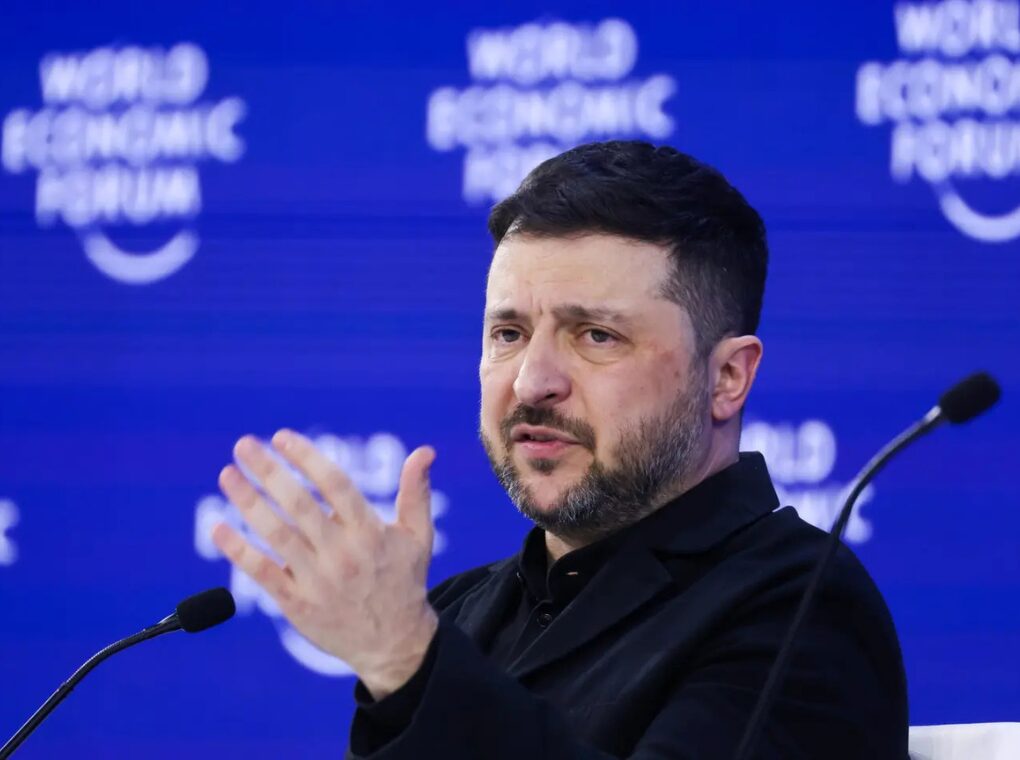
Ukrainian President Volodymyr Zelensky has reportedly rejected any form of “associate membership” for Ukraine in the European Union, calling the idea “unfair” and insisting that Kyiv deserves full accession into the bloc, according to a Reuters report. The development comes after German Chancellor Friedrich Merz allegedly proposed an alternative framework that would give Ukraine partial integration into the EU without full voting rights.
The disagreement highlights growing divisions within Europe over Ukraine’s future inside the European Union, as Kyiv continues to push for accelerated membership despite resistance from several member states.
Zelensky Pushes Back Against ‘Associate Membership’
According to Reuters, Zelensky sent a formal letter to European Commission President Ursula von der Leyen, European Council President Antonio Costa, and Cypriot President Nikos Christodoulides, whose country currently holds the rotating presidency of the EU Council.
In the letter, Zelensky reportedly criticized proposals that would stop short of granting Ukraine full EU membership, arguing that such arrangements would effectively leave Kyiv without a meaningful voice inside the bloc.
“It would be unfair for Ukraine to be present in the European Union, but remain voiceless,” Zelensky reportedly wrote, according to Reuters.
The Ukrainian leader emphasized that the country deserves “equal rights within Europe,” particularly given Kyiv’s argument that it is defending European security amid its ongoing conflict with Russia.
Zelensky also reportedly stated that “the time is right to move forward with Ukraine’s membership in a full and meaningful way,” signaling Kyiv’s continued determination to secure complete integration into the EU structure rather than accepting a limited or symbolic role.
What is Friedrich Merz’s ‘Associate Membership’ Proposal?
The controversy emerged after reports suggested that German Chancellor Friedrich Merz proposed an interim “associate membership” model for Ukraine.
Under the reported plan, Ukraine would gain access to selected EU-funded programs and could request support from member states in the event of an attack. Kyiv would also reportedly receive representation within major EU institutions, including the European Council, the European Commission, and the European Parliament.
However, the crucial limitation is that Ukraine would not receive voting rights under this model. Instead, it would participate in a non-voting capacity, making the arrangement significantly different from full EU membership.
The proposal is reportedly intended to provide Ukraine with closer European integration while avoiding the political and economic complications tied to immediate full accession.
Critics, however, argue that such a framework risks creating a “second-tier” membership status for Ukraine.
Why Is Ukraine’s EU Membership Still Controversial?
Ukraine received EU candidate status shortly after the escalation of the Russia-Ukraine conflict in 2022. Since then, Kyiv has persistently pushed for fast-tracked accession and has repeatedly signaled hopes of joining the bloc as early as 2027.
Yet Ukraine’s membership bid remains deeply divisive within Europe.
Several EU states have expressed concerns over the economic burden, agricultural competition, governance reforms, and security implications tied to Ukrainian accession. Major powers such as Germany and France have historically been cautious about promising accelerated entry timelines.
A major obstacle has been the requirement of unanimous approval from all 27 EU member states for any new country to join the bloc.
Former Hungarian Prime Minister Viktor Orbán had long been one of the strongest opponents of Ukraine’s EU ambitions, repeatedly criticizing Brussels for what he described as reckless enlargement policies. Reuters reported that Zelensky referenced Orbán’s recent removal from office in his letter, suggesting that political changes in Hungary may now create a more favorable environment for Ukraine’s membership ambitions.
However, despite Orbán’s departure, significant skepticism remains across parts of Europe regarding whether Ukraine can realistically meet accession requirements in the near future.
Europe Faces a Difficult dilemma
The debate over Ukraine’s EU future places Brussels in a difficult position.
On one hand, European leaders continue to publicly back Ukraine politically and financially. On the other hand, many governments remain hesitant about granting full membership to a country still engaged in a major war and facing extensive reconstruction needs.
Merz’s reported “associate membership” proposal appears to reflect an attempt to bridge that divide—offering Ukraine deeper integration without immediately triggering the legal and institutional consequences of full accession.
For Kyiv, however, anything less than full membership appears increasingly unacceptable.
Zelensky’s latest stance sends a clear message: Ukraine wants a complete seat at the European table—not a symbolic role without voting power.
As EU leaders weigh their next steps, the debate could become one of the defining geopolitical questions shaping Europe’s future over the coming years.