
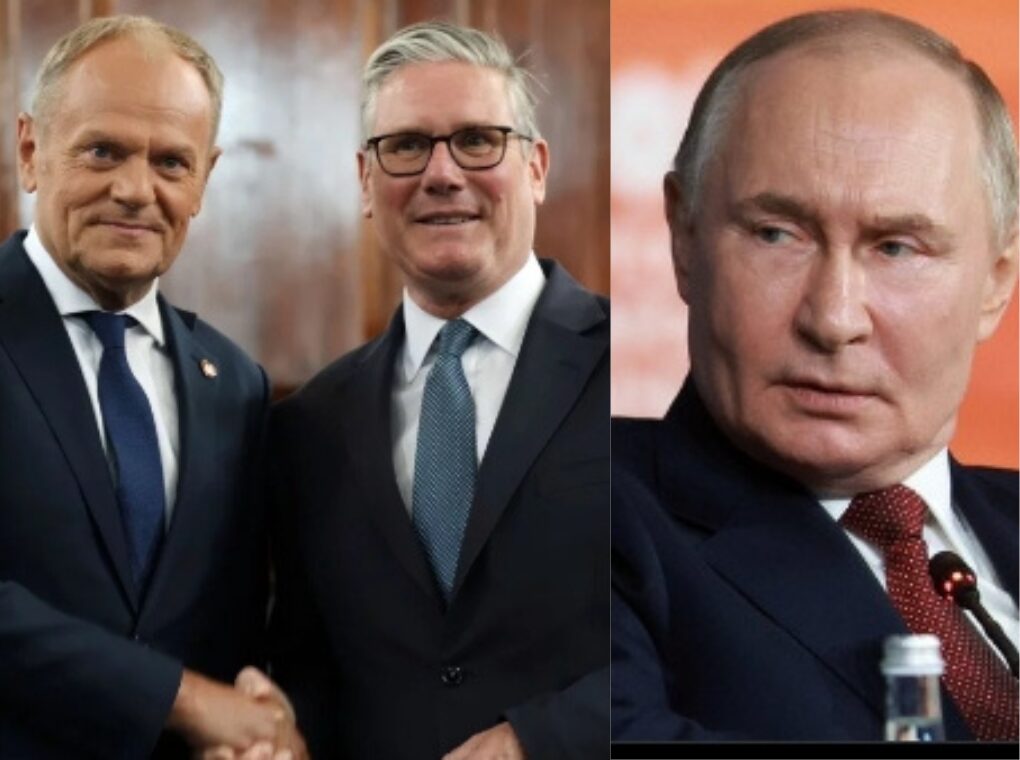
The United Kingdom and Poland have signed a major new defence and security treaty aimed at strengthening Europe’s eastern flank amid rising tensions with Russia. The agreement marks one of the most significant bilateral defence upgrades in recent years and signals a deeper strategic alignment between London and Warsaw over shared security concerns, particularly regarding cyber warfare, hybrid threats, and air defence.
The pact was announced following talks between Polish Prime Minister Donald Tusk and UK Prime Minister Keir Starmer, with both leaders emphasizing the need for tighter cooperation in response to what they described as long-term strategic threats from Russia.
Strengthening Europe’s Eastern Defence Architecture
The new UK–Poland treaty is designed to significantly deepen defence collaboration between the two NATO allies, reinforcing joint military preparedness and technological cooperation.
According to official statements, the agreement focuses on: Joint development of military technologies
Expansion of air defence systems, Enhanced intelligence sharing, Increased joint military exercises, Strengthening border security and crisis response mechanisms
Officials confirmed that both countries will also expand cooperation in next-generation defence systems, including missile defence and drone warfare capabilities, reflecting lessons learned from the ongoing conflict in Ukraine.
The agreement comes at a time when European NATO members are increasingly reassessing their defence posture amid geopolitical instability and evolving hybrid threats.
Russia Identified as Long-Term Strategic Threat
A central theme of the treaty is the shared assessment that Russia remains a persistent security challenge for Europe and NATO.
Speaking in Warsaw before departing for London, Donald Tusk stated that the partnership is fundamentally driven by the need to protect Europe from Russian aggression.
He emphasized that Russia represents “a strategic and long-term threat” not only to Poland but also to the United Kingdom and the broader NATO alliance. This framing positions the treaty as part of a wider European security realignment.
The UK government echoed this stance, with Keir Starmer stating that the evolving security landscape in Europe requires “an even stronger partnership” between allied nations.
Cybersecurity and Hybrid Warfare at the Core
One of the most critical aspects of the agreement is its focus on cybersecurity and hybrid threats.
Poland, which plays a key logistical role in the delivery of military aid to Ukraine, has increasingly become a target for cyberattacks, espionage operations, and disinformation campaigns. Polish authorities have repeatedly warned that hostile foreign actors are attempting to destabilize infrastructure and influence public opinion.
Under the new treaty, the UK and Poland will: Strengthen joint cyber defence capabilities, Improve real-time threat intelligence sharing, Develop coordinated responses to cyberattacks, Expand cooperation in counter-disinformation efforts
Security analysts view this as a significant step toward building a more integrated European cyber defence framework, particularly as digital warfare becomes a central feature of modern geopolitical conflict.
Expanding Defence Cooperation Beyond NATO Framework
While both countries are already key members of the NATO alliance, the treaty represents a more focused bilateral defence partnership.
The agreement follows similar initiatives Poland has signed with France and ongoing negotiations with Germany, reflecting Warsaw’s broader strategy of strengthening direct defence ties with major European powers.
Experts suggest this trend indicates a shift toward more flexible, networked security arrangements within Europe, complementing existing NATO structures while addressing country-specific vulnerabilities.
Air Defence, Drones, and Military Technology Development
A major component of the UK–Poland agreement is enhanced air defence cooperation, including counter-drone systems and missile defence integration.
Both nations are expected to collaborate on: Development of advanced air defence platforms, Integration of radar and surveillance systems, Joint research in autonomous military technologies, Improved interoperability of armed forces
This reflects growing concerns across Europe about drone incursions, aerial surveillance threats, and evolving battlefield technologies, particularly in light of the Ukraine conflict, where drone warfare has played a decisive role.
Strategic Context: Europe Under Pressure to Rearm
The signing of the treaty also comes amid broader geopolitical pressure on Europe to increase its defence capabilities. With shifting global priorities and evolving transatlantic dynamics, European nations are increasingly investing in self-reliant defence systems.
Poland, in particular, has emerged as one of NATO’s most militarily proactive members, significantly expanding its defence spending and military modernization programs.
Meanwhile, the United Kingdom is reinforcing its role as a key security partner in Europe, despite changing political and economic landscapes following Brexit.
What the Treaty Means for Europe
Security experts believe the UK–Poland agreement could serve as a model for future bilateral defence partnerships within Europe. The focus on cyber warfare, hybrid threats, and advanced military technology reflects the changing nature of global conflict.
Key implications include: Stronger eastern NATO deterrence against Russia, Increased European autonomy in defence planning, Expanded cyber defence coordination across allied nations, Faster development of next-generation military systems
The new UK–Poland defence treaty represents a major step in European security cooperation, driven by shared concerns over Russian military activity and hybrid warfare tactics. With an emphasis on cybersecurity, air defence, and advanced military technologies, the agreement highlights the evolving nature of modern defence alliances.
As Europe continues to navigate an increasingly complex security environment, the partnership between United Kingdom and Poland is likely to play a crucial role in shaping the continent’s defence strategy in the years ahead.