
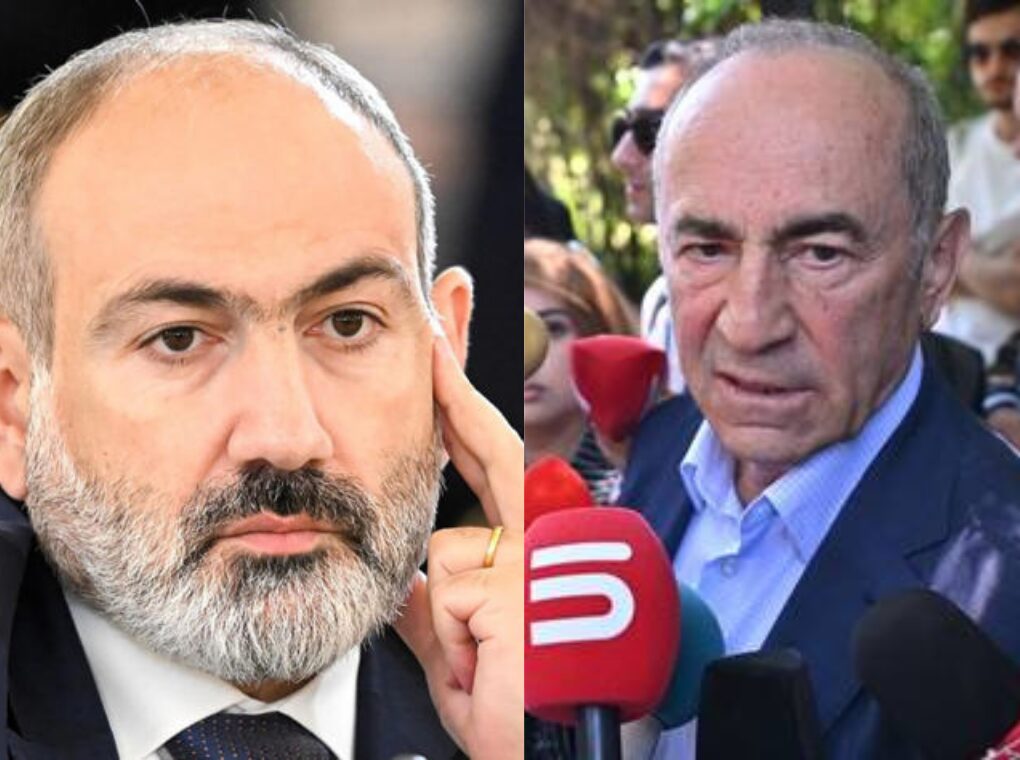
Armenia’s political tensions deepened after opposition leaders vowed to challenge the results of the country’s parliamentary elections, alleging widespread violations, political pressure, and government interference during the vote.
Prime Minister Nikol Pashinyan’s ruling Civil Contract party secured a decisive victory in Sunday’s parliamentary elections, winning 49.81% of the vote, according to official results. The outcome positions Pashinyan to form Armenia’s next government and continue his push for closer ties with the European Union.
However, opposition parties have rejected the legitimacy of the election process, warning of legal and political action against the results.
Robert Kocharyan Announces Election Challenge
Former Armenian President Robert Kocharyan, leader of the Armenia Alliance, announced on Monday that the opposition would formally contest the parliamentary election results.
“The elections took place amid systematic pressure from the authorities, unprecedented use of administrative resources, and violations of the electoral process,” Kocharyan said in a public statement.
The Armenia Alliance, which finished third with 9.94% of the vote, is currently consulting with other opposition groups on how to legally challenge the outcome.
“We will challenge the election results,” Kocharyan declared, adding that the opposition would not “abandon the trenches” of its political struggle.
Strong Armenia Party Faces Crackdown Allegations
The election campaign was overshadowed by controversy surrounding the Strong Armenia Party, led by Russian-Armenian businessman Samvel Karapetyan.
Karapetyan’s party emerged as the second-largest political force with 23.29% of the vote, despite accusations of government pressure during the campaign.
The party reportedly faced an attempt by authorities to disqualify it before the election. Additionally, six of its candidates were arrested, while Karapetyan himself remains under house arrest over allegations of plotting a coup.
Karapetyan also claimed that nearly 100 supporters were detained during the election weekend, raising concerns about political freedoms and electoral fairness.
Election observers further reported irregularities at polling stations and alleged intimidation by unidentified individuals.
Armenia’s Foreign Policy at the Center of Election Battle
The election also reflected a growing divide over Armenia’s geopolitical direction.
Pashinyan campaigned on promises of deeper integration with the European Union, signaling a stronger Western alignment for the landlocked South Caucasus nation.
Meanwhile, opposition parties, including Strong Armenia and Armenia Alliance, advocated for a more conservative foreign policy aimed at preserving Armenia’s close economic and political ties with Russia, Armenia’s key trading partner and home to a large Armenian diaspora.
Despite his pro-EU campaign messaging, Pashinyan said after the victory that Armenia would continue developing relations with Moscow.
Russia Reacts to Armenian Election Results
Russia has closely monitored the Armenian elections amid concerns over Yerevan’s shifting foreign policy priorities.
The Russian Foreign Ministry stated that significant opposition support indicates Pashinyan “does not have a monopoly on power,” warning that Armenia’s growing pro-Western orientation is polarizing domestic politics.
Moscow has previously urged Armenia to hold a referendum on its long-term geopolitical direction, arguing that Armenia cannot simultaneously pursue deeper integration with the European Union while remaining aligned with the Eurasian Economic Union (EAEU) due to incompatible economic standards.
As Armenia heads toward a potentially heated legal and political battle over the election outcome, the results could reshape not only the country’s domestic politics but also its strategic balance between Russia and the West.