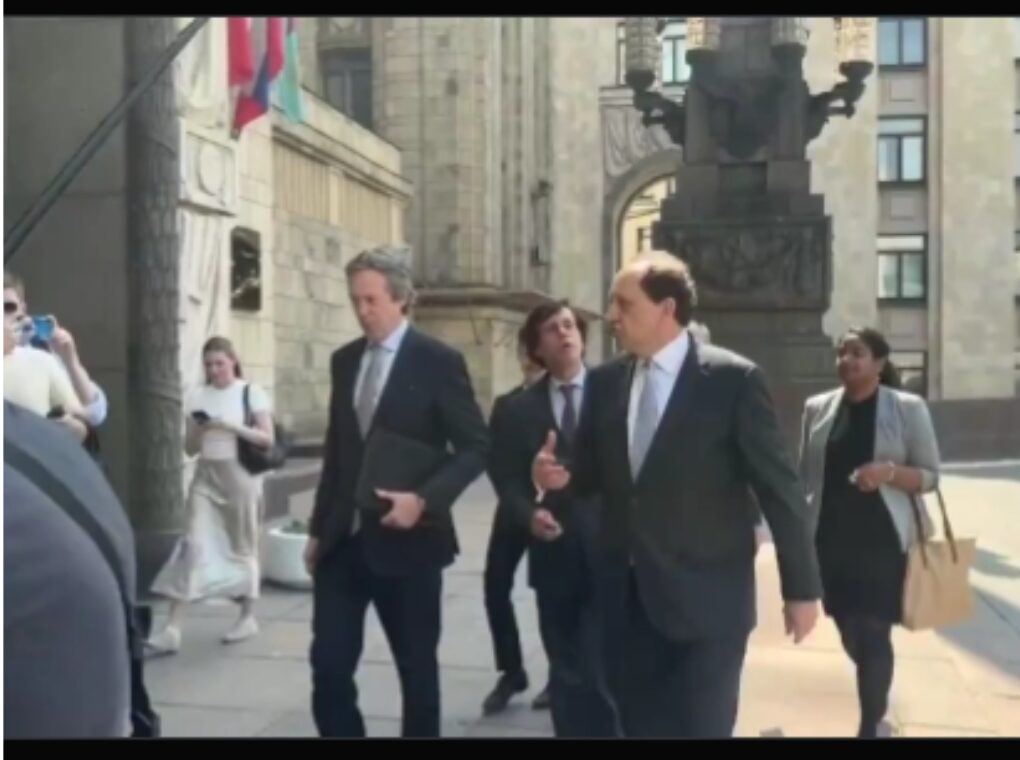
In a notable diplomatic development amid the ongoing Russia-Ukraine conflict, ambassadors from the United Kingdom, France, and Germany arrived at Russia’s Foreign Ministry in Moscow on Thursday for a meeting with Russian officials, according to a brief statement released by the Russian Foreign Ministry.
The ministry did not provide details regarding the purpose of the meeting or what issues were discussed. However, Russian state media circulated video footage showing the diplomats entering the ministry building in central Moscow, sparking fresh speculation over possible diplomatic engagement linked to efforts to end the war in Ukraine.
The visit comes at a significant moment, just days after leaders of the United Kingdom, France, and Germany — collectively known as the E3 — met with Ukrainian President Volodymyr Zelenskyy in London to discuss ceasefire proposals and broader European security concerns.
E3 Diplomacy and Renewed Contact with Moscow
The ambassadors’ meeting in Moscow follows a high-level gathering in London last Sunday involving UK Prime Minister Keir Starmer, French President Emmanuel Macron, and German Chancellor Friedrich Merz, where the leaders reaffirmed their support for Ukraine and backed Zelenskyy’s proposal for an immediate ceasefire.
During the London discussions, the E3 leaders expressed support for diplomatic efforts aimed at halting hostilities while maintaining political and military backing for Kyiv. They emphasized that any pathway to peace should include direct negotiations and international involvement, including support from European partners and the United States.
Although details of Thursday’s Moscow meeting remain unclear, analysts suggest it may be linked to ongoing diplomatic messaging between European governments and Russia over ceasefire conditions and potential negotiations.
Russian Foreign Minister Sergey Lavrov had earlier confirmed that ambassadors from the three European countries requested discussions with Russian officials. Moscow indicated it was willing to hear their positions, despite recent criticism from Western leaders directed at Russia over the war.
Why the Moscow Meeting Matters?
The arrival of E3 diplomats in Moscow has attracted attention because relations between Russia and major European powers have remained deeply strained since the escalation of the Ukraine conflict. Britain, France, and Germany have been among Ukraine’s strongest supporters, providing financial assistance, military support, sanctions coordination, and political backing.
At the same time, diplomatic engagement between Moscow and Western governments has become increasingly limited, making ambassador-level meetings politically significant.
Observers note that such diplomatic channels often remain active even during periods of heightened geopolitical tensions. Meetings between diplomats can serve as mechanisms to communicate concerns, test negotiation possibilities, or clarify positions on sensitive issues without public political commitments.
The London summit with Zelenskyy reportedly focused on several principles for a possible peace framework, including an immediate ceasefire, negotiations based on current battlefield realities, security guarantees for Ukraine, and continued international coordination.
However, major disagreements remain between Russia and Ukraine regarding the terms of any settlement.
Russia and Ukraine Continue to Differ on Peace Conditions
Ukraine has consistently called for an end to hostilities while maintaining that its territorial integrity must be preserved. Kyiv and its Western allies have repeatedly stated that any future peace agreement should not legitimize territorial changes achieved through military force.
Meanwhile, Russia has maintained that any long-term settlement must address what it describes as its core security concerns. Moscow has repeatedly raised issues including Ukraine’s military posture, future security arrangements, and broader regional security guarantees.
These differing positions have complicated previous attempts at negotiations and contributed to stalled diplomatic progress.
The E3 nations have continued to support Ukraine diplomatically and militarily while simultaneously signaling openness to diplomatic solutions if conditions allow.
Thursday’s meeting may therefore represent an effort to maintain dialogue amid ongoing hostilities, even if prospects for a breakthrough remain uncertain.
Diplomatic Significance Amid a Prolonged Conflict
Now in its fifth year, the Russia-Ukraine conflict continues to shape European security, energy markets, and global geopolitics. The humanitarian impact remains severe, while economic disruptions linked to sanctions and military operations continue to affect countries beyond Europe.
Diplomatic contacts between Russia and major European states are closely watched for any indication of changing positions or possible openings for future negotiations.
Experts say ambassador-level meetings can sometimes act as preliminary channels for broader diplomatic engagement, particularly when formal summit-level discussions remain politically difficult.
While Russia’s Foreign Ministry has not disclosed the substance of the talks, the public release of footage showing the diplomats’ arrival may signal Moscow’s willingness to demonstrate that diplomatic communication remains active despite ongoing disagreements.
What Happens Next?
As of now, no official statements have emerged from London, Paris, Berlin, or Moscow detailing the outcome of the meeting.
Attention will likely shift to whether follow-up discussions occur or whether officials provide further clarity regarding ceasefire proposals and future diplomatic contacts.
For now, the meeting underscores a dual-track approach adopted by European powers: continued support for Ukraine alongside diplomatic engagement aimed at exploring possible paths toward de-escalation.
Whether Thursday’s Moscow meeting proves to be a symbolic diplomatic gesture or an early step toward broader negotiations remains to be seen. However, in a conflict marked by prolonged tensions and limited communication, even small diplomatic developments are likely to draw global attention.