As Ukraine intensifies its long-range drone campaign deep inside Russian territory, Moscow is reportedly reinforcing its most strategic locations with advanced air defense systems by relocating assets from across the country.
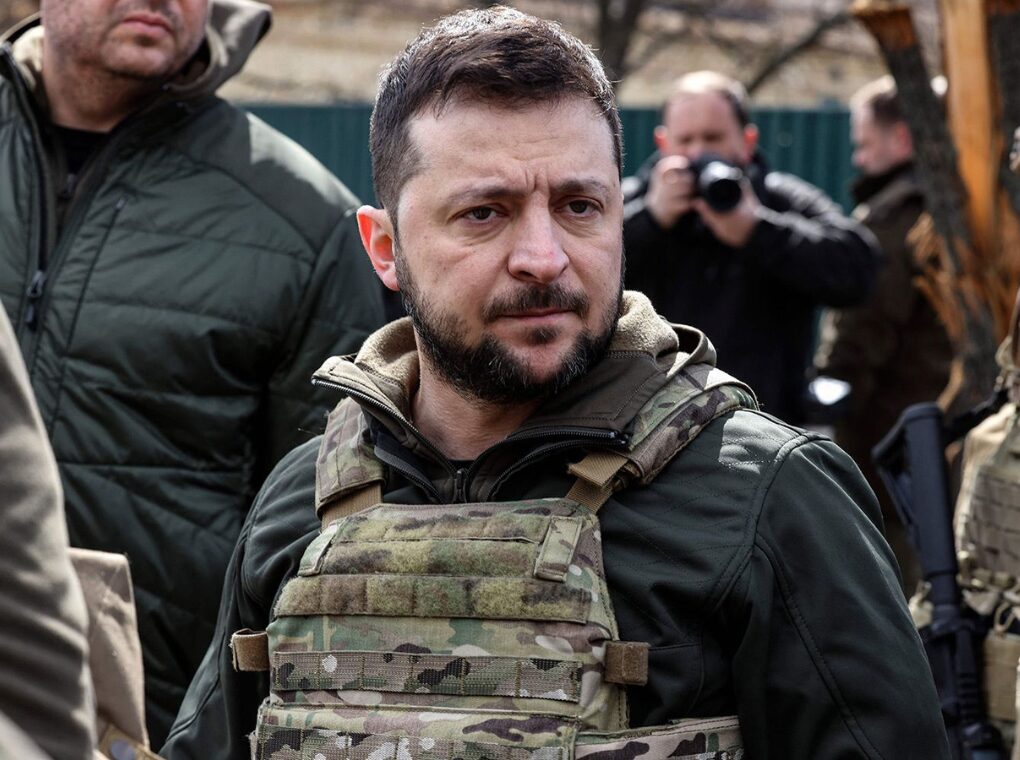
Volodymyr Zelenskyy claimed on June 24 that Russia is transforming the Moscow region into a heavily fortified air-defense zone equipped with hundreds of S-400, S-500, and Pantsir systems. In a video statement posted online, Zelensky alleged that the Kremlin has prioritized the protection of Moscow, the Kerch Bridge, and Valdai by pulling critical air-defense assets away from other Russian regions.
According to Zelensky, nearly 90 launchers have been moved to Valdai — the location of Vladimir Putin’s private residence — while Moscow has become the centerpiece of Russia’s defensive shield.
He further claimed that other Russian cities have been left vulnerable, with only a handful of air defense systems remaining in each region.
Moscow Under Growing Ukrainian Pressure
The reported redeployment comes as Ukraine steps up strikes against Russian military and energy infrastructure, exposing vulnerabilities in Russia’s homeland defense.
Earlier this month, Ukrainian drones reportedly struck the Moscow Oil Refinery, located just 15 kilometers from the Kremlin, causing severe damage to one of the capital’s largest fuel suppliers. The attack highlighted how the war has increasingly reached Russia’s core economic and political centers.
The assault forced temporary airport closures in Moscow and raised concerns about the effectiveness of Russian air defenses against swarming drone attacks.
In recent months, Ukrainian forces have also targeted fuel depots and oil infrastructure in regions including Tyumen, Krasnodar, Voronezh, Volgograd, and Crimea, increasing pressure on Russia’s logistics network and contributing to fuel shortages.
Kerch Bridge Remains a High-Priority Target
The strategically vital Crimean Bridge, also known as the Kerch Bridge, remains one of Ukraine’s most important targets.
Recent Ukrainian strikes reportedly hit radar systems, oil terminals, and gas compressors near the bridge, aiming to disrupt Russian supply lines into Crimea. Ukrainian Special Operations Forces also claimed the destruction of a key railway bridge over the North Crimean Canal, further complicating Russian military logistics.
The Kerch Bridge is viewed by the Kremlin as a symbol of Russian territorial control over Crimea and plays a crucial role in moving both military equipment and civilian supplies.
Why Valdai Matters
Beyond Moscow and Crimea, Valdai has emerged as another heavily protected zone. The region hosts Putin’s highly secured residence on Lake Valdai, approximately 400 kilometers northwest of Moscow.
Recent reports indicate anti-drone protective netting has been installed around logistics areas near the residence, signaling growing concerns over potential Ukrainian drone penetration deep into Russian territory.
Russia’s Most Advanced Air Defense Systems
S-400 Triumf
The S-400 Triumf is one of Russia’s most advanced long-range air defense systems, capable of intercepting aircraft, cruise missiles, drones, and ballistic missiles.
Its arsenal includes multiple missile variants with engagement ranges from 40 km up to 400 km, allowing layered defense against diverse threats. The system is supported by advanced radar systems capable of tracking hundreds of targets simultaneously.
The S-400 has played a major role in Russia’s defense during the ongoing war and has been heavily used against Ukrainian missile and drone attacks.
S-500 Prometheus
The S-500 Prometheus is Russia’s newest and most sophisticated air and missile defense platform. Designed to intercept hypersonic weapons, ballistic missiles, stealth aircraft, and even low-orbit satellites, it significantly expands Russia’s defensive reach.
With a claimed engagement range of up to 600 kilometers and interception altitudes reaching 200 kilometers, the S-500 is often described by Russian officials as a “near-space shield.”
The system reportedly features hit-to-kill interceptor technology and enhanced radar capabilities capable of detecting stealth targets at long distances.
Strategic Implications
If Russia has indeed concentrated S-400 and S-500 systems around Moscow, Valdai, and the Kerch Bridge, it signals a major shift in defensive priorities.
Such a move suggests that the Kremlin now views these locations as critical to both military operations and political stability, even if it means weakening defenses in dozens of other regions.
The combination of S-400, S-500, and Pantsir systems could create one of the most layered and formidable air-defense networks in the world. However, the increasing frequency and success of Ukrainian drone strikes suggest that even Russia’s most advanced systems may be struggling to fully contain the evolving threat.
As the war enters a more technologically driven phase, air superiority and infrastructure defense are becoming just as decisive as battlefield gains.