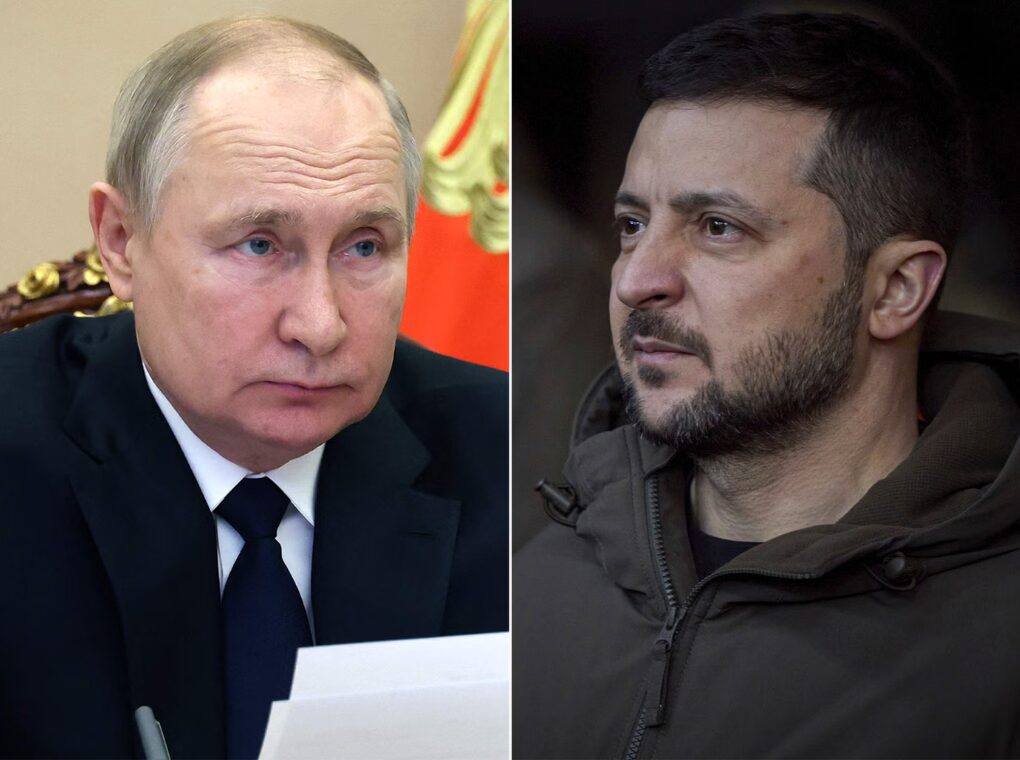
As of June 2026, the war has entered its 1,570th day, overtaking the 1,568-day span of the First World War. What was once expected to be a short, decisive campaign has evolved into a grinding war of attrition, reshaping military doctrine, exposing the limitations of economic sanctions, and accelerating the shift toward a multipolar world order.
A War That Defied Western Expectations
When Russia launched its full-scale invasion of Ukraine in February 2022, the West responded with unprecedented economic warfare.
The United States, the European Union, and G7 allies froze nearly $300 billion in Russian reserves, cut major Russian banks from SWIFT, imposed export controls on critical technologies, and capped Russian oil prices at $60 per barrel.
At the time, Western leaders described the sanctions as a “financial nuclear option” designed to cripple Moscow’s war machine.
But four years later, the results tell a more complicated story.
Russia’s economy contracted by 2.1% in 2022 but rebounded sharply in the following years, posting 3.6% growth in 2023 and 4.3% in 2024, largely fueled by massive defense spending and redirected energy exports.
How Russia Adapted to Sanctions
Despite over 16,000 sanctions, Russia found ways to absorb the shock.
The most significant factor was energy.
After Europe slashed imports of Russian oil and gas, Moscow rapidly pivoted toward Asia. India and China emerged as key buyers, with Russian crude exports to India surging from just 50,000 barrels per day before the war to around 1.7 million barrels per day by 2024.
Asia’s share of Russian oil exports jumped from 41% in 2020 to 81% in 2024, while Europe’s share collapsed.
To bypass Western restrictions, Russia assembled a vast “shadow fleet” of aging oil tankers, allowing crude shipments to continue outside Western-controlled maritime systems.
At the same time, Moscow expanded its own payment infrastructure, including the SPFS system as an alternative to SWIFT, while deepening yuan-based trade with China.
By 2024, the Chinese yuan had overtaken the US dollar as the most traded foreign currency on the Moscow Exchange.
A New World War I-Style Attrition
Military historians increasingly compare Ukraine to World War I.
Like the trenches of the Western Front, Ukraine’s battlefield has become a near-static line of fortified positions stretching hundreds of kilometers.
Artillery duels, drone warfare, and incremental territorial gains measured in meters rather than miles now define the conflict.
But unlike 1914–1918, today’s battlefield is “transparent.”
FPV drones, satellite surveillance, and AI-driven targeting have made surprise offensives far more difficult.
This has reinforced attritional warfare rather than replacing it.
Ukraine’s 2023 and 2024 offensives demonstrated how costly breakthroughs have become in an era where troop concentrations can be detected and destroyed almost instantly.
Why Sanctions Failed to End the War
The key lesson from 1,570+ days of war is stark: sanctions can impose costs, but they cannot force capitulation on a determined major power with alternative economic partners.
Unlike World War I, when Germany faced a near-universal Allied blockade, Russia continues to trade with countries representing a majority of the world’s population and a large share of global GDP.
This structural difference matters.
Countries like India, China, Brazil, and much of the Global South refused to join Western sanctions, preserving Russia’s economic lifelines.
That reality reflects the deeper transformation of the international system.
India’s Strategic Balancing Act
Among all global powers, India has emerged as one of the most strategically significant players in the conflict.
Under Prime Minister Narendra Modi, India dramatically increased purchases of discounted Russian crude while maintaining diplomatic engagement with both Moscow and Kyiv.
In 2024, Modi visited both Russia and Ukraine — a rare dual-track diplomatic move that positioned India as one of the few major powers with credible access to both sides.
This approach, often described as “strategic autonomy,” has strengthened India’s energy security while preserving its geopolitical flexibility.
The Bigger Global Shift
The broader implications extend far beyond Ukraine.
By freezing Russian sovereign reserves, Western powers may have accelerated de-dollarization.
Many countries now see holding reserves in dollars as carrying political risk.
Alternative financial systems — from Russia’s SPFS to China’s CIPS — have expanded rapidly.
That means future sanctions may be less effective than those imposed in 2022.
The Russia-Ukraine war is not just reshaping Europe’s security architecture.
It is rewriting the rules of global power.
The Strategic Verdict
More than four years into the war, one conclusion stands out:
Economic warfare alone cannot defeat a resource-rich, nuclear-armed power willing to absorb immense costs.
Sanctions have hurt Russia. They have not stopped Russia.
And as the war surpasses even World War I in duration, the question facing the world is no longer how to end this conflict — but what this new era of industrial, technological, and geopolitical attrition means for the next one.