
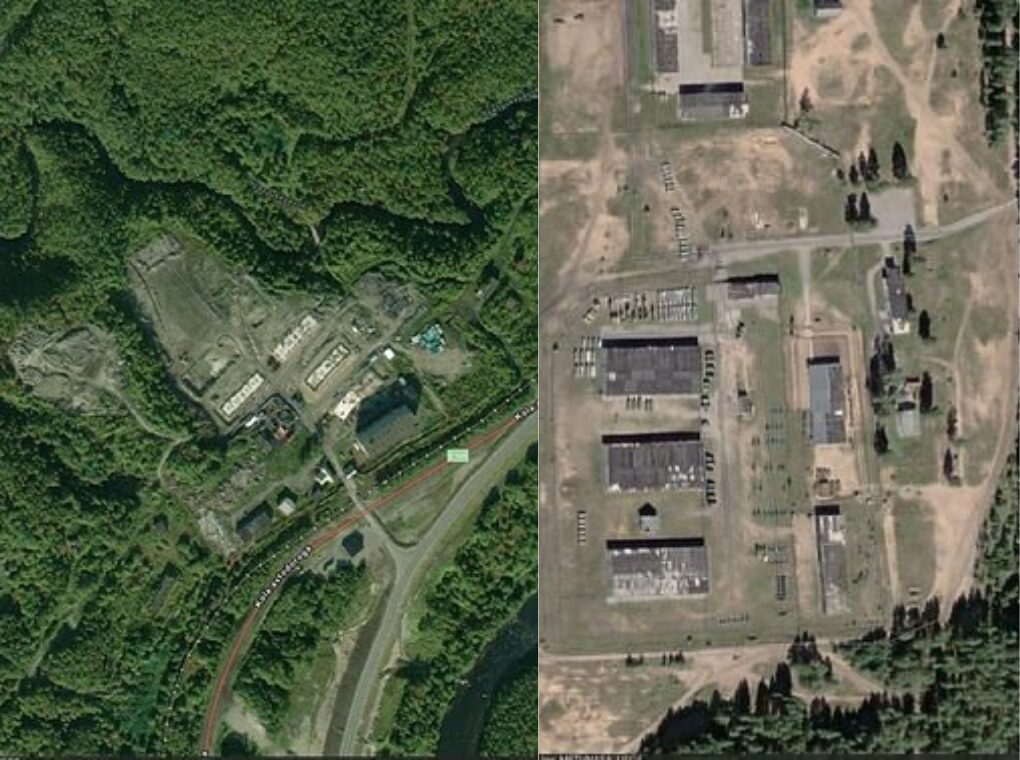
Fresh satellite images showing the expansion of Russian military infrastructure near NATO borders have triggered renewed concerns across Europe, with analysts warning that Moscow may be preparing for a prolonged confrontation with the West. The developments come at a politically sensitive moment for the United Kingdom, where internal disputes over defence spending have intensified following the resignation of Defence Secretary John Healey.
According to reports published by the UK-based Daily Mail, citing satellite imagery released by Denmark’s national broadcaster in cooperation with intelligence agencies, Russia has significantly expanded several military bases near NATO member states over the past two years. The reported build-up includes the construction of new barracks, warehouses, transport facilities, and the deployment of additional military vehicles in strategic locations near northern Europe.
The images have intensified debate over Russian President Vladimir Putin’s long-term military ambitions and the preparedness of European nations to respond to potential security threats.
Russian Military Expansion Near NATO Borders

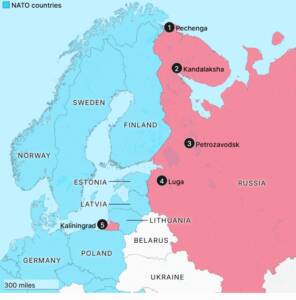
Among the locations highlighted in the satellite analysis is the town of Pechenga in Russia’s Arctic region, situated approximately five miles from the Norwegian border. Intelligence assessments cited in the report suggest that the nearby Murmansk region — close to both Finland and Norway — may now have the capacity to host as many as 17,000 additional troops within operational range of neighboring NATO countries.
Another military installation near the Estonian border reportedly shows a notable increase in military equipment and infrastructure, raising concerns about Russia’s evolving military posture in the Baltic region.
The reported construction activity includes newly built housing facilities for troops, storage depots, logistics hubs, and expanded operational areas that analysts believe could support rapid deployment capabilities.
Security experts note that while military expansions do not automatically indicate imminent conflict, the timing and scale of the developments have drawn attention given Russia’s ongoing war in Ukraine and strained relations with NATO.
Analysts Warn of Long-Term Strategic Preparations
Military experts and former intelligence officials have offered differing interpretations of the satellite findings, though many agree that the developments reflect a long-term strategic posture.
Former British Army officer Colonel Richard Kemp reportedly stated that although a Russian attack on NATO is not inevitable, the possibility cannot be dismissed entirely.
He warned that Russia has historically demonstrated an unpredictable military approach and stressed that European allies, including Britain, must remain prepared for emerging security risks.
Former British military intelligence officer Philip Ingram suggested that the infrastructure projects appear aimed at strengthening Russia’s ability to pressure NATO along an extended frontier while also creating conditions for rapid military mobilisation in the future.
According to Ingram, Russia may be positioning itself to redeploy troops toward NATO borders once the war in Ukraine reaches a different phase or eventually subsides.
Meanwhile, Danish Defence Academy analyst Anders Puck Nielsen reportedly argued that Russia increasingly views a future confrontation with Europe as a realistic possibility, though Moscow’s immediate military focus remains on Ukraine.
NATO Security Concerns Continue to Grow
The reported military expansion comes amid broader concerns about Russian military activity near NATO territory.
According to the report, Western defence officials have expressed alarm over increased incidents involving Russian aircraft and drones near NATO airspace. While exact figures have not been officially confirmed, reports suggest that airspace violations and military encounters have increased during 2026 compared to previous years.
Recent security incidents have also reportedly included Russian submarines operating near undersea communication cables in the North Atlantic and increased naval activity around British waters.
Defence analysts argue that such actions are contributing to heightened tensions between Russia and NATO countries, particularly as European governments continue reassessing defence spending and military readiness.
UK Defence Debate Intensifies After John Healey Resignation
The security concerns come as Britain faces growing political pressure over defence funding and military preparedness.
Former UK Defence Secretary John Healey resigned this week following disagreements within Prime Minister Keir Starmer’s government over defence priorities and budget commitments.
In his resignation remarks, Healey reportedly raised concerns that Britain’s armed forces were not adequately prepared to address increasing geopolitical threats, including the possibility of future Russian aggression.
The UK government is currently working on a long-delayed Defence Investment Plan, intended to address an estimated £28 billion funding gap over the next four years. However, reports indicate that Treasury support currently falls well short of defence officials’ expectations.
Following Healey’s departure, security minister Dan Jarvis has been appointed to lead the Ministry of Defence.
The transition has placed additional pressure on the Starmer government to finalise defence spending plans amid increasing scrutiny from military officials and opposition voices.
Business Secretary Peter Kyle recently acknowledged that the Defence Investment Plan remains under development, stating that the government is focused on balancing military modernisation with broader economic priorities.
Growing Debate Over Europe’s Defence Readiness
The satellite findings have renewed broader discussions over whether European countries are sufficiently prepared for future security threats.
Several defence analysts argue that NATO members must accelerate military modernisation efforts, strengthen deterrence measures, and improve strategic coordination in response to evolving regional risks.
At the same time, experts caution against assuming that military infrastructure expansion alone signals an imminent conflict, noting that Russia’s actions may also reflect efforts to reinforce border security and long-term military positioning.
As tensions between Russia and Western nations remain elevated, the latest developments are likely to intensify debate across Europe over defence spending, military readiness, and the future security landscape on NATO’s eastern frontier.