
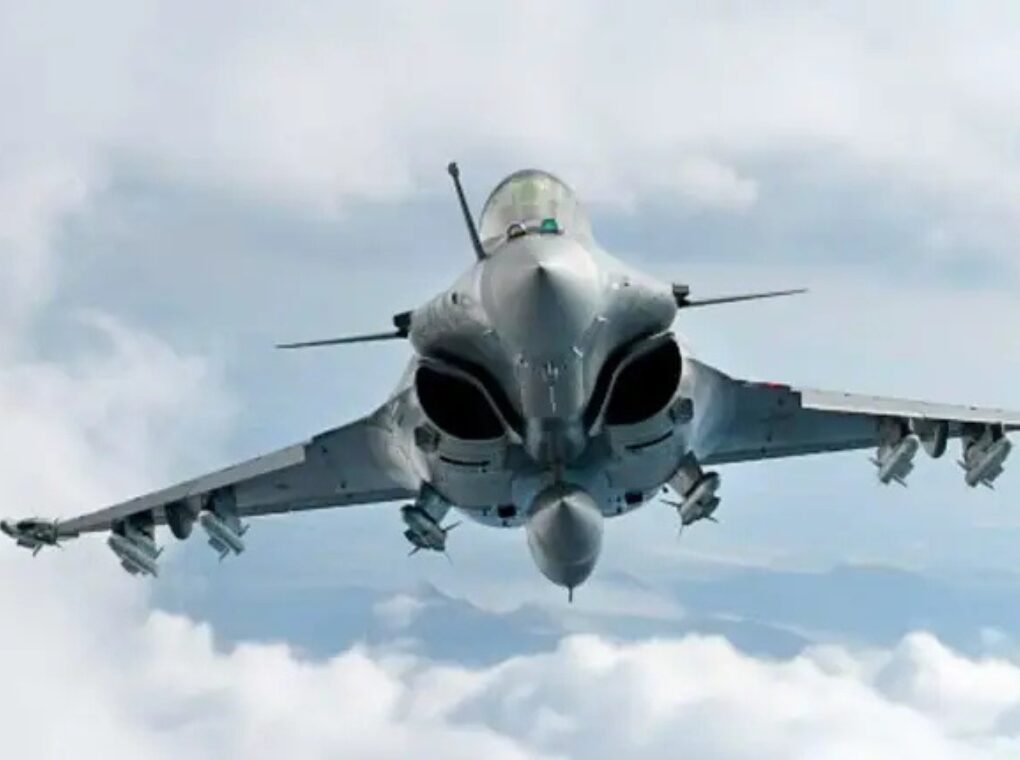
A recently surfaced Indian Air Force (IAF) procurement document has reignited debate over Pakistan’s claims of shooting down multiple Indian Dassault Rafale fighter jets during Operation Sindoor.
The document, a Request for Proposal (RFP) issued to French aerospace company Safran, appears to reference maintenance and logistics support for all 36 Rafale aircraft currently in Indian service — a detail that has drawn attention from defense analysts and military observers.
IAF’s Rafale RFP and What It Suggests
According to the first paragraph of the RFP, the Indian Air Force is seeking Performance Based Logistics (PBL) and maintenance support for its fleet of 36 Rafale fighter jets.
This is significant because Pakistan had previously claimed during Operation Sindoor that it had successfully shot down four Indian Rafales. The claims were made publicly by Pakistan’s military spokesperson, with even specific tail numbers cited.
However, if the IAF’s official documentation continues to account for all 36 Rafales, it raises serious questions about the credibility of those earlier claims.
While the RFP does not directly address combat losses or operational history, defense experts note that fleet-wide logistics planning typically reflects active inventory.
Background: India’s Rafale Deal With France
India signed an Inter-Governmental Agreement (IGA) with France in September 2016 to procure 36 Rafale fighter jets in an emergency government-to-government deal.
The jets began arriving in 2020 and have since become one of the most advanced frontline assets in the Indian Air Force.
The original agreement included a five-year logistics and consumable spares package under the Performance Based Logistics model, which is now nearing renewal.
The latest RFP appears to be part of that continuation process.
Pakistan’s Rafale Claims During Operation Sindoor
During Operation Sindoor, Pakistan’s military and media repeatedly claimed that four Indian Rafales had been shot down in air combat.
These claims quickly became central to Pakistan’s victory narrative and were widely circulated across regional and international media platforms.
However, no independently verified visual evidence was ever presented to confirm the destruction of the aircraft.
In fact, two of the tail numbers Pakistan had claimed to have destroyed — RB021 and RB022 — were later reportedly seen flying in Indian Air Force formations during Republic Day events earlier this year, further casting doubt on the earlier narrative.
More Than an India-Pakistan Conflict: A Global Defense Testbed
Military analysts increasingly view Operation Sindoor as more than just a bilateral India-Pakistan conflict.
The operation involved a wide range of platforms from multiple defense ecosystems:
> French-built Rafales
>American-made General Dynamics F-16 Fighting Falcon jets
>Chinese-origin systems
>Turkish drones and support assets
>Russian-origin equipment
This made the conflict a real-world testing ground for several competing defense technologies.
In modern warfare, battlefield performance directly impacts global arms sales, making perception and narrative almost as important as tactical outcomes.
Why Rafale’s Image Matters Globally
The Rafale has become one of the most successful fighter aircraft in the export market, competing directly with the Eurofighter Typhoon and the Lockheed Martin F-35 Lightning II.
Countries like the United Arab Emirates, Qatar, and Egypt have placed major orders for the French fighter.
Its strong export performance has made it a critical asset not just for France’s defense industry but also for Europe’s broader strategic autonomy.
Unlike the F-35, the Rafale operates outside direct US operational dependencies, making it attractive for countries seeking greater sovereignty in defense procurement.
What This Means Going Forward
The IAF’s latest RFP does not explicitly deny Pakistan’s wartime claims. However, by formally planning logistics for all 36 Rafales, it indirectly strengthens India’s position and undermines claims of confirmed combat losses.
For military analysts, the document serves as an important indicator of fleet status.
It also highlights a broader reality of modern warfare: alongside missiles and airstrikes, information warfare and strategic narratives play a major role in shaping public perception.
As the debate over Operation Sindoor continues, this official document may prove to be one of the strongest pieces of evidence yet in the battle over what really happened in the skies.