Washington wants Kyiv to spare Russia’s refineries. The energy data points to a different culprit, and Ukraine risks losing its sharpest weapon.
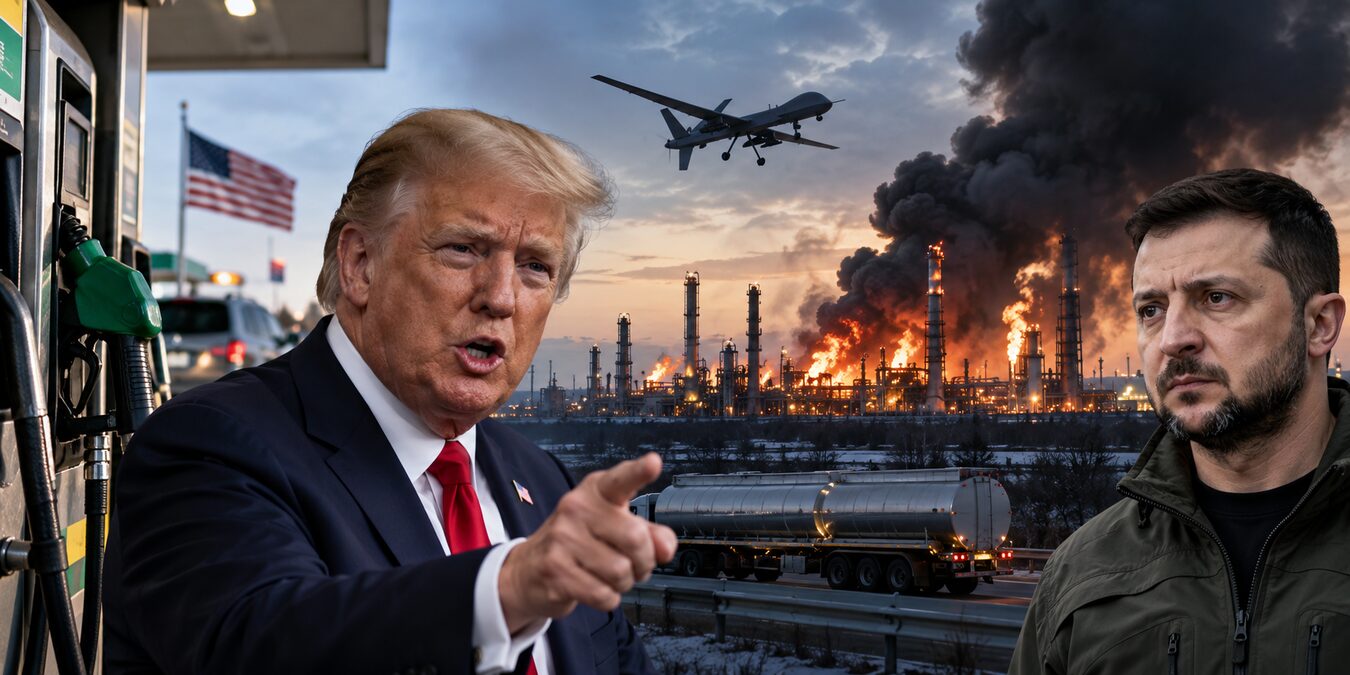
The US president, Donald Trump, has ordered Ukraine to stop bombing Russia’s oil refineries, blaming the Ukrainian president, Volodymyr Zelenskyy, for a global diesel shortage that drove American pump prices to a record last week. Trump delivered the demand to reporters on Sunday, September 13, on the first tee of the Irish Open at his Doonbeg golf club in Ireland.
“He has to stop knocking out diesel fuel in Russia,” Trump said. He told Kyiv to pick other targets and said the strikes were hurting the world. Hours later, aboard Air Force One, he rejected the idea that the US war with Iran had emptied the world’s fuel tanks. “This isn’t done by the Middle East,” he told reporters, naming Russia and Ukraine instead.
The accusation lands awkwardly. Trump spent the summer telling Americans that the Iran war explained their fuel bills, and only last week he predicted prices would fall once that war ended. Most energy analysts still back the earlier explanation.
Diesel at $6, and still climbing
The motoring club AAA logged a national average of $6.05 a gallon on Friday, September 11 — the first time US diesel prices have crossed that line. Drivers paid about $3.70 a gallon a year ago, a rise of roughly 63 per cent. California pump prices neared $8. Brent crude traded at $107.31 on Sunday, after Saudi Arabia shut a pipeline that bypasses the Strait of Hormuz.
Diesel underpins the cost of almost everything Americans buy. The KPMG chief economist, Diane Swonk, said the cost of the fuel “gets into just about everything”, from running a farm to stocking a supermarket shelf. The GasBuddy analyst Patrick De Haan warned of “sticker shock”, estimating that Americans now spend about $700 million more each day on fuel than they did a year ago.
What Kyiv’s drones have actually done
Ukraine has attacked Russia’s refining network for three years, and the damage shows. Russian refinery runs sank to a 24-year low in August. Moscow banned diesel exports in July, rationed fuel at home and pulled cargoes from an already tight market.
The International Energy Agency set out the sequence in its September market report. Gulf producers shipped just over a quarter of their pre-war volumes of diesel and gasoil in August, after the war with Iran began in late February. Ukrainian strikes then compounded those losses by disrupting Russia’s refining system and all but halting its product exports. Before the disruptions, Russia and the Gulf together supplied almost 45 per cent of seaborne trade in the two fuels.
Read plainly, the agency’s account places the Gulf collapse first and the Russian damage second — the reverse of Trump’s framing.
Does this dent US support for Ukraine?
Olena Lennon, a national security practitioner, called the request “purely hypocritical”, arguing that America’s own war has drained far more fuel from the market than Ukraine’s strikes. Dropping the refinery campaign, she said, would strip Kyiv of its most effective pressure point inside Russia.
Others disagree. George Beebe of the Quincy Institute said the deep-strike campaign had backfired, provoking heavier Russian attacks on Ukraine’s power grid, ports and railways. Konstantin Sonin of the University of Chicago raised a practical objection: Ukrainian planners cannot single out diesel units inside a refinery, so obeying Trump would mean curbing energy strikes altogether.
Leverage matters more here than fuel. Europe now carries most of the bill — Brussels released another €6.1 billion for Ukrainian military procurement on September 11 — yet Kyiv still depends on American hardware. Roughly 95 per cent of its Patriot interceptors arrive through Nato’s PURL scheme, under which allies buy US missiles on Ukraine’s behalf, giving Washington control over that supply.
Politics sharpens the risk. Americans vote in midterm elections in November, and fuel prices are dominating the campaign. A Chicago Council on Global Affairs survey published in February found Republican support for military aid to Ukraine had fallen to 43 per cent from 51 per cent, pulling overall support down to 57 per cent. A winter of $6 diesel is unlikely to reverse that drift.
The wider picture
Zelenskyy has not responded to Trump publicly. He has long argued that refinery strikes squeeze Moscow harder than any Western sanctions package, and in July he created a dedicated long-range strike command.
The war grinds on regardless. Ukraine’s air force said it counted 453 Russian drones overnight into Sunday, and that it downed or suppressed 409 of them. Ukrainian drones hit a refinery at Slavyansk-on-Kuban, while Russian officials said a strike killed two people in Tatarstan. The Kremlin spokesperson, Dmitry Peskov, said talks involving Russia, Ukraine and the United States could resume in October.