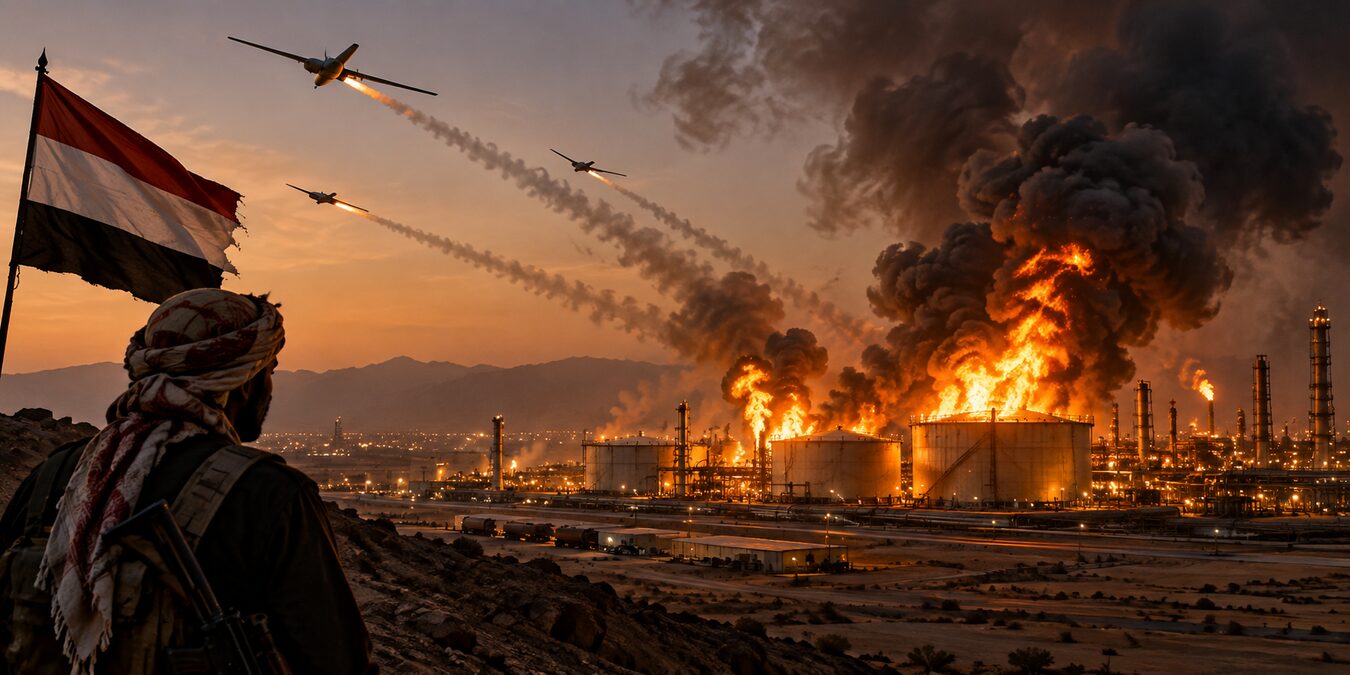
A Houthi attack on Saudi Arabia wounded 73 people on 8 September. Missiles and drones set oil sites alight across the kingdom’s south. Major-General Turki al-Malki, spokesman for the Saudi-led coalition, named Abha, Khamis Mushait, Jizan and Najran, calling the strikes a “dangerous escalation.” Riyadh promised a firm answer. A week later, it is fighting largely alone.
What the Houthis Hit
Saudi Arabia’s Energy Ministry confirmed fires at several energy installations and a temporary halt to some operations. Yahya Saree, the Houthi military spokesman, said his forces fired scores of ballistic missiles and drones. Satellite images showed smoke above the Jazan refinery and an Aramco distribution centre at Abha.
The truce had already collapsed. Saudi aircraft struck the runway at Sanaa airport on 13 July, and the Houthis answered with a naval blockade of Saudi shipping.
The group then pressed its advantage, capturing the port of Mokha and Perim island — both of which sit beside the Bab al-Mandeb strait.
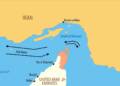
That matters for oil. Iran’s pressure on the Strait of Hormuz had already pushed Riyadh towards this Red Sea route; Saudi crude exports along it ran eight times higher this spring.
Islamabad Sends Words, Not Warplanes for Saudi
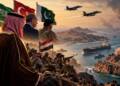
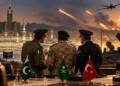
Saudi Arabia and Pakistan signed a Strategic Mutual Defence Agreement in Riyadh in September 2025. It treats aggression against one as aggression against both. On 7 August 2026, they widened the arrangement with Turkey through the Mecca Joint Defence Agreement.
Khawaja Asif, Pakistan’s defence minister, moved quickly after the barrage. “Definitely the Mecca agreement will become operational,” he said.
Islamabad retreated within 48 hours. Foreign ministry spokesman Sajjad Haider Khan ruled out striking the Houthis on 10 September. “But as of now, there is no discussion of this kind,” he said, describing the pact as an umbrella agreement still awaiting institutional machinery.
Riyadh has paid a great deal for that solidarity. Saudi Arabia placed a fresh $3bn deposit with Pakistan’s central bank in April 2026 and extended an existing $5bn deposit on easier terms. Islamabad is now negotiating a $6.7bn deferred oil facility with the kingdom.
Pakistan does maintain forces inside the kingdom: 8,000 troops, some 16 JF-17 fighters and a Chinese HQ-9 air defence system, all financed by Saudi Arabia. Officials describe the role as advisory and defensive. Turkey, the third signatory, has also stayed out of the fighting.
Defending Saudi soil is one thing. Bombing Yemen is another. Qamar Cheema of the Sanober Institute told Middle East Eye that Islamabad cannot attack the Houthis now. Pakistan shares a 900km border with Iran, the group’s main backer, and hosts a large Shia population. Parliament refused to join the Saudi coalition in 2015 — a memory that still shapes policy in Islamabad.
Washington Offers Data, Not Bombs
Crown Prince Mohammed bin Salman telephoned President Donald Trump twice on 10 September, asking for American strikes on the Houthis. Trump declined both requests.
Washington offered intelligence and targeting data instead. Roughly 200 American personnel already provide non-combat support inside the kingdom.
The reasoning is plain. US officials said Trump wants his forces fixed on Iran and the Strait of Hormuz, and a senior administration official said regional partners should lead. Yemen also carries hard memories for American planners. Admiral Brad Cooper, the CENTCOM commander, met the crown prince in Jeddah on 14 September.
Money Bought Saudi’s Hardware, Not Readiness
Saudi Arabia spent $83.2bn on defence in 2025, the eighth largest total worldwide. Trump signed a $142bn arms package with Riyadh in May 2025, and later approved F-35 deliveries and major non-NATO ally status.
Riyadh also holds the Gulf’s largest stock of Patriot interceptors and fields THAAD batteries. That inventory did not stop the salvo on 8 September. Critics argue the kingdom bought platforms rather than proficiency: the Royal Saudi Land Forces leaned on Yemeni proxies and contractors during the last war, and pilot training hours and combined-arms coordination drew similar criticism. Riyadh, in short, rents capability abroad — and this month it discovered the limits of rented allies.
What Comes Next
Oil prices climbed more than one per cent after the barrage. Drones launched from Iraq then struck the East-West pipeline on 11 September. Riyadh has withheld retaliation for now, though Yemen analyst Mohammed Al-Basha said that all signs “point to a large-scale Saudi retaliation.” Saudi Arabia has also sought help from Gulf states, Egypt and, indirectly through CENTCOM, Israel.
The Houthis show no sign of stopping. Their demand stays the same: an end to the Saudi blockade of northern Yemen.
Riyadh bought insurance for a decade. The claim has now been filed, and the insurers are reading the small print.