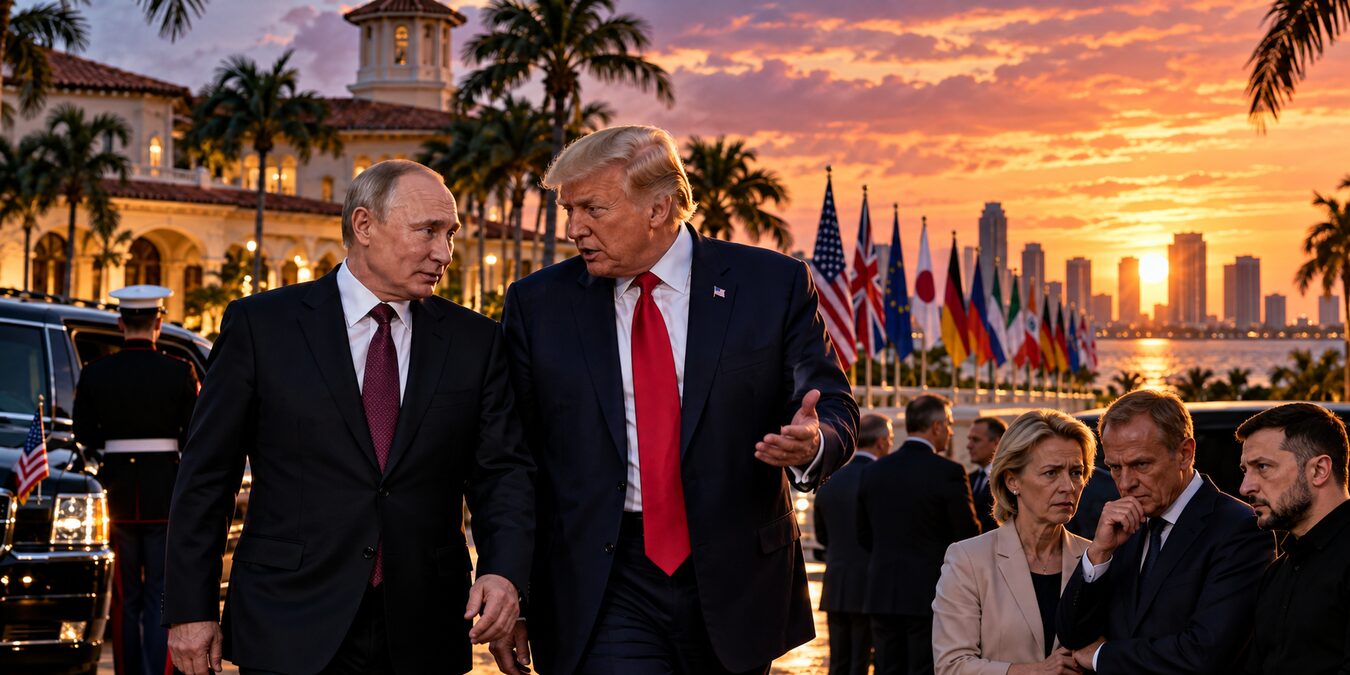
The United States has invited Russian President Vladimir Putin to the G20 summit in Miami this December. Secretary of State Marco Rubio announced the invitation Wednesday in New York, following a meeting with Russian Foreign Minister Sergey Lavrov on the sidelines of the UN General Assembly. The move raises the prospect of a second summit between Putin and President Donald Trump.
“We’ve invited President Putin to the G20,” Rubio told reporters.
World leaders are set to gather December 14–15 at Trump National Doral Miami — the president’s own golf resort.
The Kremlin Keeps Washington Waiting
Moscow has welcomed the offer but not accepted it. Kremlin spokesman Dmitry Peskov thanked Washington and said Russia would decide on its own timeline, with details to follow through diplomatic channels. By Thursday, he was tempering expectations further: “It is premature to talk about this for now.”
Other signals point elsewhere. Earlier reports suggested Putin would attend the APEC summit in China but skip the G20 entirely.
Why Washington Wants Putin in Miami
Rubio cast the invitation as pragmatic diplomacy, arguing that resolving conflicts requires engaging with adversaries — and that a G20 setting would let Putin interact with other world leaders, not just Trump.
The underlying motive is Ukraine. Rubio said Washington remains open to engaging Moscow on the war, even as peace efforts have stalled — a slowdown partly attributed to Washington’s shifting focus toward its confrontation with Iran. Still, Trump envoys Jared Kushner and Steve Witkoff traveled to Ukraine this month for talks with President Volodymyr Zelenskyy.
The Shadow of Alaska
The central question: would Miami accomplish more than Anchorage did?
Trump and Putin met at a military base in Anchorage on August 15, 2025. The talks produced no formal agreement to end the war. “There’s no deal until there’s a deal,” Trump said at the time.
Trump later dropped his demand for a ceasefire ahead of a broader peace deal — a shift toward Putin’s position. Eurasia Group’s Ian Bremmer argued Putin “clearly won,” conceding nothing while buying time. Putin himself acknowledged in June that Alaska ended without formal agreements. Moscow has since accused Washington of abandoning the “spirit of Anchorage.”
Rubio struck a cautious tone this week, acknowledging no meeting has been agreed and that any summit would require careful preparation. Without that groundwork, Miami risks repeating Alaska’s outcome: handshakes, cameras, no deal.
Europe Pushes Back
European leaders reacted with alarm. EU foreign policy chief Kaja Kallas and Polish Prime Minister Donald Tusk warned the invitation could normalize Russian aggression and embolden further attacks. Kallas called it “the wrong path” and said EU leaders need to discuss the implications.
Zelenskyy also pushed back, telling the UN on Wednesday that Putin remains the source from which the war keeps spreading.
Legal and Practical Hurdles
The International Criminal Court issued an arrest warrant for Putin in 2023 over the deportation of Ukrainian children to Russia. Since the US isn’t an ICC member, the warrant carries no binding weight on Washington.
Sanctions present a separate complication. Ahead of Alaska, the US Treasury issued a temporary authorization exempting certain transactions from sanctions — a step officials would likely need to repeat for Miami.
A Miami visit would break a long pattern. Putin hasn’t attended a G20 summit in person since 2019 (he joined virtually in 2023), and a trip would mark his first visit to the continental US since 2015.
The decision now rests with Moscow. Europe is watching closely. So is Kyiv.