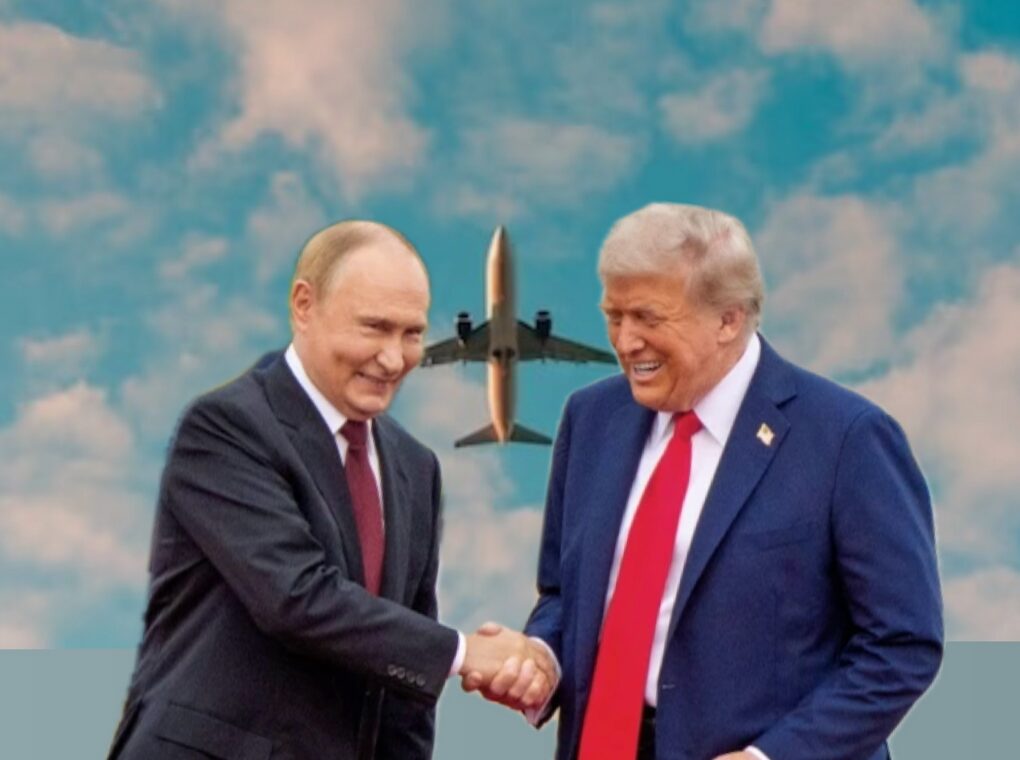
When Russian President Vladimir Putin touched down in Anchorage on August 15 for talks with US President Donald Trump, the reception was as ceremonial as one would expect—flags raised, a red-carpet welcome, and global media attention. Yet behind the optics of pageantry, an extraordinary episode highlighted just how far-reaching international sanctions have become. According to US Secretary of State Marco Rubio, Putin’s delegation had to pay nearly $250,000, in cash to refuel their aircraft during the Alaska stopover.
The revelation has become one of the more telling anecdotes of diplomatic pressures in the modern era: a world leader, traveling with an official delegation, restricted to carrying stacks of cash instead of accessing routine international banking facilities.
Cash on the Runway
Sanctions imposed on Moscow since the start of the Ukraine war have crippled Russia’s access to Western-controlled financial systems. Banks in Russia are largely cut off from SWIFT, the international financial messaging network used by banks across the globe to settle cross-border payments. That exclusion means even seemingly ordinary expenses—such as paying for aviation fuel abroad—become logistical challenges for the Kremlin.
“When the Russians landed in Alaska, they were there purely to refuel,” Rubio explained in an NBC interview. “But because they cannot route payments through our banking system, the only option left was cash.” The Secretary of State noted, almost sardonically, that the scenario underscores the daily consequences Moscow endures under sanctions.
It is rare in global diplomacy for leaders to travel carrying such amounts of liquid currency, not only due to the risks but also the sheer inconvenience. In most state visits, financial settlements are either pre-arranged by government channels or processed without notice through neutral banks. For Russia, once a major player seamlessly integrated into global commerce, the inability to access even these basic conveniences serves as a reminder of its current isolation.
Five Hours in Alaska
Putin’s stop in Alaska lasted about five hours in total. After the refueling issue was resolved, he joined Trump for a joint session widely billed as a high-stakes attempt to recalibrate relations between Moscow and Washington. Expectations had been set high, particularly since Trump had earlier spoken about seeking a pathway toward ending hostilities in Ukraine. Ultimately, however, the summit ended without concrete agreements.
Trump later acknowledged that “no deal” had been struck, despite reports suggesting that Moscow presented a framework of compromises Washington asked Kyiv to at least consider. Observers noted that the encounter seemed more symbolic than substantive—a choreographed gesture of diplomacy at a time when battlefield realities continued to define the war.
Why Sanctions Bite Slowly
A core question raised after the summit centered on whether sanctions are still effective in changing Russian behavior. Rubio, in his remarks, admitted that while penalties have inflicted significant economic pain, they have not fundamentally changed the Kremlin’s course of action. “They face consequences every single day,” he said, “but that has not altered the direction of this war.”
He cautioned against seeing sanctions as quick fixes. “They take months, sometimes years, to fully wear down an economy,” he explained, adding that the measures were still the right choice despite limited immediate results. The need to pay for fuel with cash, he noted, is one visible symptom of broader economic disconnection.
The Next Stage of Diplomacy
Back in Washington a few days later, Trump hosted Ukrainian President Volodymyr Zelenskyy alongside leading European officials. The White House meeting shifted the diplomatic narrative away from Putin’s symbolic Alaska visit toward long-term security arrangements for Kyiv. Zelenskyy stressed that he was willing to open channels for direct negotiations with Moscow but drew a clear line, rejecting any proposal involving ceding Ukrainian territory.
European allies echoed similar sentiments, pushing for commitments that would draw Ukraine closer to NATO and ensure sustained defense support. The broader consensus emerging from these talks was that the war would not be settled at a single summit but through persistent, multi-layered diplomacy paired with continued economic and military assistance.
Symbolism of the Alaska Incident
While the Alaska meeting produced no breakthrough, the story of Putin’s delegation paying fuel bills in cash has echoed widely in diplomatic circles. For Moscow, it is a reminder of how financial isolation complicates even routine government activity abroad. For Washington, it serves as a symbolic victory, demonstrating that sanctions—though slow in effect—have real, tangible impacts.
It is also an anecdote with powerful imagery: one of the world’s most powerful leaders arriving with stacks of currency in hand, bypassing financial networks that nearly every other government takes for granted. In modern geopolitics, where power is often exercised invisibly through banking rules and digital systems, such scenes expose the subtle ways economic tools reshape international behavior.
What Lies Ahead
If anything, the Alaska episode illustrates the paradox of sanctions policy. On the one hand, restrictions clearly complicate Russia’s access to the outside world, forcing it to rely on awkward, old-fashioned solutions. On the other hand, as Rubio admitted, these hardships have not yet translated into decisive changes in Russian military strategy.
For now, diplomacy remains fragmented: Washington seeks to keep Kyiv’s defenses intact, Europe looks toward longer-term security guarantees, and Moscow continues to project resolve despite considerable isolation. The coming months will test whether sanctions, combined with diplomatic engagement, can gradually shift the balance—or whether the war will stretch further, with moments like Putin’s cash payment in Alaska becoming striking but ultimately symbolic anecdotes in a much larger conflict.