
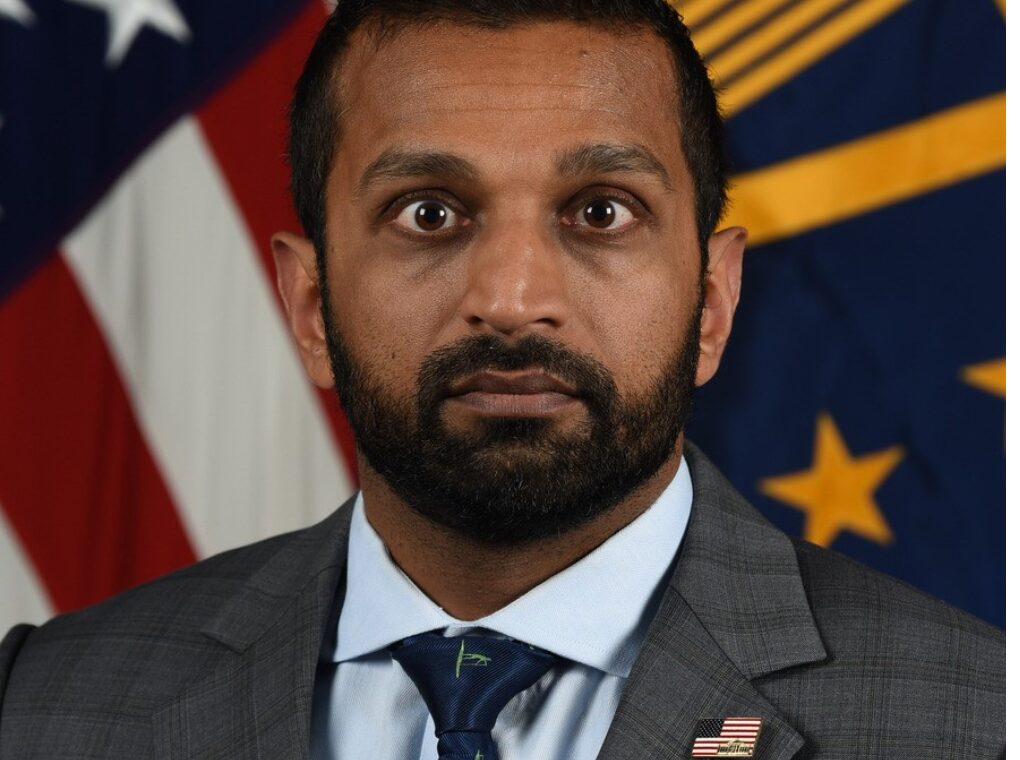
The U.S. fentanyl crisis is taking a new geopolitical turn. According to FBI Director Kash Patel, hostile regimes, including China, Russia, and Iran, are partnering with transnational criminal organizations and Mexican cartels to smuggle fentanyl into the United States through Canada, particularly via Vancouver.
In an explosive interview with Fox News, Patel stated that America’s northern border has become a key entry point for the deadly synthetic opioid, citing a failure by Canadian authorities to sufficiently disrupt production and trafficking operations. “They’re sailing around to Vancouver and coming in by air,” said Patel, stressing that the issue demands urgent bilateral action.
Canada’s Role in the North American Fentanyl Pipeline
Patel called on Canadian officials to intensify their efforts, pointing to growing concerns about “super laboratories” operating in provinces like British Columbia and Ontario. “Canada is making it and shipping it down here,” he said, adding, “They are our partner in the north. Say what you want about Mexico, but they helped us seal the southern border.”
B.C. Conservative MLA and public safety critic Elenore Sturko echoed Patel’s alarm. She urged the British Columbia government to implement a comprehensive fentanyl strategy, form a bipartisan drug task force, and launch two public inquiries into drug trafficking.
Her calls follow a Criminal Intelligence Service Canada (CISC) report, which found a 42% increase in the involvement of Canadian organized crime groups in fentanyl-related activities since 2019. The report noted that 235 criminal organizations are involved in fentanyl operations in Canada, 35 of which are linked to international exports.
DEA, RCMP Point to Growing Super lab Threat
The U.S. Drug Enforcement Administration (DEA) recently named Canada as a growing concern in its 2025 National Drug Threat Assessment, highlighting the emergence of large-scale fentanyl production facilities. In October 2024, the RCMP dismantled what it described as the largest fentanyl and methamphetamine superlab in Canadian history in British Columbia. The raid prevented the distribution of up to 95 million lethal doses.
Further seizures occurred in March 2025 when three synthetic drug labs, also linked to transnational organized crime groups, were shut down by the RCMP in British Columbia.
The DEA’s report ties the bulk of precursor chemical sourcing to China, with Pakistan also as a significant source and supplier. These chemicals are often shipped through Canada before being manufactured into fentanyl in hidden superlabs or rerouted to the U.S. and other international markets.
Trade and Tariff Tensions Escalate
In response to what he calls “Canada’s failure to stem drug trafficking,” former President Donald Trump has implemented 25% tariffs on Canadian goods not covered by USMCA, as well as 10% on energy products. Trump stated the move was not a trade war, but part of “a war on drugs.”
Canada has retaliated with 25% tariffs on $30 billion worth of U.S. goods and announced further levies. China and Mexico have also responded to U.S. measures, creating a multi-front economic and diplomatic standoff centered around drug enforcement.
Disputed Numbers, Divergent Realities
Canadian officials, including Prime Minister office, have countered claims of large-scale trafficking through Canada. According to U.S. Customs and Border Protection, only 0.2% of fentanyl seizures occur at the northern border, with 98% at the U.S.-Mexico border.
However, experts argue that this statistic overlooks Canada’s growing role in precursor chemical trafficking, money laundering, and fentanyl production. Investigative journalist Sam Cooper noted that Chinese companies continue to send precursor chemicals to Canada, where organized crime networks control large-scale manufacturing operations. “What is key here is that the precursors are coming into Canada and being shipped elsewhere,” he said.
Canada Responds: Funding, Czar, and Strike Force
To counter U.S. pressure and internal challenges, the Canadian government has allocated C$1.3 billion to bolster border security and drug enforcement. In February, Former PM Trudeau appointed Kevin Brosseau as Canada’s first fentanyl czar, tasked with leading a Canada–U.S. Joint Strike Force on fentanyl and classifying several trafficking groups as terrorist organizations.
The Human Cost of Fentanyl
The U.S. Centers for Disease Control and Prevention reported over 74,000 fentanyl-related deaths in 2023 alone, a number that continues to climb. Fentanyl, a synthetic opioid 50 times stronger than heroin, is increasingly mixed with other drugs like cocaine and methamphetamine, often without users’ knowledge. Just two milligrams — the size of a pencil tip — can be fatal.
While the majority of fentanyl still enters the U.S. through Mexico, the growing complexity of the global supply chain — including Chinese chemical suppliers, Indian intermediaries, Canadian superlabs, and transnational cartels — has created a crisis that defies simple border control solutions.
Conclusion: A North American Security Priority
The latest warnings from U.S. law enforcement reflect growing frustration with what they perceive as insufficient Canadian action on drug trafficking. While seizures at the northern border remain low compared to the south, officials argue that focusing solely on seizures misses the point.
What’s unfolding is not just a drug issue, but a geopolitical threat involving state-backed actors, economic sanctions, and multinational criminal networks. With Canada, China, and Russia now pulled into the spotlight, the North American fentanyl crisis is poised to become one of the most critical cross-border security challenges of the decade.