The Indian oil industry has entered a period of reassessment following the Trump administration’s decision to impose sanctions on Russia’s two major oil producers, Rosneft and Lukoil. These sanctions, announced on Wednesday, mark the first direct punitive measures by President Donald Trump in his second term against Russia for its continued military operations in Ukraine.
The move has sent ripples through global energy markets, placing India, one of the largest importers of Russian crude, in a delicate position. State-owned refiners, including Indian Oil Corporation (IOC), Hindustan Petroleum Corporation Limited (HPCL), Bharat Petroleum Corporation Limited (BPCL), and Mangalore Refinery and Petrochemicals Limited (MRPL), are reportedly reviewing all active and upcoming contracts for Russian crude oil. Their focus is to ensure that no consignments are sourced directly from Rosneft or Lukoil, according to sources quoted by Reuters.
India’s Refiners Scramble for Compliance
The U.S. Treasury Department’s directive has set November 21 as the deadline for global firms to wrap up transactions with the sanctioned Russian entities. This timeline has prompted Indian refiners to scrutinize shipping and payment documentation to confirm compliance.
Although Indian state-owned refiners traditionally avoid direct dealings with Rosneft and Lukoil, opting instead to purchase through intermediaries or trading houses, the sanctions have raised caution levels across the industry. One senior executive at a public-sector refinery noted that “even indirect exposure could attract scrutiny from the U.S. financial system,” given the growing severity of secondary sanctions.
Private refiners, particularly Reliance Industries and Nayara Energy, which account for a significant portion of Russian crude imports, are also expected to re-evaluate their sourcing strategies. Nayara’s partial ownership by Rosneft may invite additional attention from U.S. regulators.
The Geopolitical Undertone
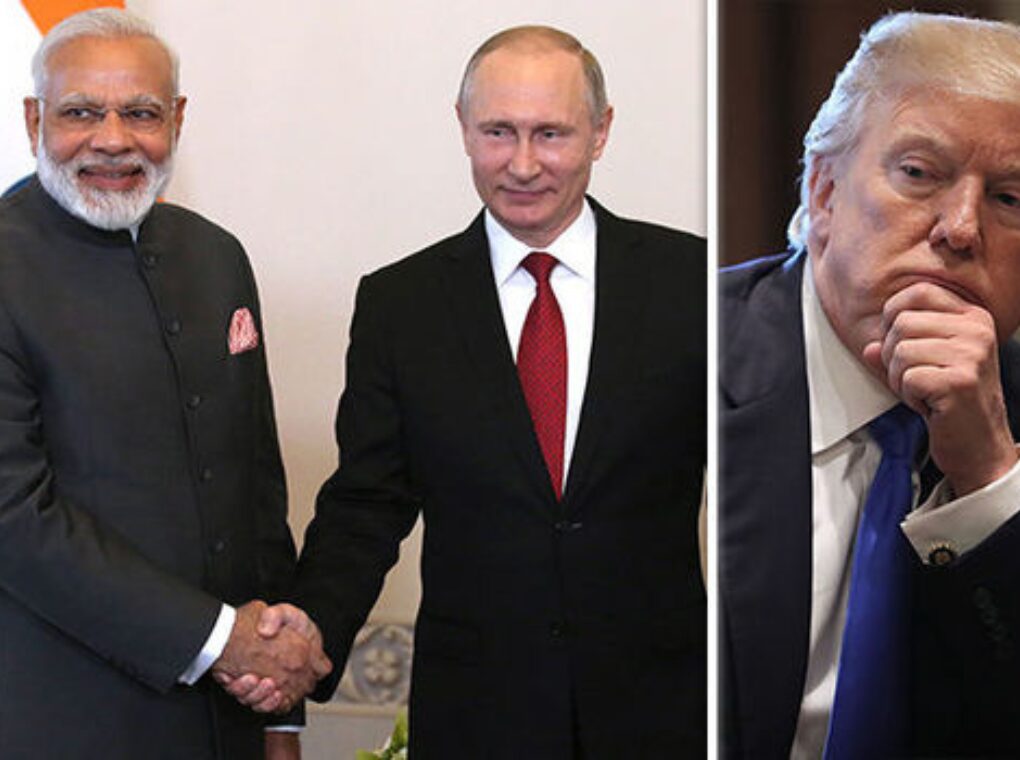
President Trump’s sanctions announcement came a day after he publicly claimed to have spoken with Prime Minister Narendra Modi, asserting that India would “not be buying much oil from Russia.” During a White House Diwali celebration, Trump emphasized the “strong personal relationship” between the two leaders, adding that both shared a desire to see the Russia-Ukraine war come to an end.
Modi acknowledged the call in a social media post but avoided any reference to oil purchases or trade commitments. The omission reflects India’s attempt to maintain a neutral diplomatic balance between Washington and Moscow while safeguarding its energy security.
The Stakes for India’s Energy Security
India is the world’s third-largest oil consumer and importer, meeting nearly 87 percent of its crude demand from overseas sources. Before the Russia-Ukraine conflict, India relied primarily on Middle Eastern suppliers such as Iraq, Saudi Arabia, and the UAE, which collectively fulfilled about two-thirds of its import needs.
Following Western sanctions on Moscow in early 2022, Russia emerged as a major supplier of discounted crude oil to India. The financial incentive was significant: discounts initially reached $19–20 per barrel in 2023, though they have since narrowed to $3.5–5 per barrel as demand for Russian oil from Asian markets increased.
Between January and September 2025, India imported an average of 1.7 million barrels per day of Russian crude, with private refiners taking the lion’s share. Russia’s share of India’s total oil imports skyrocketed from just 1.7 percent in FY2020 to nearly 40 percent in FY2024, displacing traditional Middle Eastern suppliers and reshaping India’s import matrix.
Navigating Between Economics and Diplomacy
Analysts argue that India’s dependence on discounted Russian crude cannot be reversed overnight. A sudden halt would likely lead to higher domestic fuel prices and inflationary pressures. According to trade analytics firm Kpler, the most viable approach for India would be a gradual reduction in Russian oil imports rather than an abrupt cutoff.
New Delhi has consistently maintained that its energy decisions are driven by “national interest” and affordability considerations. Indian officials have emphasized that Russian imports play a critical role in stabilizing domestic fuel prices for the country’s 1.4 billion citizens.
However, with the U.S. and European Union now showing renewed determination to enforce secondary sanctions on entities aiding Russian oil trade, India may face tighter scrutiny over its procurement channels. The current developments also highlight the broader geopolitical challenge of balancing strategic autonomy with the realities of global financial and trade systems dominated by the U.S. dollar.
While Indian refiners may not immediately suspend Russian oil purchases, they are expected to exercise heightened caution in contracting and payment mechanisms. Traders suggest that refiners could shift toward oil supplied via non-sanctioned intermediaries or increase imports from Middle Eastern and West African producers to offset potential shortfalls.
Energy economists predict that India’s diversification efforts will intensify in the coming months. The government may also explore more rupee-based or barter-style arrangements with non-Western partners to reduce vulnerability to Western sanctions.
In essence, the Trump administration’s sanctions have not only disrupted Moscow’s energy exports but have also reignited the complex energy diplomacy between Washington and New Delhi. As India weighs compliance against cost, the coming weeks will test its ability to protect both its energy security and strategic autonomy in an increasingly polarized world.