TFIGlobal
TFIGlobal
TFIPOST English
TFIPOST हिन्दी
No Result
View All Result
  • Indo-Pacific
  • Americas
  • Canada
  • Indian Subcontinent
  • West Asia
  • Europe
  • Africa
  • The Caribbean
TFIGlobal
  • Indo-Pacific
  • Americas
  • Canada
  • Indian Subcontinent
  • West Asia
  • Europe
  • Africa
  • The Caribbean
No Result
View All Result
TFIGlobal
TFIGlobal
No Result
View All Result
  • Indo-Pacific
  • Americas
  • Canada
  • Indian Subcontinent
  • West Asia
  • Europe
  • Africa
  • The Caribbean

China is accused of gross human rights violations so it is changing the whole meaning of Human Rights at UNHCR

Abhyoday Sisodia by Abhyoday Sisodia
February 24, 2021
in Geopolitics
China, Human Rights
Share on FacebookShare on X

When you cannot play by the rules of the game, you change the rules of the game. This has become the policy approach by China in the face of increasing concerns raised by the international community. At the 46th session of the United Nations Human Rights Council, Chinese Foreign Minister Wang Yi delivered a speech. The speech contained significant clues about Beijing’s effort to change the very idea of human rights to best serve the Chinese Communist Party.

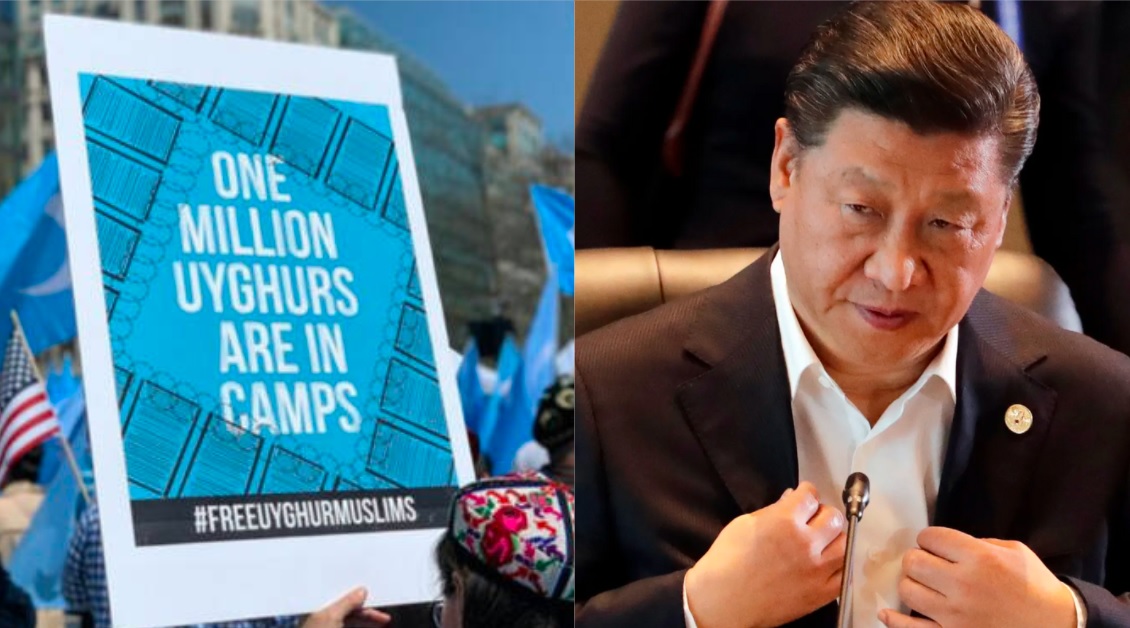
Wang Yi’s speech focused on providing reasoning for Chinese action in Xinjiang. The speech of the Chinese Foreign Minister must be the biggest spectacle of Irony as he was trying to sell the Chinese definition of human rights at the UN Human Rights Council. As the international criticism has mounted, China has moved away from denying the atrocities taking place in Xinjiang outrightly but has moved to change the definition, which is considerate to CCP’s actions in Xinjiang.

Also Read

The 1,000-Mile Kill Shot: America’s New Missile Plan Puts China in Its Sights

Orca XLUUV Completes 1,852km Uncrewed Patrol Across the Pacific

Cheques and balances: the Beijing-linked money quietly flowing through America’s universities

If we scrutinise the speech, Wang Yi’s proposition of “people-centred” human rights is utilitarian. Meaning it includes “people’s sense of gains, happiness and security” as “the fundamental pursuit of human rights.” In this formulation, economic prosperity tops the list, and the concept of happiness which has no internationally recognised definition vis a vis human rights replaces more concrete markers like racial and gender equality or freedom of religion, and security. These are deliberate attempts by the Chinese Communist Party to change the whole definition of human rights.

Many countries have started to launch an offensive against China independently. Following the lead of previous US President Donald Trump, Britain’s foreign secretary Dominic Raab on Monday (Feb 22) denounced torture, forced labour and sterilisations that he said were taking place against Muslim Uyghurs on an “industrial scale” in China’s Xinjiang region.

The British foreign secretary, instead of using the term genocide, used the definition of genocide. This was followed in quick succession by Canada as it heightened its diplomatic offensive on the Chinese Communist Party. Canadian lawmakers have overwhelmingly approved a non-binding motion, accusing China of committing genocide against its Muslim minorities in the western region of Xinjiang. The motion, which recognises “that a genocide is currently being carried out by the People’s Republic of China against Uyghurs and other Turkic Muslims,” also calls on the International Olympic Committee to move the 2022 Winter Olympic Games from Beijing.

Read more: Joe Biden may be tempted to drop the Uyghur Genocide tag on China, but the world is still following Trump’s lead.

An article published on The Diplomat inferred that Wang Yi’s full enumeration of human rights can be understood in the order in which these concepts of “peace, development, equity, justice, democracy and freedom” are enumerated. The order here with peace and (economic) development at the top and democracy and freedom at the bottom are particularly notable. In this context, Wang Yi held up China’s claim to have eradicated extreme poverty in 2020 as “a milestone in our human rights achievement.”

China hopes to change the goalposts by supporting a redefinition of human rights to encompass economic and physical security, such that it can properly contend for the moral high ground of human rights defence with western democracies (and particularly the United States). “Human rights are not a monopoly by a small number of nations,” as Wang Yi put it in his speech, “Even less should they be used as a tool to pressure other nations and interfere in their internal affairs.”

China is finding it more and more difficult to defend its actions in the international community. In such a scenario, it is trying to make use of any method which may seem plausible. In the latest act of desperation, China is trying to change the definition of human rights as well as change the narrative surrounding the gross human rights violations with its ethnic Uyghur minorities.

Tags: ChinaShort takesUNHRCxinjiang
ShareTweetSend
Abhyoday Sisodia

Abhyoday Sisodia

M.A. in East Asian Studies, Department of East Asian Studies, the University of Delhi, India. Deep interest in geopolitics, foreign policy and world affairs.

Also Read

President Donald Trump signs an order in the foreground as Lake Ontario and the Toronto skyline appear behind him, with American and Canadian flags symbolising the escalating dispute over the lake's name and US-Canada relations.

Trump Renames Lake Ontario ‘Lake America’, and Google Has Already Redrawn the Map

August 31, 2026
A dramatic nighttime scene showing a US warship facing a large oil terminal engulfed in flames, with explosions, thick black smoke, fighter jets, and missiles streaking across the sky above the sea after strikes

Trump Posts AI Video of Kharg ‘Blown to Smithereens’ as US and Iran Trade Fire

August 31, 2026
A dramatic scene showing the flags of Turkey, Saudi Arabia and Pakistan above military aircraft, soldiers and air-defence systems, as a large Saudi-style oil refinery burns in the background. Three leaders stand in the foreground watching the unfolding crisis.

Turkey, Saudi Arabia and Pakistan Open First Defence Pact Talks as Saudi Refineries Burn

August 31, 2026
A nighttime protest riot in Jakarta, with demonstrators facing riot police amid tear gas and water cannon spray as a guard post and motorcycles burn nearby.

Fire, Tear Gas, and 322 Detained: Jakarta’s Anti-Corruption Protest Ends in a Riot

August 31, 2026
A dramatic geopolitical oil scene showing an oil refinery and pumpjack, the US Capitol, Venezuelan mountains and flag imagery, and a large oil tanker at sea, symbolising the US–Venezuela oil deal.

Trump’s Venezuela Oil Deal: 65 Billion Barrels, a 100-Year Lease, and a Country Divided

August 30, 2026
A hypersonic glide vehicle streaks through the upper atmosphere as it launches a missile toward a US AWACS radar aircraft, with tanker and support aircraft flying in the distance above dramatic cloud cover.

China’s Hypersonic Gliders Can Now Shoot at Aircraft — And America’s Radar Planes Are the Target

August 25, 2026
Youtube Twitter Facebook
TFIGlobalTFIGlobal
Right Arm. Round the World. FAST.
  • About Us
  • Contact Us
  • TFIPOST – English
  • TFIPOST हिन्दी
  • Careers
  • Brand Partnerships
  • Terms of use
  • Privacy Policy

©2026 - TFI MEDIA PRIVATE LIMITED

Welcome Back!

Login to your account below

Forgotten Password?

Retrieve your password

Please enter your username or email address to reset your password.

Log In

Add New Playlist

No Result
View All Result
  • Indo-Pacific
  • Americas
  • Canada
  • Indian Subcontinent
  • West Asia
  • Europe
  • Africa
  • The Caribbean
TFIPOST English
TFIPOST हिन्दी

©2026 - TFI MEDIA PRIVATE LIMITED

This website uses cookies. By continuing to use this website you are giving consent to cookies being used. View our Privacy and Cookie Policy.