TFIGlobal
TFIGlobal
TFIPOST English
TFIPOST हिन्दी
No Result
View All Result
  • Indo-Pacific
  • Americas
  • Canada
  • Indian Subcontinent
  • West Asia
  • Europe
  • Africa
  • The Caribbean
TFIGlobal
  • Indo-Pacific
  • Americas
  • Canada
  • Indian Subcontinent
  • West Asia
  • Europe
  • Africa
  • The Caribbean
No Result
View All Result
TFIGlobal
TFIGlobal
No Result
View All Result
  • Indo-Pacific
  • Americas
  • Canada
  • Indian Subcontinent
  • West Asia
  • Europe
  • Africa
  • The Caribbean

China is really asking for it. Now it has decided to gun down any vessel in the international waters

Akshay Narang by Akshay Narang
April 30, 2021
in Indo-Pacific
China, PLA, South China Sea
Share on FacebookShare on X

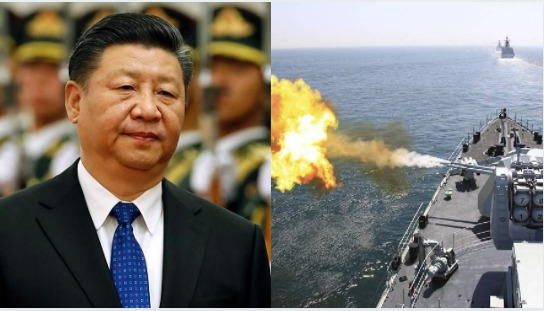
China’s maritime aggression shows no signs of abatement. Now, Beijing is looking to harass its enemies in the South China Sea and the East China Sea with new legislation. On Thursday, the Communist nation passed a legislation to strengthen the power of its maritime safety authorities.

China has amended its Maritime Traffic Safety Law to empower the maritime safety agency, under the control of the Transportation Ministry. From September 1, the agency will be enabled to order foreign vessels to leave from waters claimed by China, in case it feels such vessels are a security threat. The agency will also be allowed to block overseas ships from intruding waters claimed by China if they do not fall under innocent passage in international law.

Also Read

One Man, 14 Break-Ins: Anthropic’s Report on How AI Became a Weapon for Hire

The 1,000-Mile Kill Shot: America’s New Missile Plan Puts China in Its Sights

Dead in the Water: USS Benfold Adrift for Four Days in the South China Sea

The latest Amendment is a very dangerous pattern in the Chinese context. China’s ‘territorial waters’ are not limited to the extent defined by the UN Convention on the Law of the Sea (UNCLOS), rather Beijing claims almost the entire South China Sea region under its nine dash-line theory. Also, China claims sovereignty over Japan’s Senkaku Islands and the waters surrounding it.

So, the real concern is how China is going to use, or in fact, misuse the latest Amendment to its Maritime Traffic Safety Law. Kyodo News, a Japanese media publication, reported, “China boosts power of maritime authorities, fanning tensions.”

China, PLA, South China Sea
[PC:GlobalRiskInsights]
Kyodo News reported China’s latest legislative move in light of the ongoing Sino-Japanese tussles near the Senkaku Islands. Beijing keeps sending official vessels that intrude into Japanese waters near the Senkaku Islands in the East China Sea. China’s officials, and even its Foreign Minister Wang Yi, have sought to lay claim on the Japanese Islands.

In the South China Sea, tensions have been growing near disputed features like the Whitsun Reef, Spratly Islands and Scarborough Shoal. China claims sovereignty over all these features in dispute with other nations namely Malaysia, the Philippines, Brunei, Taiwan and Vietnam.

In fact, Chinese navy and Coast Guard vessels often try to intimidate fishing boats and other vessels of rival claimants in the South China Sea region. Of late, China has been using maritime militias to flex its muscles in the region and Beijing casually passes off such maritime militias as fishing vessels.

Also, the Chinese legislative revisions come at a time when the Southeast Asian nations led by Vietnam are pushing back against an annual, unilateral ban on fishing imposed by China in the South China Sea region. China has been imposing such bans since 1995, and at least from 2001, it has also started harrying overseas fishing vessels that defy Beijing’s illegal ban.

Read More: China’s fishing boat terror in South China Sea comes to a halt as Vietnam responds in kind

With the passage of the Amendment arming Chinese maritime authorities with extensive powers, Beijing’s maritime disputes are all set to escalate. Clashes will be particularly inevitable when an expansionist China tries to block/ order out overseas ships from contested regions.

And then in February, China had passed another controversial law allowing its Coast Guard to open fire against foreign ships. Such legislations are increasing the imminent risk of a military clash in the Western Pacific, which can easily spiral into an encounter involving multiple Navies, Coast Guards and militias.

It actually seems that imprudent planners in Beijing are asking for a bloody military clash, which could end up doing more harm than good to the paper Dragon.


Tags: ChinaPLAShort takesSouth China Sea
ShareTweetSend
Akshay Narang

Akshay Narang

Patriot, Political Analyst, International Relations expert

Also Read

A dramatic cyberwarfare illustration showing a shadowy hacker from China launching digital attacks from red-lit servers toward major US government, scientific and industrial facilities, with blue shields marking defended targets and red broken locks indicating compromised systems.

From Victims to Targets: US Quietly Edits Its Chinese Hacking Claims

August 30, 2026
A hooded hacker sits before multiple computer screens as images of the U.S. Capitol, NASA, federal institutions, servers and network data surround them, symbolising a Chinese-linked cyber-espionage hacking campaign targeting American government agencies.

Eight Years in the Dark: Chinese Hacking Campaign Reached NASA, the Fed, and the US Senate

August 27, 2026
A hypersonic glide vehicle streaks through the upper atmosphere as it launches a missile toward a US AWACS radar aircraft, with tanker and support aircraft flying in the distance above dramatic cloud cover.

China’s Hypersonic Gliders Can Now Shoot at Aircraft — And America’s Radar Planes Are the Target

August 25, 2026
A dramatic collage showing Hui Ka Yan in the foreground, Evergrande’s rise symbolised by a luxury skyscraper, car and stacks of cash, and China’s property crisis represented by unfinished buildings, rubble, displaced families and a prison cell. Evergrande founder life sentence

From China’s Richest Man to a Prison Cell: The Evergrande Founder’s Life Sentence Explained

August 24, 2026
A container ship sails through icy Arctic waters toward a snow-covered coastal port, surrounded by floating sea ice and towering mountains under a dramatic sunset.

A Ship Sails North, and the China-Russia Arctic Shipping Route Comes Alive

August 22, 2026
Conceptual illustration of Chinese data infrastructure feeding into a central artificial intelligence system, with glowing data streams spreading toward chatbots and users worldwide, symbolising China’s growing influence over AI training data and information ecosystems.

Explainer: How China Plans to Shape What the World’s AI Knows

August 22, 2026
Youtube Twitter Facebook
TFIGlobalTFIGlobal
Right Arm. Round the World. FAST.
  • About Us
  • Contact Us
  • TFIPOST – English
  • TFIPOST हिन्दी
  • Careers
  • Brand Partnerships
  • Terms of use
  • Privacy Policy

©2026 - TFI MEDIA PRIVATE LIMITED

Welcome Back!

Login to your account below

Forgotten Password?

Retrieve your password

Please enter your username or email address to reset your password.

Log In

Add New Playlist

No Result
View All Result
  • Indo-Pacific
  • Americas
  • Canada
  • Indian Subcontinent
  • West Asia
  • Europe
  • Africa
  • The Caribbean
TFIPOST English
TFIPOST हिन्दी

©2026 - TFI MEDIA PRIVATE LIMITED

This website uses cookies. By continuing to use this website you are giving consent to cookies being used. View our Privacy and Cookie Policy.