TFIGlobal
TFIGlobal
TFIPOST English
TFIPOST हिन्दी
No Result
View All Result
  • Indo-Pacific
  • Americas
  • Canada
  • Indian Subcontinent
  • West Asia
  • Europe
  • Africa
  • The Caribbean
TFIGlobal
  • Indo-Pacific
  • Americas
  • Canada
  • Indian Subcontinent
  • West Asia
  • Europe
  • Africa
  • The Caribbean
No Result
View All Result
TFIGlobal
TFIGlobal
No Result
View All Result
  • Indo-Pacific
  • Americas
  • Canada
  • Indian Subcontinent
  • West Asia
  • Europe
  • Africa
  • The Caribbean

With Chinese belligerence at its peak, it’s time for Australia to go nuclear

Akshay Narang by Akshay Narang
May 14, 2021
in Indo-Pacific
China, Australia, Indo-Pacific, Nuclear weapons,

[PC:DailyAdvent]

Share on FacebookShare on X

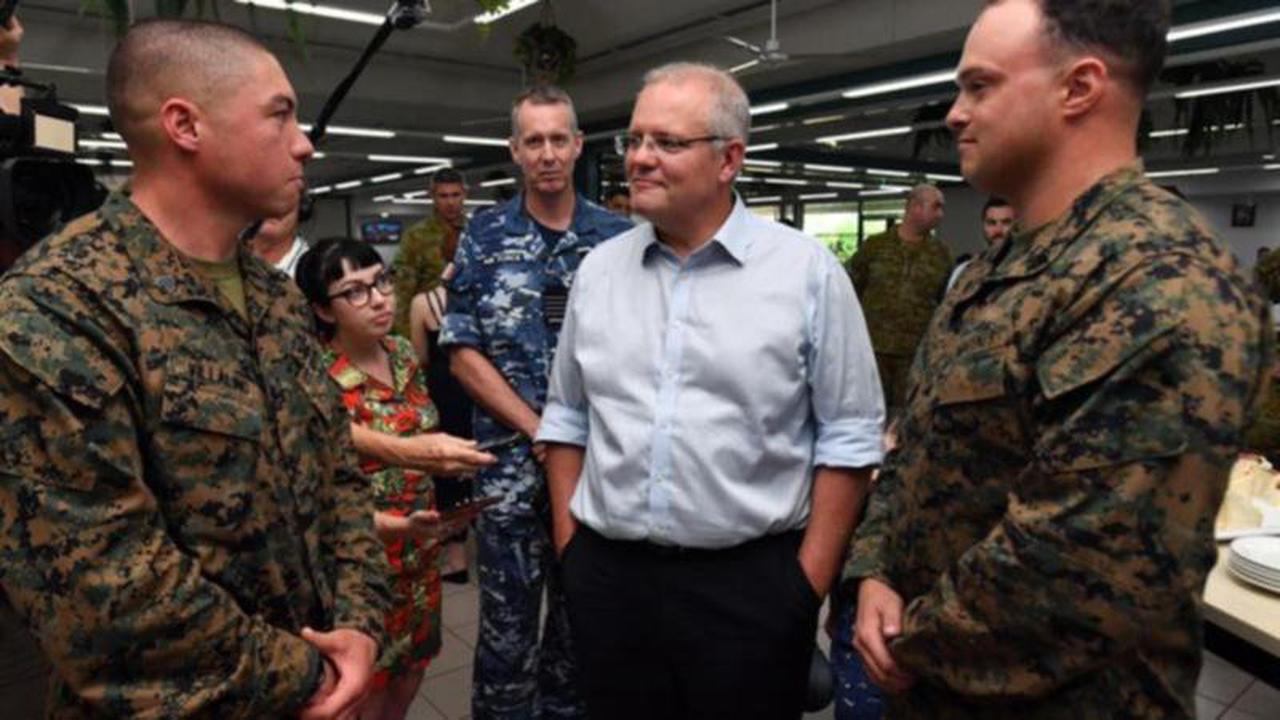
Australia started an ideological battle with China last year. Canberra started by demanding an international probe into the origins of the Wuhan virus, condemning the violation of human rights in Xinjiang and Hong Kong, and also standing up for the island nation of Taiwan. But the Sino-Australia battle is no longer merely ideological. It is fast turning into a strategic, economic and geopolitical face-off which could easily lead to the militarization of the bilateral tensions.

China is belligerent. It does not care for world peace and attacks anyone who defies its hawkish policies. Australia is no exception. China is already accused of fighting grey zone warfare with Australia. Hardline Chinese Communist thinkers even talk about bombing Australia. So, the latest turn of events carry an important message for Canberra- go nuclear before Chinese belligerence spirals out of control. In fact, there are growing calls within Australia to develop nuclear deterrence against Chinese belligerence.

Also Read

The 1,000-Mile Kill Shot: America’s New Missile Plan Puts China in Its Sights

Dead in the Water: USS Benfold Adrift for Four Days in the South China Sea

Orca XLUUV Completes 1,852km Uncrewed Patrol Across the Pacific

Earlier this month, Hu Xijin, editor in chief of CCP mouthpiece Global Times wrote, “I suggest China make a plan to impose retaliatory punishment against Australia once it militarily interferes in the cross-Straits situation.”
Reflecting his violent mentality, the Global Times editor in chief added, “The plan should include long-range strikes on the military facilities and relevant key facilities on Australian soil if it really sends its troops to China’s offshore areas and combats against the PLA.”

China, Australia, Indo-Pacific, Nuclear weapons,
[PC:AsiaTimes]
Hu concluded, “If they (Australia) are bold enough to coordinate with the US to militarily interfere in the Taiwan question and send troops to the Taiwan Straits to wage war with the PLA, they must know what disasters they would cause to their country. China has a strong production capability, including producing additional long-range missiles with conventional warheads that target military objectives in Australia when the situation becomes highly tense.”

Citing Hu’s threat, Anders Corr, an academician from Yale and Harvard suggested that the United States and other allies should “immediately support Australia in obtaining an independent submarine-based nuclear deterrent so that Australia can join the countries such as the United States, France, Britain, and India as powerful global defenders of freedom and democracy.”

Corr also spoke about the limited time period within which Australia will have to go nuclear. Writing in The Epoch Times, he said, “Australia has a limited window of opportunity in which to go nuclear, after which China’s rising power and regional hegemony will make an independent nuclear Australia impossible.”

According to Corr, the “limited window of opportunity” could be as short as 5 or 10 years.

Academic opinion in Australia is slowly mobilising around the need to develop nuclear weapons in order to tackle the Chinese threat. In his book, “How to Defend Australia”, Hugh White, a professor of strategic studies at the Australian National University, argued that developing nuclear weapons has become inevitable.

Read More: Australia laid a trap for China and China fell into it. And now it stands exposed

White added, “The strategic costs of forgoing nuclear weapons in the new Asia could be much greater than they have been until now.”

Canberra has questioned Chinese belligerence, which is why Australia now finds itself at the forefront of Chinese aggression. Bangkok Post quoted Malcolm Davis, a military planner as saying, “Far from being in a strategic backwater, Australia is very much now a state in the front line.”

China is a bully one cannot reason with. If the paper Dragon acquires asymmetric firepower, it will simply seek to undermine its ideological rivals. And in the case of Australia, China is already threatening to use its lethal military power against Canberra. Ultimately, Australia will have to understand that it cannot fight Beijing without ramping up military strength. If Canberra has to handle China, there is only one option- go nuclear.


Tags: AustraliaChinaIndo-PacificNuclear weaponsShort takes
ShareTweetSend
Akshay Narang

Akshay Narang

Patriot, Political Analyst, International Relations expert

Also Read

A dramatic cyberwarfare illustration showing a shadowy hacker from China launching digital attacks from red-lit servers toward major US government, scientific and industrial facilities, with blue shields marking defended targets and red broken locks indicating compromised systems.

From Victims to Targets: US Quietly Edits Its Chinese Hacking Claims

August 30, 2026
A hooded hacker sits before multiple computer screens as images of the U.S. Capitol, NASA, federal institutions, servers and network data surround them, symbolising a Chinese-linked cyber-espionage hacking campaign targeting American government agencies.

Eight Years in the Dark: Chinese Hacking Campaign Reached NASA, the Fed, and the US Senate

August 27, 2026
A hypersonic glide vehicle streaks through the upper atmosphere as it launches a missile toward a US AWACS radar aircraft, with tanker and support aircraft flying in the distance above dramatic cloud cover.

China’s Hypersonic Gliders Can Now Shoot at Aircraft — And America’s Radar Planes Are the Target

August 25, 2026
A dramatic collage showing Hui Ka Yan in the foreground, Evergrande’s rise symbolised by a luxury skyscraper, car and stacks of cash, and China’s property crisis represented by unfinished buildings, rubble, displaced families and a prison cell. Evergrande founder life sentence

From China’s Richest Man to a Prison Cell: The Evergrande Founder’s Life Sentence Explained

August 24, 2026
A container ship sails through icy Arctic waters toward a snow-covered coastal port, surrounded by floating sea ice and towering mountains under a dramatic sunset.

A Ship Sails North, and the China-Russia Arctic Shipping Route Comes Alive

August 22, 2026
Conceptual illustration of Chinese data infrastructure feeding into a central artificial intelligence system, with glowing data streams spreading toward chatbots and users worldwide, symbolising China’s growing influence over AI training data and information ecosystems.

Explainer: How China Plans to Shape What the World’s AI Knows

August 22, 2026
Youtube Twitter Facebook
TFIGlobalTFIGlobal
Right Arm. Round the World. FAST.
  • About Us
  • Contact Us
  • TFIPOST – English
  • TFIPOST हिन्दी
  • Careers
  • Brand Partnerships
  • Terms of use
  • Privacy Policy

©2026 - TFI MEDIA PRIVATE LIMITED

Welcome Back!

Login to your account below

Forgotten Password?

Retrieve your password

Please enter your username or email address to reset your password.

Log In

Add New Playlist

No Result
View All Result
  • Indo-Pacific
  • Americas
  • Canada
  • Indian Subcontinent
  • West Asia
  • Europe
  • Africa
  • The Caribbean
TFIPOST English
TFIPOST हिन्दी

©2026 - TFI MEDIA PRIVATE LIMITED

This website uses cookies. By continuing to use this website you are giving consent to cookies being used. View our Privacy and Cookie Policy.