TFIGlobal
TFIGlobal
TFIPOST English
TFIPOST हिन्दी
No Result
View All Result
  • Indo-Pacific
  • Americas
  • Canada
  • Indian Subcontinent
  • West Asia
  • Europe
  • Africa
  • The Caribbean
TFIGlobal
  • Indo-Pacific
  • Americas
  • Canada
  • Indian Subcontinent
  • West Asia
  • Europe
  • Africa
  • The Caribbean
No Result
View All Result
TFIGlobal
TFIGlobal
No Result
View All Result
  • Indo-Pacific
  • Americas
  • Canada
  • Indian Subcontinent
  • West Asia
  • Europe
  • Africa
  • The Caribbean

Madagascar’s pro-Ukraine foreign minister loses job

Bishnu Rathi by Bishnu Rathi
October 21, 2022
in Africa, Geopolitics
Madagascar’s pro-Ukraine foreign minister loses job
Share on FacebookShare on X

Richard Randriamandranto news: The Russo-Ukrainian war has had a profound impact on the world’s supply chains for essential minerals, food, oil, and gas. Together, Russia and Ukraine—often referred to as the breadbasket of Europe—export 29% of the world’s wheat, 80% of its sunflower oil, and 40% of its barley. Before the war, Russia supplied roughly 10% of the world’s oil, and only last year, 40% of Europe’s gas came from Russia.

While Russians and Ukrainians continue to be the main victims of the conflict, there have also been significant indirect consequences on the world’s food and energy systems. However, the unrest is not limited to Europe. Indeed, the war has wreaked havoc on a different continent, unleashing a “three-headed dragon” of food, energy, and financial shortages across Africa, further endangering the lives of those who are already at peril and placing dozens of nations at risk of default.

Also Read

African Country ‘Burkina Faso’ Ends Diplomatic Relations with France amid Deepening Anti-West Shift

Russia Accuses Macron of Secret Assassination Plot in Africa After Saif al-Islam Gaddafi’s Death

 Japan-Africa summit: After China, Russia, the USA, Japan entered Africa with more lucrative offers, “4 Japanese Cities were designated as ‘hometowns’ for migrants from Nigeria, Tanzania, Ghana, and Mozambique”

During the war, many African countries adopted a prudent geopolitical strategy. Some sided with the West, while others remained neutral or clandestinely supported Russia. There emerged novel, often inflexible geopolitical stances, with African countries unwilling to be told who to side with in the conflict.

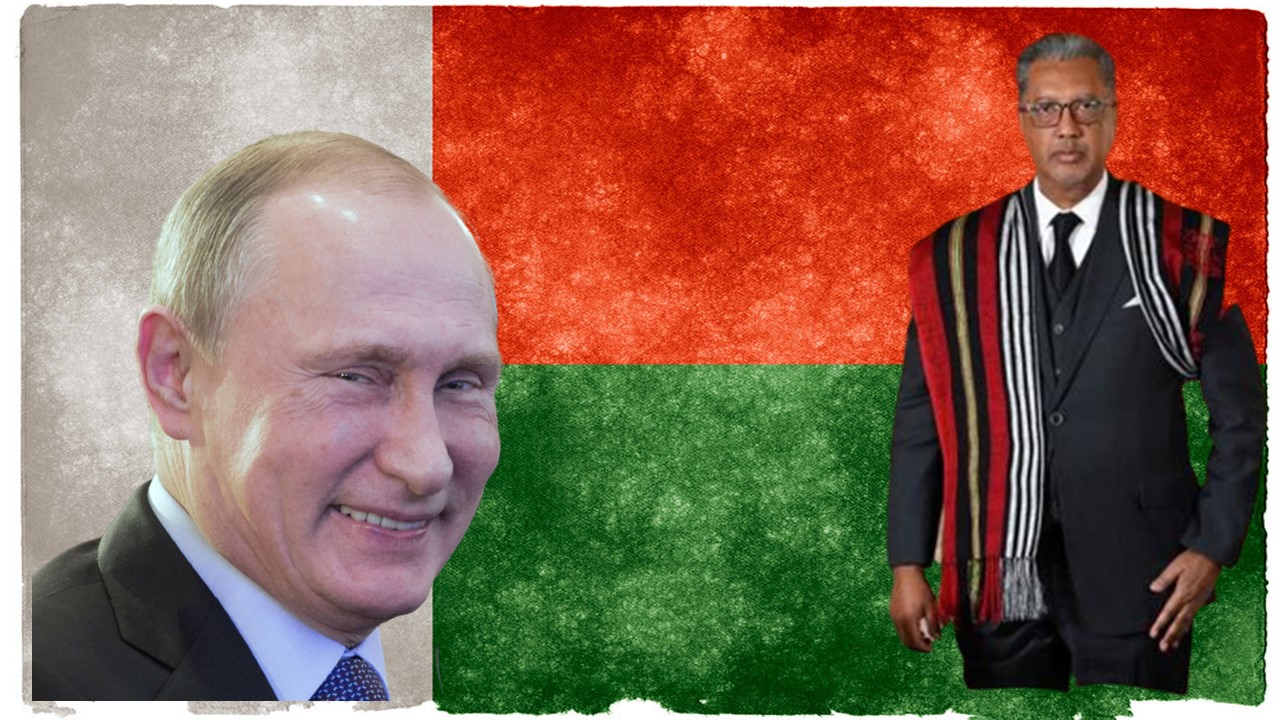
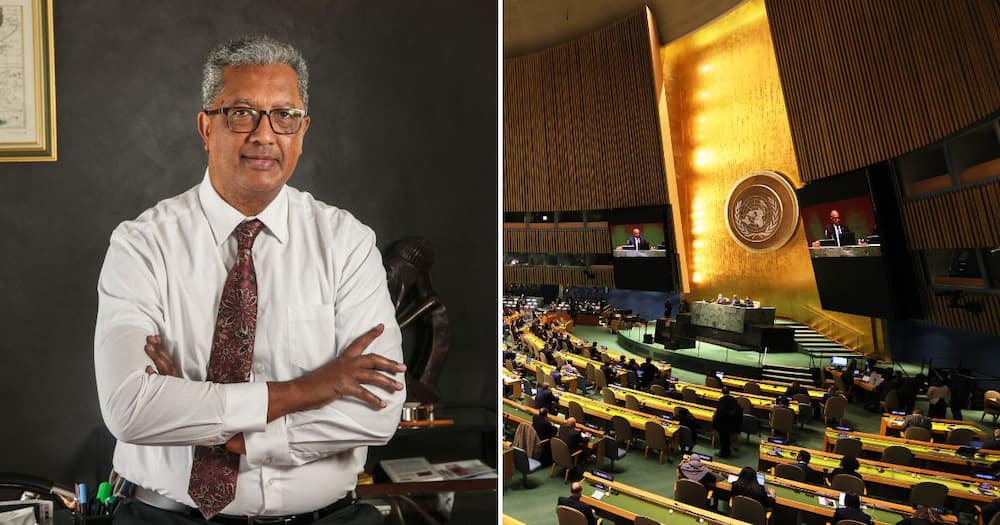
The recent incident in Madagascar exemplifies Africa’s growing ossification of foreign policy. Madagascar’s President Andry Rajoelina recently fired his foreign minister, Richard Randriamandranto, without explanation, just a week after Madagascar voted at the United Nations to condemn Russia’s “illegal annexations” of Ukrainian territory.
(Source: Briefly.co.za)

You see, Madagascar has adopted a non-aligned policy in response to Russia’s invasion of Ukraine, despite invitations from the European Union and the United States to condemn Russia. However, on October 12, Madagascar, along with 142 other countries, condemned Russia’s “illegal annexations” in Ukraine, reversing the country’s policy since the beginning of the war.

The public TVM channel broadcast reported recently accusing the foreign minister Richard Randriamandranto of making this decision without consulting the head of state or the prime minister.

Many commentators regard the Russo-Ukrainian War as a watershed moment in international affairs that annihilated the post-Cold War international order. The conflict is also significant in the Global South, resurrecting non-alignment and independent foreign policy as geopolitical tensions between the West and Russia rise.

In addition to demonstrating Europe’s vulnerability in the absence of Russian oil and gas, the war has revealed that many countries in the Global South, particularly Africa, prefer not to support the West despite having capitalist economies, democratic political systems, and values that are nearly identical to those promoted by the West.

However, to say that all African countries have overwhelmingly supported Russia would be an exaggeration. Perhaps the best way to characterise the changing equations of African foreign policy is the growing independence and self-assertiveness that countries are frequently demonstrating. Africa is avoiding being caught in the crossfire of great power politics. But for how long the contemporary rigidity that encompasses many African countries’ foreign policies, as seen in the case of Madagascar, will serve its interests remains to be seen.

Tags: AfricaMadagascar
ShareTweetSend
Bishnu Rathi

Bishnu Rathi

Bishnu Rathi, Associate Editor (Global Desk, English) at TFI Media. Undergrad student from Shaheed Bhagat Singh College, Delhi University. I am a geopolitical aficionado with an adherence to Mearsheimerian Realism.

Also Read

President Donald Trump signs an order in the foreground as Lake Ontario and the Toronto skyline appear behind him, with American and Canadian flags symbolising the escalating dispute over the lake's name and US-Canada relations.

Trump Renames Lake Ontario ‘Lake America’, and Google Has Already Redrawn the Map

August 31, 2026
A dramatic nighttime scene showing a US warship facing a large oil terminal engulfed in flames, with explosions, thick black smoke, fighter jets, and missiles streaking across the sky above the sea after strikes

Trump Posts AI Video of Kharg ‘Blown to Smithereens’ as US and Iran Trade Fire

August 31, 2026
A dramatic scene showing the flags of Turkey, Saudi Arabia and Pakistan above military aircraft, soldiers and air-defence systems, as a large Saudi-style oil refinery burns in the background. Three leaders stand in the foreground watching the unfolding crisis.

Turkey, Saudi Arabia and Pakistan Open First Defence Pact Talks as Saudi Refineries Burn

August 31, 2026
A nighttime protest riot in Jakarta, with demonstrators facing riot police amid tear gas and water cannon spray as a guard post and motorcycles burn nearby.

Fire, Tear Gas, and 322 Detained: Jakarta’s Anti-Corruption Protest Ends in a Riot

August 31, 2026
A dramatic geopolitical oil scene showing an oil refinery and pumpjack, the US Capitol, Venezuelan mountains and flag imagery, and a large oil tanker at sea, symbolising the US–Venezuela oil deal.

Trump’s Venezuela Oil Deal: 65 Billion Barrels, a 100-Year Lease, and a Country Divided

August 30, 2026
A hypersonic glide vehicle streaks through the upper atmosphere as it launches a missile toward a US AWACS radar aircraft, with tanker and support aircraft flying in the distance above dramatic cloud cover.

China’s Hypersonic Gliders Can Now Shoot at Aircraft — And America’s Radar Planes Are the Target

August 25, 2026
Youtube Twitter Facebook
TFIGlobalTFIGlobal
Right Arm. Round the World. FAST.
  • About Us
  • Contact Us
  • TFIPOST – English
  • TFIPOST हिन्दी
  • Careers
  • Brand Partnerships
  • Terms of use
  • Privacy Policy

©2026 - TFI MEDIA PRIVATE LIMITED

Welcome Back!

Login to your account below

Forgotten Password?

Retrieve your password

Please enter your username or email address to reset your password.

Log In

Add New Playlist

No Result
View All Result
  • Indo-Pacific
  • Americas
  • Canada
  • Indian Subcontinent
  • West Asia
  • Europe
  • Africa
  • The Caribbean
TFIPOST English
TFIPOST हिन्दी

©2026 - TFI MEDIA PRIVATE LIMITED

This website uses cookies. By continuing to use this website you are giving consent to cookies being used. View our Privacy and Cookie Policy.