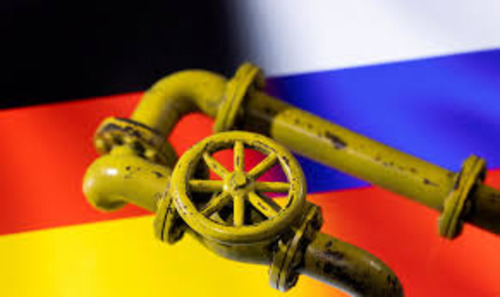
The decline in Germany’s industrial prowess is increasingly evident, with the loss of affordable Russian natural gas exacerbating the challenges faced by manufacturers. As reported by Bloomberg News, the nation’s status as an industrial superpower is undergoing a notable transformation, signaling the culmination of a decline that has been unfolding since 2017.
The recent cessation of Russian gas imports in 2022, a consequence of punitive measures against Moscow due to the Ukraine conflict, has delivered a significant blow to Germany’s manufacturing sector. The impact is palpable, leading to a hastened deindustrialization marked by factory closures and the relocation of production lines abroad. This shift is driven by the surge in energy costs, making it increasingly difficult for German manufacturers to maintain competitiveness.
Join us on Telegram: https://t.me/tfiglobal
The ramifications extend beyond mere economic shifts, as century-old factories are forced to shutter their operations. Simultaneously, companies are compelled to seek solace in countries where production costs are more favorable.
“There’s not a lot of hope, if I’m honest,” Stefan Klebert, CEO at machinery maker GEA Group AG, told the outlet. “I am really uncertain that we can halt this trend. Many things would have to change very quickly.”
According to a survey conducted in September by the Federation of German Industries, the primary motive for relocating investments abroad is rooted in apprehensions regarding energy security and associated costs. Among the sectors significantly affected by the discontinuation of Russian gas, chemical manufacturers stand out prominently. Major players such as BASF SE, the largest chemical producer in Europe, and Lanxess AG, are responding to this challenge by implementing substantial job cuts.
Additionally, the repercussions of increased energy costs are reverberating across diverse industries. Notably, French tire maker Michelin and its American counterpart Goodyear are either closing or downsizing their facilities in Germany. Maria Rottger, the regional chief for Michelin, highlighted the prohibitive nature of costs for German exporters, pointing out the challenges they face in achieving thriving operations.
Read More: A one German publication is turning Germany into a land of chaos
“Despite the motivation of our employees, we have arrived at a point where we can’t export truck tires from Germany at competitive prices. If Germany can’t export competitively in the international context, the country loses one of its biggest strengths.”
Finance Minister Christian Lindner asserted during an event in Frankfurt, that Germany’s economic challenges are translating into a decline in prosperity. The nation’s incapacity to foster economic growth is stressed by Lindner, who concurrently serves as the leader of the Free Democratic Party in Germany.
“We are no longer competitive,” Linder said. “We are getting poorer because we have no growth. We are falling behind.”
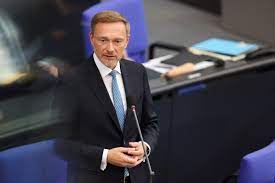
Finance Minister Christian Lindner’s remarks follow the recent release of a pessimistic outlook by the Organisation for Economic Cooperation and Development (OECD). The organization significantly reduced its growth forecast for Germany this year, now projecting a mere 0.3%, which is notably lower than the 2.9% forecasted for the G20 and even falls below the 0.6% anticipated for the Eurozone.
Adding to the economic concerns, upcoming industrial production data expected later this week is anticipated to reflect the lowest levels since 2008. This period marks a significant downturn for German industry, reminiscent of the repercussions experienced in the aftermath of the global financial crisis.
“It is inconceivable to me that the government does not draw any conclusions from this analysis,” Linder said.
Citing the interconnected nature of Germany’s societal commitments, Finance Minister Christian Lindner foregrounded that the fulfillment of social obligations, encompassing aspects such as the maintenance of the current state of social security, environmental initiatives, and the imperative to augment expenditures on external security, is contingent upon bolstering economic prosperity.
Read More: In the next 10 yrs. both Germany and France can LEAVE the EU
According to official preliminary data released in January by Destatis, the country experienced a decline in price-adjusted GDP by 0.3% in the preceding year. Simultaneously, industrial output, excluding construction, witnessed a contraction of 2%. This decline is primarily attributed to a substantial reduction in production within the energy supply sector.
In the fourth quarter of the preceding year, the German economy witnessed a contraction. A study conducted by consulting firm Alvarez & Marsal revealed that 15% of German companies are currently facing distress, indicating the presence of weak balance sheets. Notably, this distress rate has seen an increase from the previous year’s level of 9%, positioning Germany with the highest distress rate in Europe, as reported by the firm.
Russian President Vladimir Putin, in December, expressed the view that Western nations are jeopardizing their own interests by actively contributing to Russia’s collapse instead of pursuing mutually beneficial economic cooperation. Putin accused German leaders of harming their economy under U.S. pressure and criticized their tacit acceptance of the bombings of the Nord Stream pipelines, attributing them to the CIA.
Hence, Germany’s economy is grappling with significant challenges, primarily stemming from the cessation of affordable Russian natural gas imports. The punitive measures imposed due to the Ukraine conflict have led to a pronounced decline in the nation’s industrial prowess, prompting factory closures, the relocation of production lines abroad, and substantial job cuts in key sectors such as chemicals. The surge in energy costs is a major driver of this deindustrialization trend, impacting various industries beyond manufacturing leading to the downturn of Germany’s economy.