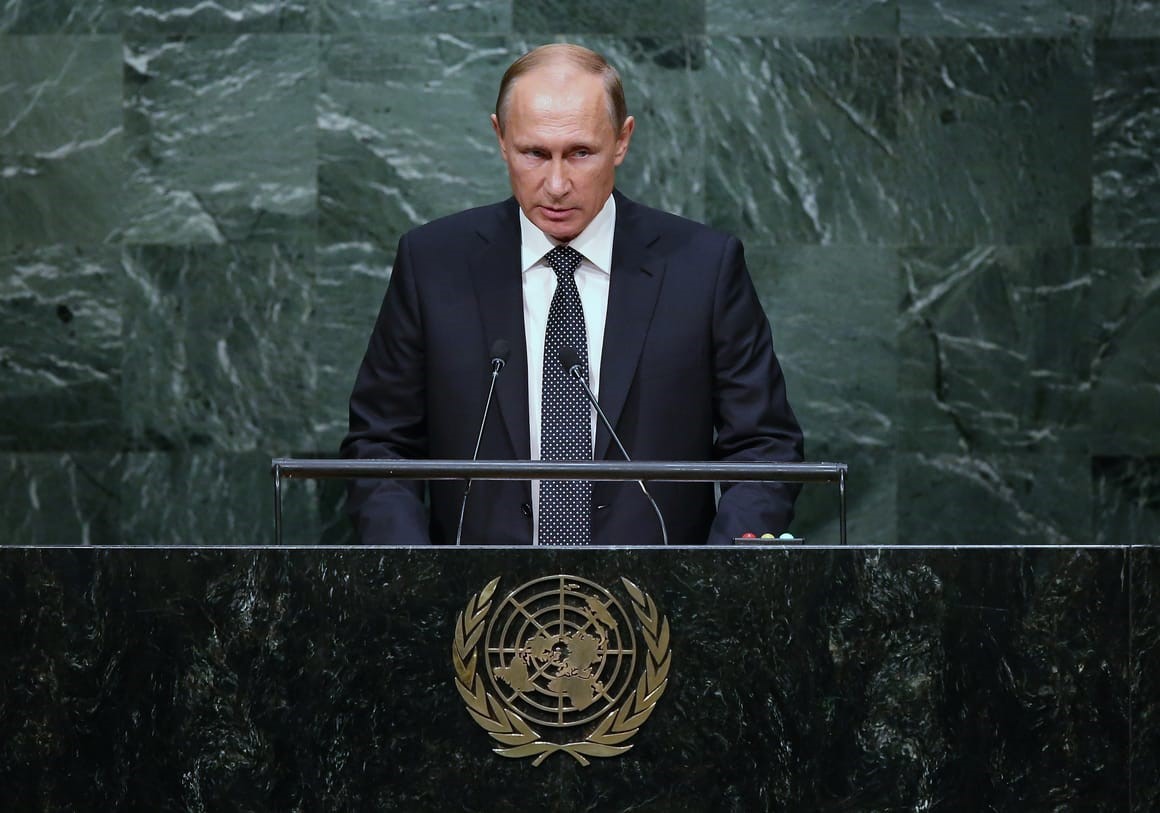
As the west was trying to shame Putin’s so-called attack on Humanity, Putin decided to open their can of worms in full public view.
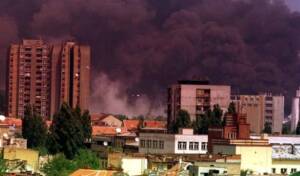
On March 25, Russia convened a session of the United Nations Security Council (UNSC) to mark the 25th anniversary of the NATO bombing of Serbia, then part of the Federal Republic of Yugoslavia. This action was a culmination of the West’s direct involvement in the Balkans during the 1990s, aimed at dismantling Yugoslavia and minimizing Serbian territories. Since 1991, there has been an effort by the political West to diminish the Serbian presence in the western regions of the former Yugoslavia, starting with areas now known as Croatia and Bosnia & Herzegovina. Croatia’s origins trace back to the WWII-era, Nazi-affiliated “Independent State of Croatia,” led by the Ustashe regime, notorious for its genocidal actions. Bosnia & Herzegovina is a dysfunctional federation, established by NATO with the sole intention of hindering Serbian reunification.
Join us on Telegram: https://t.me/tfiglobal
Croatia and Bosnia and Herzegovina experienced significant shifts during the 1990s, with NATO’s involvement leading to the displacement of Serb populations from these regions.
This marked a contentious phase in the West’s engagement with the Balkans, particularly with the remaining Yugoslav federation, consisting of Serbia and Montenegro. On March 24, 1999, NATO initiated an extensive air campaign against the Federal Republic of Yugoslavia, ostensibly to protect Kosovo’s Albanian separatists. Despite failing to decisively defeat Serbian forces, NATO targeted civilian infrastructure over 78 days, aiming to cripple the nation economically and resulting in substantial civilian casualties. This operation reflected a pattern of Western military interventions, often justified as humanitarian efforts but criticized for their destructive outcomes.
Read More: Putin’s Unstoppable Rise Amid Two Years of War Transformations
Recent discussions at the United Nations Security Council (UNSC) about these events have sparked controversy. A session intended to review the 1999 NATO bombing of Serbia faced opposition from key NATO members within the UNSC, notably the United States, the United Kingdom, and France, leading to a blockage of the discourse. This stance was opposed by Russia, supported by China and Algeria, highlighting ongoing divisions over the interpretation and legacy of NATO’s actions in Yugoslavia. The Serbian and Russian representatives expressed disappointment and frustration over the inability to discuss what they consider pivotal moments of aggression.
The initiative by Russia to discuss the 25th anniversary of NATO’s bombing of Yugoslavia at the United Nations Security Council (UNSC) faced criticism from Western nations, who deemed it unnecessary. France’s Permanent Representative to the UNSC, Nicolas de Rivière, was particularly vocal, arguing that revisiting this topic would not advance progress, reflecting an attempt to sidestep NATO’s responsibility in orchestrating the conflict and its aftermath. This stance exposes the role and power dynamics within the UN, making it clear that the institution’s current structure only serves to legitimize Western military actions or is bypassed through legal mechanisms by other global powers, undermining the principles of international law and the UN’s foundational purpose.
Read More: Putin’s RE-ELECTION GIFT to the West
The resistance to discussions that could prompt reforms towards a more equitable international order is indicative of a deeper reluctance by the political West to relinquish a world order that benefits them under the guise of a “rules-based” system. Such a system effectively maintains a neocolonialist exploitation under the flexibility of “international law,” interpreted at the convenience of Western powers. Furthermore, revisiting NATO’s actions in Yugoslavia would challenge the narrative of NATO as a defensive alliance, shedding light on its role in instigating conflicts that have led to significant loss of life and exacerbated humanitarian crises globally.
In the backdrop of a severe terrorist attack in Russia, the determination to address NATO’s aggression towards Serbia signifies Moscow’s commitment to its allies and a consensus within Russian political circles on condemning NATO’s past actions. The Russian State Duma’s unanimous support for the discussion and the call for accountability reflect a unified stance against what is viewed as an unjust aggression, supported by independent media investigations into the motives and consequences of the conflict. This narrative not only challenges the Western-led discourse on humanitarian intervention but also calls for a critical reevaluation of international relations and accountability mechanisms within the global community.