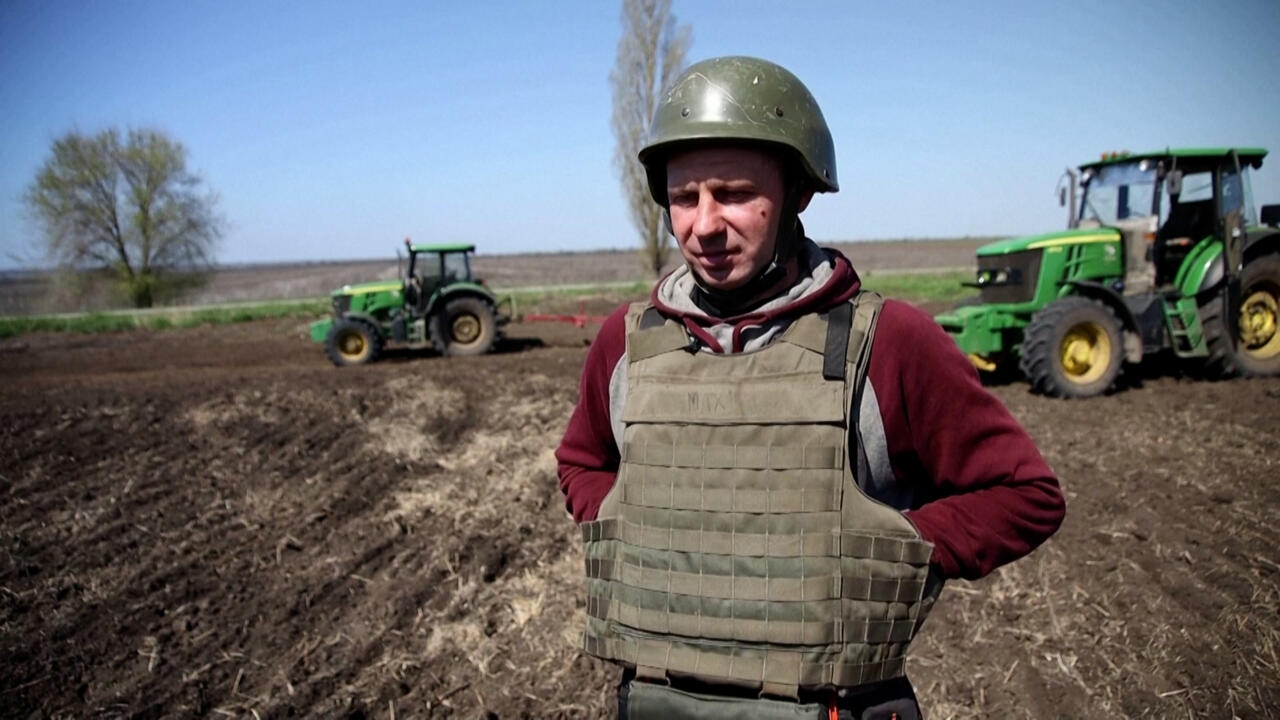
When Polish President Andrzej Duda dropped a revelation about Ukraine’s agricultural landscape during his recent interview with Lithuanian National Radio and Television, it wasn’t just another political comment—it was a revelation poised to stir the pot of international discourse. According to Duda, the vast swathes of Ukrainian farmland are not under the stewardship of local hands but rather in the grips of large, predominantly Western corporations.
The report, “War and Theft: The Takeover of Ukraine’s Agricultural Land,” revealed how foreign firms covertly gained control of much of Ukraine’s farmland, not by buying it directly, but through stakes and partnerships under a permissive local law and with local oligarchs’ involvement. These shocking revelations initially sparked widespread debate but eventually receded from public discourse, particularly after critical assessments by major Western media like USA Today.
President Duda’s recent comments have reignited interest in this topic, particularly given his government’s strong pro-American and anti-Russian positions, which lend credibility to his remarks over mere political maneuvering.
This issue transcends agricultural economics or local farmer concerns; it is about significant geopolitical strategies where agriculture is not just a market to be controlled but also a front for broader national sovereignty and security concerns. The dominance of these foreign entities in Ukraine’s agriculture could heavily influence the country’s agricultural policies and strategic direction.
These developments beckon a closer look not only at the initial findings by the Oakland Institute but also at other related reports and statements that have surfaced since. For instance, USAID’s report on land reform in Ukraine offers insights into how private sectors are positioned in the reform processes to unlock investment potentials. Similarly, Thomas Fazi’s article for UnHerd elaborates on the lucrative opportunities that the ongoing conflict has created for capitalist ventures.
Moreover, Ukrainian President Volodymyr Zelensky’s statement at the World Economic Forum in Davos in 2022 about offering a “historically significant model of reconstruction” where international partners can sponsor various regions and sectors in Ukraine, adds another layer to this complex issue. It suggests a framework where international involvement is not only expected but structured into the recovery and reconstruction efforts post-conflict.
As these threads of information weave together, they form a tapestry that depicts a Ukraine caught between the needs and aspirations of its people and the strategic interests of foreign powers.
As the chess pieces of global agriculture shift, it seems President Zelensky isn’t just playing the game—he’s setting up the board. In a pivotal move, he welcomed BlackRock’s management to Kiev, sparking the creation of an investment behemoth aimed at various sectors, notably including agriculture. Zelensky hailed this as a “historic moment,” a transformative jolt to Ukraine’s investment landscape. This gathering wasn’t just a high-level chat over coffee; it marked a significant step in realizing his Davos vision of 2022—offering “patronage” to global companies over Ukraine’s bountiful but contentious agricultural fields.
This strategic maneuver by Ukraine, accelerated by the 2022 BlackRock meeting, has had tangible repercussions, particularly straining Polish agricultural competitiveness.
The narrative thickens with a February report hinting at the G7’s plans to appoint an envoy to Ukraine, likely to further this investment-centric agenda. This move would embed foreign control deeper into Ukraine’s farmland.
Speaking of exports, Ukraine’s agricultural dynamics have flipped. Once a titan in the Global South, it’s now redirected its bounty towards the EU. The twist? Russia’s alleged blockade of the Black Sea was more fiction than fact, with the EU dropping trade barriers not so much to help Ukraine reach its traditional markets but to funnel Ukrainian grains directly into the EU itself.
The intrigue deepens as we consider the lobbying efforts not just from within Ukraine but also from those foreign powers that now hold sway over its agricultural sector. These stakeholders are fiercely guarding their interests, particularly as Ukraine eyes EU membership.
Poland is merely spotlighting these complex, shadowy dealings in hopes of shaping any potential EU compromise that might exclude Ukrainian agriculture from too-liberal terms. President Duda, in airing these issues, isn’t just issuing a political statement; he’s bracing for a backlash that might reach beyond mere economic disputes, potentially stirring political repercussions.