In the context of international political maneuvers around non-governmental organization (NGO) regulations, it is crucial to examine similar precedents to understand the implications of new legislative measures, such as the proposed “foreign agents” law in Georgia. A comparable situation unfolded in India under Prime Minister Narendra Modi, who assumed office in 2014. Upon his election, instead of immediately focusing on predictable primary issues like job creation, defense, or education, Modi initiated a stringent oversight and regulation of NGOs. This action included the enforcement of the Foreign Contribution Regulation Act (FCRA) which led to the shutdown of numerous organizations, notably including prominent groups like Greenpeace, George Soros’ Open Society, and Amnesty International. This crackdown resulted in the closure of over 90,000 NGOs.
The impact of these measures was profound, with a marked reduction in various forms of illegal activities, including terrorism, organized crime, counterfeit currency circulation, and Naxalism—an extreme form of left-wing extremism. Despite international criticism, Modi’s government maintained its course, which significantly bolstered his domestic approval ratings while drawing ire from liberal factions globally.
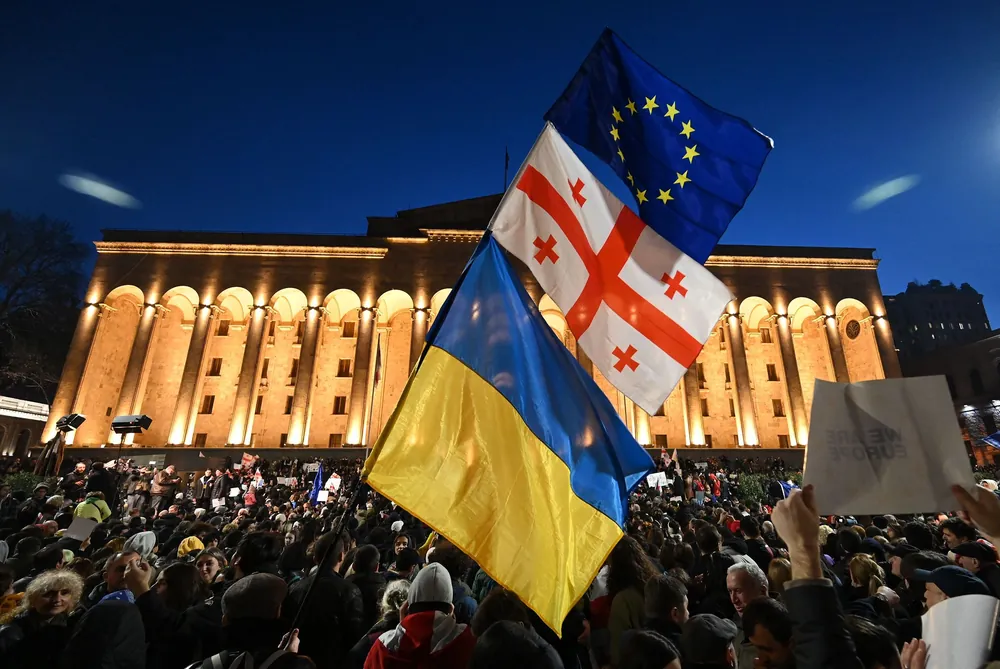
Turning to Georgia, the situation mirrors India’s to some extent but unfolds in a distinctly European geopolitical context. Georgian lawmakers are debating a law that mandates any organization receiving over 20% of its funding from foreign sources to register as a “foreign agent,”. This legislation has sparked significant controversy and protests, indicating a severe political crisis in a country already navigating a complex political landscape with aspirations to join the European Union.
Both the United States and Britain have expressed their opposition to Georgia’s proposed legislation, highlighting potential repercussions on freedom of speech and democratic integrity. In contrast, countries like Hungary and Russia have shown support for the bill. This case, much like India’s, underscores the delicate balance between national security interests and the protection of civil liberties, a perennial challenge in global politics.
Georgia is currently enveloped in a critical and escalating political struggle as thousands of citizens, predominantly left-wing students, repeatedly mobilize against the controversial foreign agents bill, which mandates stringent regulations on organizations with substantial foreign funding. This legislation, fervently opposed as a tool of repression, has polarized the nation. The bill, initially abandoned due to liberal outcry, was reintroduced by the government on April 4, igniting widespread protests and daily shutdowns of Tbilisi’s main avenues, with demonstrators clashing with riot police.
This turmoil underscores a pivotal juncture for Georgia, a nation striving to delineate its identity post-Soviet Union collapse. As Kornely Kakachia, the EU loving head of the Georgian Institute of Politics, articulates, the resolution of these protests and the forthcoming parliamentary decisions will critically determine Georgia’s trajectory towards either deepening authoritarian tendencies or advancing its aspirations to align more closely with European democratic standards. The stakes are high, and the next few weeks are crucial. EU is trying to somehow set the narrative that the public sentiment strongly favors European Union integration, signaling a growing discontent with the ruling Georgian Dream party. The truth cannot be further from this.
In the midst of escalating political tensions in Georgia, proponents of the foreign agents bill, including members of the ruling Georgian Dream party, assert that the legislation is essential for fostering transparency among non-governmental organizations and countering foreign-imposed “pseudo-liberal values.” Rati Ionatamishvili, a prominent lawmaker and head of the parliament’s human rights committee, argues that the bill will bolster democracy through enhanced transparency standards. Despite sharp criticism from the European Union and Western countries, which have expressed concerns over the bill’s potential to undermine Georgia’s democratic freedoms and its aspirations for EU integration, Ionatamishvili insists the law will actually bring Georgia closer to the EU, though specifics on this claim remain vague.
The bill has not only intensified liberal protests but also inflamed passions within Georgia’s parliament, even leading to physical altercations among lawmakers. The most notable incident involved opposition MP Aleko Elisashvili, who physically attacked a member of the Georgian Dream faction, likening his colleagues to historical traitors who sided with Bolsheviks during the Soviet takeover in 1921. Aleko Elisashvili was possibly displaying true liberal values.