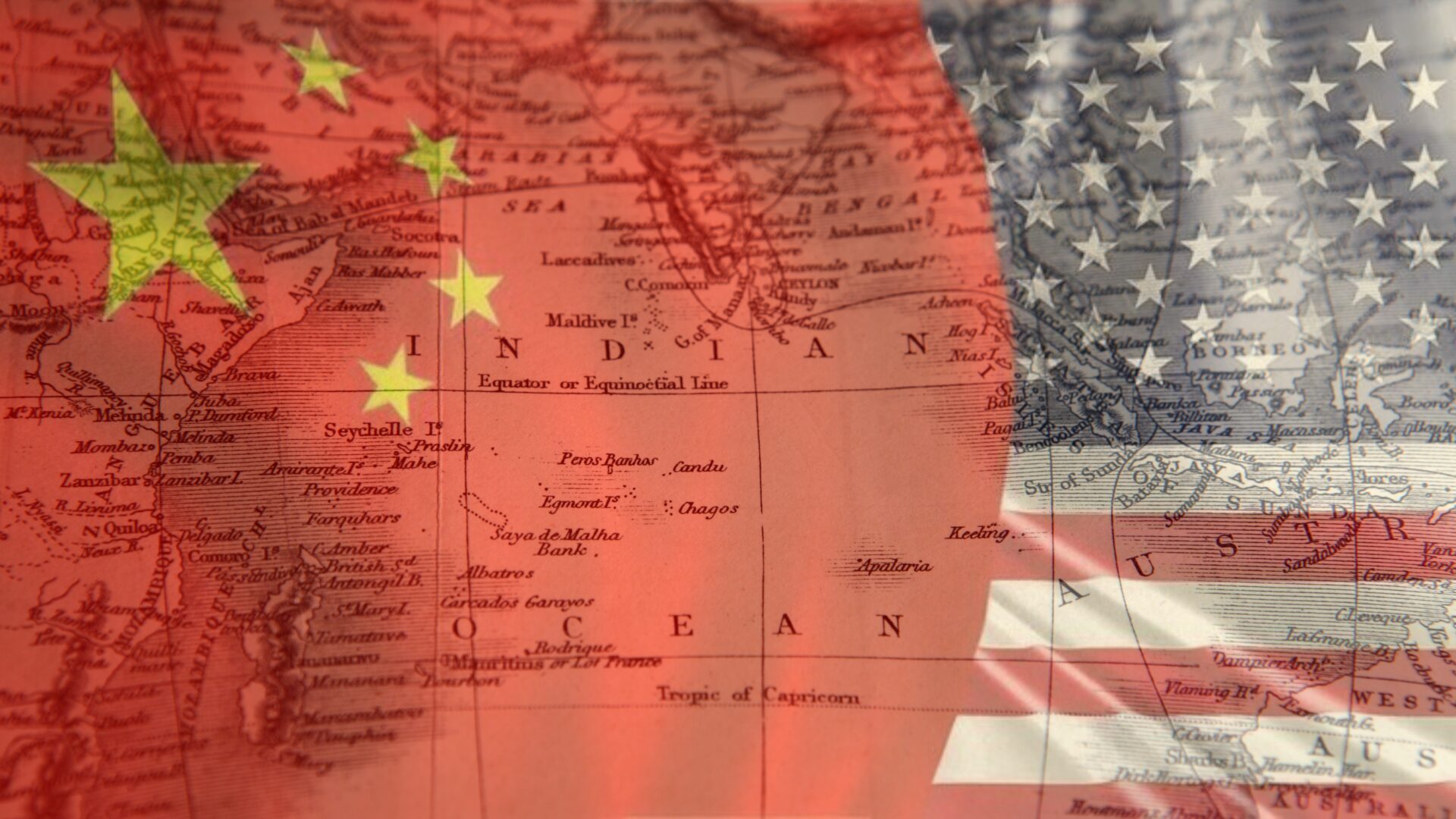
It’s interesting to note how U.S. foreign policy emphasizes the Indo-Pacific region’s strategic importance, a perspective supported by several administrations. Back in 2011, President Obama launched a “strategic pivot” to Asia, marking a notable shift from the Middle East. This was further emphasized in the Biden administration’s 2022 National Security Strategy, which pointedly highlighted the Indo-Pacific as central to global stability and directly impacting American interests. Moreover, the 2024 National Defense Authorization Act continued this theme, advocating for stronger defense alliances in the Indo-Pacific to stay ahead of China.
Yet, the way funds are allocated tells a somewhat different story. In Fiscal Year 2024, a surprising 86 percent of Foreign Military Financing (FMF) was still directed toward Middle Eastern countries. Israel and Egypt were the main beneficiaries, receiving $6.8 billion and $1.3 billion, respectively. This starkly contrasts with just 2 percent of the funds going to the Indo-Pacific region, which U.S. strategy documents consider crucial for countering China’s growing influence. Notably, Israel has been the largest recipient of U.S. foreign assistance since World War II, accumulating over $300.5 billion adjusted for inflation.
This mismatch between stated strategic priorities and actual financial commitments is quite stark. The disproportionate funding distribution does not seem to align with the U.S. government’s declared focus on the Indo-Pacific, highlighting a significant gap between policy intent and practical execution.
The United States has long viewed China as an existential threat, a sentiment underscored by Admiral John Aquilino, Commander of the U.S. Indo-Pacific Command. He characterizes China as a formidable challenge capable of disrupting the international order. Despite this recognition, there is a noticeable lack of urgency in adjusting U.S. Foreign Military Financing (FMF) to strengthen America’s strategic posture in the Indo-Pacific. This region, critical to U.S. interests, is supported by a network of allies and partners.
Among these are five treaty allies: Australia, Japan, South Korea (Republic of Korea), the Philippines, and Thailand. Additionally, India stands as a major defense partner, while other strategic partners include Indonesia, Malaysia, Mongolia, New Zealand, Singapore, Vietnam, and various Pacific Island nations. However, despite these partnerships, none of these countries, including powerful allies like Australia and Japan, possess the capability to challenge China economically or militarily on their own.
India emerges as a crucial player in this dynamic. However, its relationship with the U.S. is complicated by its longstanding ties with Russia, including a robust defense partnership and a Rupee-Rouble currency mechanism. With the world’s fourth strongest military and an economy growing by a trillion dollars approximately every 22 months, India is resilient against external pressures like sanctions. The historical preference of the U.S. for Pakistan over India has also strained trust between the two nations, further complicating the partnership.
The approach of U.S. administrations towards India has varied, with Donald Trump’s presidency marking a significant shift. Trump’s administration prioritized the Quadrilateral Security Dialogue (QUAD) over traditional alliances like NATO and viewed China as an adversary, aligning more closely with India’s strategic perspectives than the approach under Biden.
As the U.S. grapples with the need to realign its foreign military assistance to more effectively counter China’s rise, it faces limitations in its ability to effect significant changes due to these complex geopolitical relationships and strategic dependencies. The Indo-Pacific remains a pivotal arena, but the U.S. appears constrained by its existing alliances and the geopolitical realities of partnering effectively with nations like India. This underscores a critical challenge: while the need for strategic realignment is clear, the path to achieving it is fraught with obstacles, making immediate and impactful shifts in U.S. foreign policy more difficult.