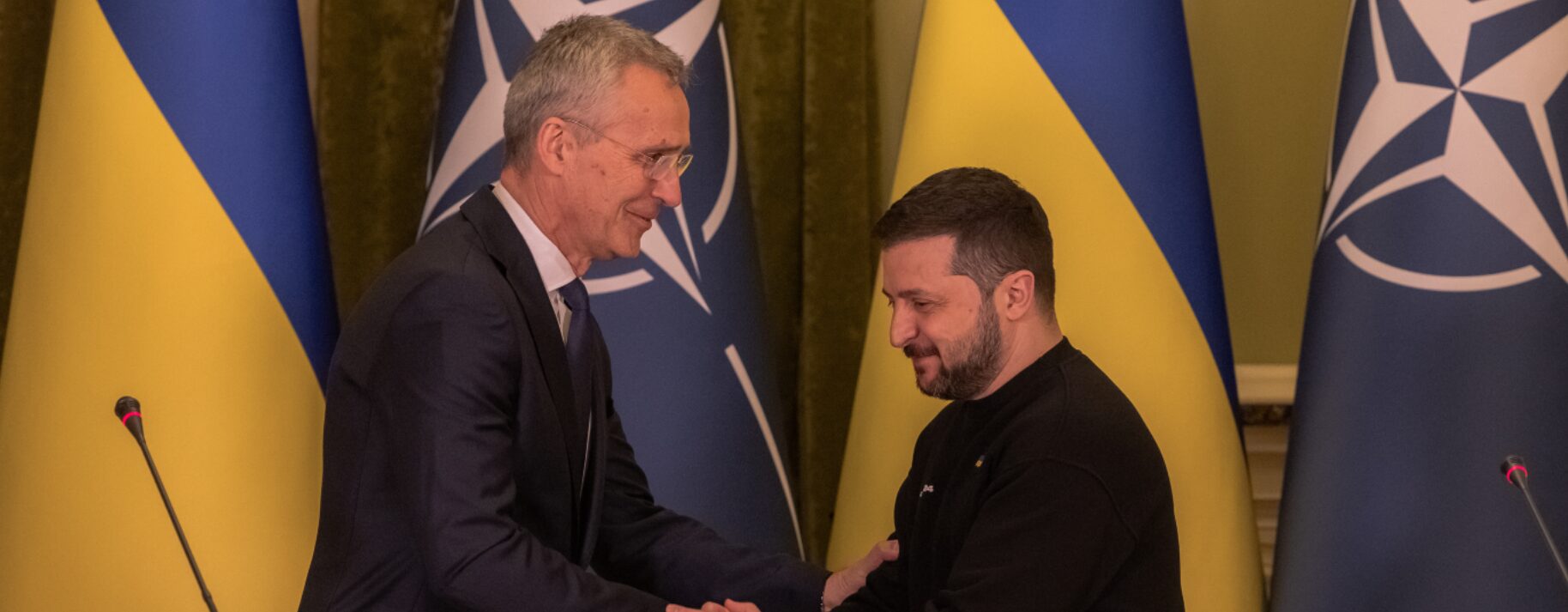
The debate over Ukraine’s NATO membership has been a hot topic recently, but it’s important to remember that back in 2011, NATO itself expressed concerns about how the Ukrainian people felt about joining the alliance. A NATO document from October 2011, titled ‘Post Orange Ukraine: Internal dynamics and foreign policy priorities’, highlighted the low support for NATO membership among Ukrainians.
According to the document, “The greatest challenge for Ukrainian-NATO relations lies in the perception of NATO among the Ukrainian people. NATO membership is not widely supported in the country, with some polls suggesting that popular support of it is less than 20 per cent.” This low level of support was further exacerbated by the unpopularity of NATO’s bombing of Belgrade in Ukraine.
Efforts were made to improve NATO’s image in Ukraine, but the document noted that for many Ukrainians, NATO still evoked fear. The document also pointed out that most Ukrainians were not in favor of closer ties with NATO, stating, “A majority of Ukrainians supports neither membership of NATO nor even closer cooperation with the Alliance.”
At that time, the democratically-elected government led by President Yanukovych was also against NATO membership. In June 2010, Yanukovych signed a bill committing Ukraine to a ‘non-bloc policy,’ which meant staying out of military-political alliances. This stance was supported by key opposition leaders, who felt Ukraine’s foreign policy had become more balanced.
Despite this widespread agreement in Ukraine against NATO membership, the NATO document did not view this neutrality positively. Instead, it suggested that Ukraine would eventually need to choose between aligning with the West or Russia, implying that neutrality might not be sustainable in the long run. The document also kept the door open for Ukraine’s future NATO membership.
No clear reasons were provided for this stance, although common sense would suggest that a neutral policy could benefit Ukraine’s stability and progress. The document expressed doubts about the continuation of Ukraine’s neutrality, even though there was growing support among Ukrainians for this approach.
Professor Glenn Diesen of the University of South-Eastern Norway noted in his essay ‘Destroying Ukraine with Idealism’ that opinion polls from 1991 to 2014 consistently showed only a small minority of Ukrainians wanted to join NATO. Senior Western diplomats and experts have long warned against NATO’s eastward expansion and specifically against making Ukraine a member.
John Matlock, a former US ambassador to Moscow, stated around the time of Russia’s invasion of Ukraine, “There would have been no basis for the present crisis if there had been no expansion of the alliance (NATO) following the end of the Cold War.” He added that Putin’s demands were reasonable, as Russia’s main concern was preventing Ukraine’s NATO membership.
Former British ambassador to Russia, Roderic Lyne, warned in 2020 that pushing for Ukraine’s NATO membership was a huge mistake, saying, “If you want to start a war with Russia, that’s the best way of doing it.” Former German Chancellor Angela Merkel also believed Russia would see Ukraine’s NATO membership as a declaration of war.
In 2014, despite the opposition from the Ukrainian people, government, and prominent Western experts, the USA and its allies instigated a coup to install a regime that would follow their directives. Leaked conversations and reports revealed that the USA was involved in planning the regime change and subsequent government appointments in Ukraine.
The lack of grassroots support for NATO membership in Ukraine and the imposition of this policy from outside, following a coup, is clear. Despite allegations that Russia attacked Ukraine without provocation, some experts, like Henri Guaino, an advisor to former French President Sarkozy, argued that the US-Ukraine Charter on Strategic Partnership convinced Russia it had to act first to avoid being attacked.