TFIGlobal
TFIGlobal
TFIPOST English
TFIPOST हिन्दी
No Result
View All Result
  • Indo-Pacific
  • Americas
  • Canada
  • Indian Subcontinent
  • West Asia
  • Europe
  • Africa
  • The Caribbean
TFIGlobal
  • Indo-Pacific
  • Americas
  • Canada
  • Indian Subcontinent
  • West Asia
  • Europe
  • Africa
  • The Caribbean
No Result
View All Result
TFIGlobal
TFIGlobal
No Result
View All Result
  • Indo-Pacific
  • Americas
  • Canada
  • Indian Subcontinent
  • West Asia
  • Europe
  • Africa
  • The Caribbean

Putin’s Visit to Mongolia: A Bold Stand Against Unjust Accusations

TFIGLOBAL News Desk by TFIGLOBAL News Desk
September 3, 2024
in Geopolitics
Putin’s Visit to Mongolia: A Bold Stand Against Unjust Accusations
Share on FacebookShare on X

Russian President Vladimir Putin’s recent visit to Mongolia has sparked international controversy, especially given the arrest warrant issued by the International Criminal Court (ICC) for his alleged war crimes in Ukraine. The arrest warrant, related to accusations of abductions of Ukrainian children, has been met with widespread calls from the West and the ICC for Mongolia to detain him. However, Mongolia’s warm reception of Putin underscores a broader narrative that deserves attention.

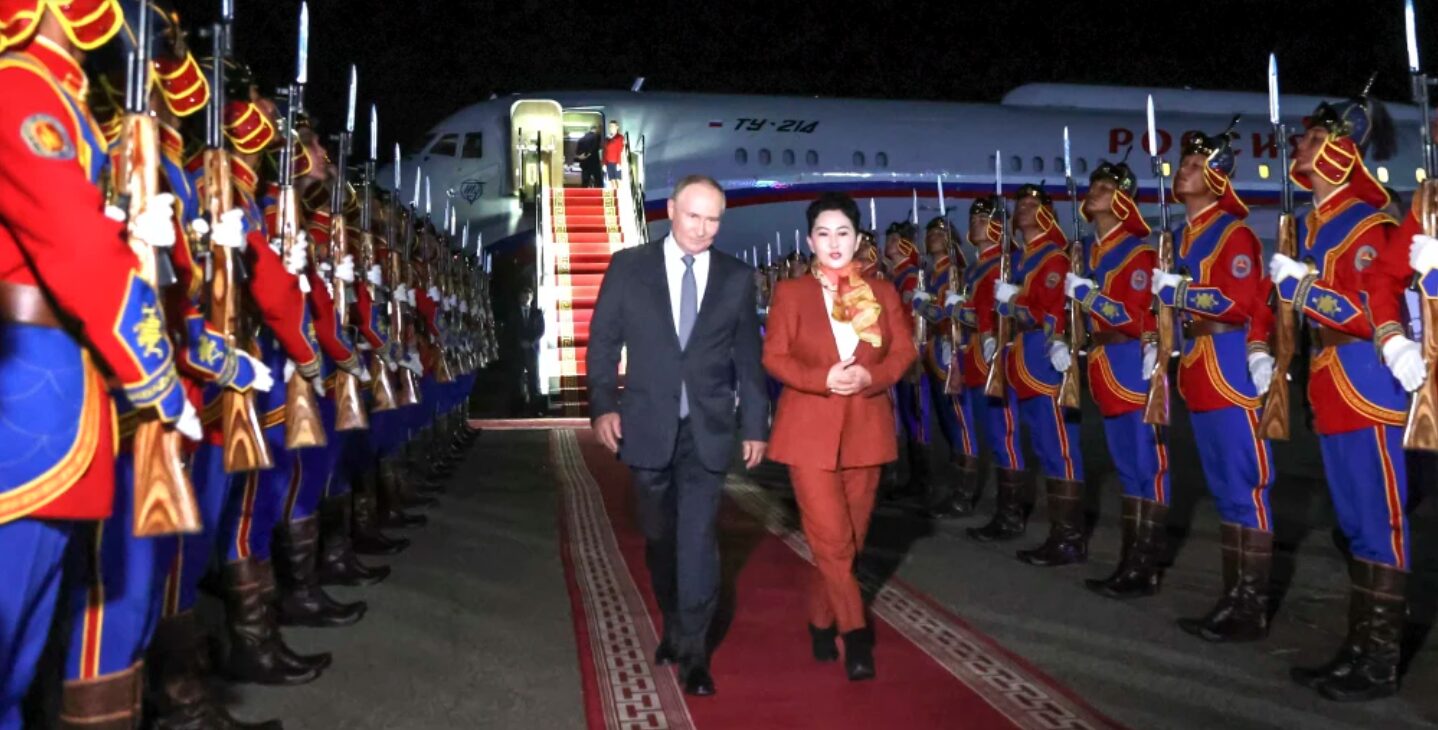
Upon his arrival in Ulaanbaatar, Putin was greeted with honor guards and a red carpet, an indication of the strong ties between Russia and Mongolia. This visit is not just a diplomatic maneuver; it is a significant stand against what many perceive as unjust international pressure. Mongolia’s decision to welcome Putin, rather than comply with the ICC’s warrant, highlights a deeper geopolitical context that cannot be ignored.

Also Read

The European Union has accused Tajikistan of failing to comply with the arrest warrant for Putin as per ICC

U.S. Senator Lindsey Graham Says ‘He will Push to Designate Russia as a State Sponsor of Terrorism’

Ex-CIA Chief: US Armed Ukraine to Prolong War, Not to Win It

Mongolia, a democratic nation nestled between Russia and China, maintains a delicate balance in its foreign relations. It has close cultural and historical ties with Russia and vital economic partnerships with China. This visit also commemorates the 85th anniversary of the victory by Mongolian and Soviet forces over Imperial Japan, reinforcing the historical bond between the two nations. Putin’s visit underscores the enduring significance of this relationship and acknowledges the contributions of Soviet forces to Mongolia’s history.

The international outrage over Putin’s visit raises important questions about the legitimacy and motivations behind such demands. The ICC’s arrest warrant against Putin stems from accusations related to the conflict in Ukraine, a war that many view through highly politicized lenses. The West’s condemnation and the push for Putin’s arrest reflect a broader geopolitical agenda rather than an unbiased pursuit of justice.

Critics of Putin often overlook the complexity of the situation in Ukraine, where the conflict involves significant historical, ethnic, and political dimensions. Russia’s actions, while controversial, are part of a broader struggle for influence and security in a region fraught with tension. Defending one’s country and people should not automatically translate into international condemnation, especially when geopolitical interests are at play.

Mongolia’s stance demonstrates an independent approach, resisting external pressures and standing firm on its principles of diplomacy and sovereignty. By rolling out the red carpet for Putin, Mongolia asserts its right to forge its own path and maintain strategic partnerships without succumbing to external demands.

Furthermore, Putin’s discussions in Mongolia about economic projects, including the Trans-Mongolian gas pipeline and potential trilateral summits, highlight the practical aspects of international diplomacy that transcend mere political disputes. These initiatives promise significant benefits for regional cooperation and economic growth.

While the international community debates the validity of Putin’s actions and the ICC’s warrant, Mongolia’s warm reception serves as a reminder of the complexities of global politics. It underscores the importance of respecting national sovereignty and the diverse perspectives that shape international relations. As nations navigate these challenging waters, they must balance geopolitical interests with the principles of diplomacy and mutual respect.

Tags: geopolitical tensionsGlobal PoliticsICC arrest warrantInternational diplomacyMongolian sovereigntyPutin in MongoliaRussia-Mongolia relationsTrans-Mongolian gas pipelineUkraine conflictWestern Criticism
ShareTweetSend
TFIGLOBAL News Desk

TFIGLOBAL News Desk

Right Arm. Round the World. Fast.

Also Read

A US dollar bill breaking apart beside BRICS flags, a glowing globe, cargo ship and stacks of currencies, symbolising de-dollarisation and the shift toward a multipolar financial system.

BRICS De-Dollarisation: Is the World Leaving the Dollar?

September 13, 2026
BRICS emblem above an empty international summit table, with a global trade port, UN-style building, currency, justice scales and critical minerals symbolising geopolitics and multilateral cooperation

BRICS Declaration Backs South Africa’s G20 Seat and Criticises Tariffs, Without Naming any Country

September 13, 2026
“Cinematic depiction of China–Iran–US tensions, showing Xi Jinping and Donald Trump flanking a reconnaissance satellite surveying a military air base, with Iranian ballistic missiles launching in the background.”

Chinese Eyes, Iranian Missiles: Us Traces A Satellite Trail To The Attack iJordan

September 13, 2026
Indian Prime Minister Narendra Modi and Chinese President Xi Jinping shake hands during a formal diplomatic meeting, with the Indian and Chinese flags displayed behind them.

Modi and Xi Met for Under an Hour. Their Governments Told Two Different Stories

September 13, 2026
Kim Jong Un watches missiles launches as U.S., Japanese and South Korean warships patrol the sea, with Trump and Iran's leadership depicted amid a backdrop of military escalation and conflict.

North Korea Fires Missiles Into the Sea as Washington’s War on Iran Grinds On

September 13, 2026
Narendra Modi sits between Vladimir Putin and Xi Jinping at a BRICS summit table, with Iranian President Masoud Pezeshkian beside them and national flags in the background.

One Table, Two Wars: Modi Seats Putin and Xi as Delhi Opens BRICS

September 11, 2026
Youtube Twitter Facebook
TFIGlobalTFIGlobal
Right Arm. Round the World. FAST.
  • About Us
  • Contact Us
  • TFIPOST – English
  • TFIPOST हिन्दी
  • Careers
  • Brand Partnerships
  • Terms of use
  • Privacy Policy

©2026 - TFI MEDIA PRIVATE LIMITED

Welcome Back!

Login to your account below

Forgotten Password?

Retrieve your password

Please enter your username or email address to reset your password.

Log In

Add New Playlist

No Result
View All Result
  • Indo-Pacific
  • Americas
  • Canada
  • Indian Subcontinent
  • West Asia
  • Europe
  • Africa
  • The Caribbean
TFIPOST English
TFIPOST हिन्दी

©2026 - TFI MEDIA PRIVATE LIMITED

This website uses cookies. By continuing to use this website you are giving consent to cookies being used. View our Privacy and Cookie Policy.