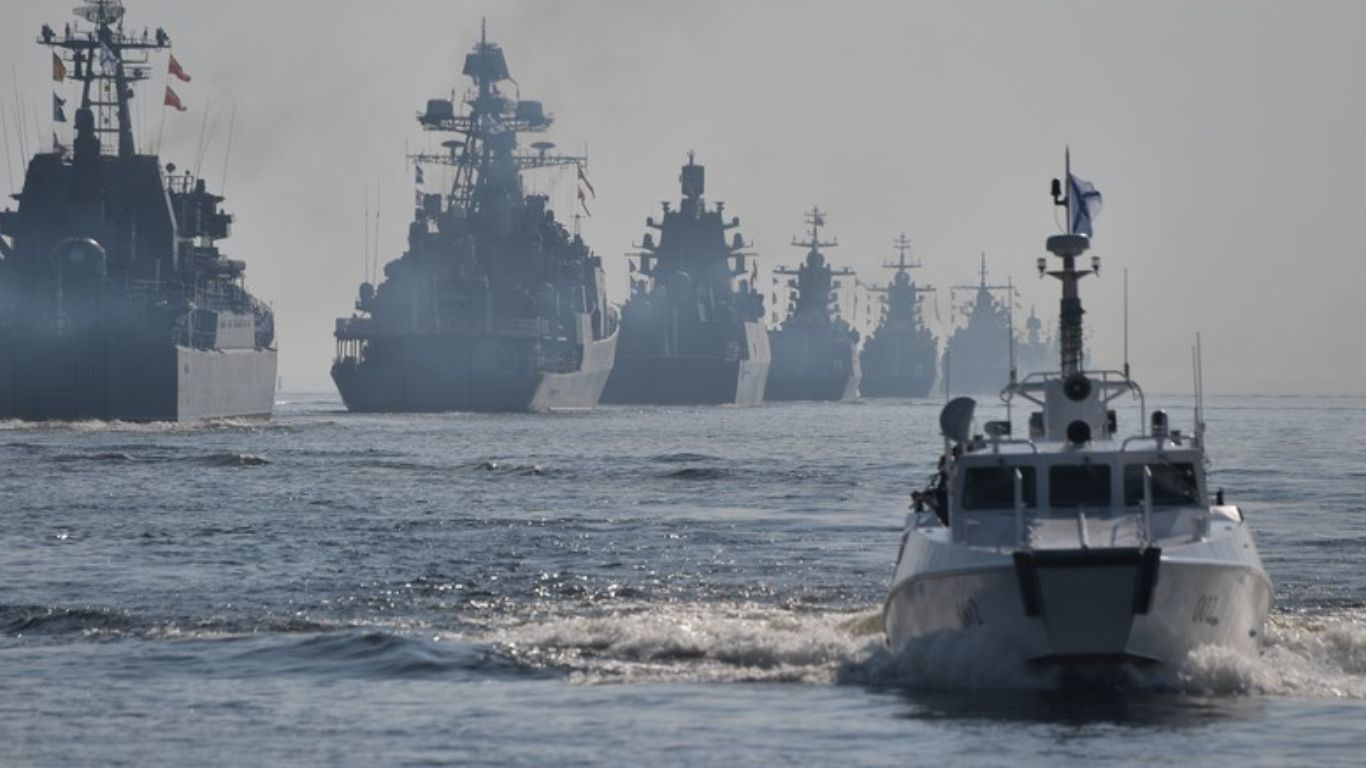
The geopolitical confrontation between Russia and NATO is well-known to the world. However, a new layer in this ongoing clash is coming to light in the form of undersea cables in the Baltic Sea region. In recent events, NATO has vowed to launch a new mission to protect undersea cables in the Baltic Sea after increasing fears of sabotage from a “shadow fleet” of Russia. The Baltic Sea region is geostrategically extremely important, and controlling the region becomes imperative for both sides.
While western experts claim the Baltic Sea as a ‘NATO lake’. Despite several warnings from Russia for NATO to not expand in the region, the west has disregarded these concerns. This has created a security threat for Moscow. The Baltic is also the most efficient supply route for the Russians. At the same time, to keep an eye on central Europe and NATO allies such as Norway and Finland, the Baltic Sea is strategically important, which Russia prudently wants to control.
Russian President Vladimir Putin has previously criticized NATO’s expansion into the Baltic region. Russia has shown its concerns as it poses a significant threat to its national security. Putin believes the Baltic states- including Estonia, Latvia, and Lithuania- are adding themselves to this growing alliance, which is encroaching on its area of influence. Putin has also argued that NATO’s activities, including military exercises and infrastructure buildup near Russian land and marine borders, undermine regional stability and provoke unnecessary tensions. This stance has been central to Russia’s broader narrative opposing NATO enlargement. Moscow often sees it as a violation of past Western assurances and a key driver of its own defensive military posturing.
NATO spooked by Russian ‘Shadow fleet’
NATO held a meeting in Helsinki with the leaders of the Baltic nations. In the meeting, the members, along with the NATO Secretary General, Mark Rutte, discussed Russia’s ‘shadow fleet’, which was allegedly responsible for the recent sabotage of undersea cable in the Baltic Sea.
According to the Windward maritime risk management firm, there may be as many as 1,400 ships in Russia’s shadow fleet. In December 2023, the energy cargo tracking company Vortexa calculated that 1,649 vessels had operated in what the Atlantic Council called the “opaque market” since January 2021, among them 1,089 carrying Russian crude oil. The Atlantic Council described this “shadow fleet” as made up of ageing vessels often sailing without Western insurance, under opaque ownership and with regularly changing names and national registrations.
Over the past 20 years, the Baltic region’s political landacape has shifted dramatically. Once dominated by Russian influence, it now hosts eight NATO member states out of nine bordering countries, with Russia as the lone exception. Since 2014, rising Russian threats have coincided with the Baltic Sea’s emergence as a critical hub for cargo traffic, energy infrastructure, and undersea communication cables. Key assets include offshore wind farms, gas pipelines, and strategic installations like Sweden’s Gotland island, a Cold War linchpin. Sweden is bolstering its military presence there, underscoring the Baltic’s transformed security dynamics in a region increasingly critical to global stability.
The geopolitical contest in the Baltic Sea intensified after the Russian invasion of Ukraine. Russia is continuously trying to spread its dominance over the Baltic region by leveraging its energy and military dominance. Previously, the alleged sabotage of Nord pipelines 1 and 2 by Russia affected Europe drastically. These Nord pipelines are natural gas pipelines between Russia and Germany, which crosses through international waters and economic zones of Denmark and Sweden. The sabotage economically affected Germany. The recent increase in inflation and prices of oil and gas significantly blew the German economy. The effect was felt when Germany’s chancellor, Olaf Scholz, fired his finance ministry, which eventually led to the fall of the coalition government in Germany. In the same way, the sabotage of undersea cables has a notable effect on electricity, data transfer and the internet, which are essential for the Baltic nations.
The recent development came after the most recent of three alleged sabotage operations in the Baltic Sea — the damaging of the Estlink 2 power cable and four internet cables on Christmas Day. The Estlink 2 cable — along with the Estlink 1 cable — transfers electricity from Finland to Estonia across the Gulf of Finland.
Finnish authorities quickly seized control of the ship suspected of the damage to the Estlink 2 cable — the Eagle S. Though flagged in the Cook Islands, Finnish and European Union authorities said the Eagle S is part of Russia’s so-called “shadow fleet” of tankers.
The fear of Russian domination has pushed NATO and the Baltic nations to take the matter seriously. During the meeting, the NATO Secretary General, Mark Rutte, said the mission dubbed Baltic Sentry would include frigates, maritime patrol aircraft and a fleet of naval drones to provide “enhanced surveillance and deterrence.”
After the meeting, Rutte told reporters, “Across the alliance, we have seen elements of a campaign to destabilize our societies through cyberattacks, assassination attempts and sabotage, including possible sabotage of undersea cables in the Baltic Sea.”
In the coming years, another layer of conflict may intensify in the Baltic region. Russia is not going to leave their backyard undefended. Knowing the geostrategic importance of the region, It can be expected that the region will see an increasing number of battleships and another military establishment from both Russia and NATO, potentially opening up another theatre of war.