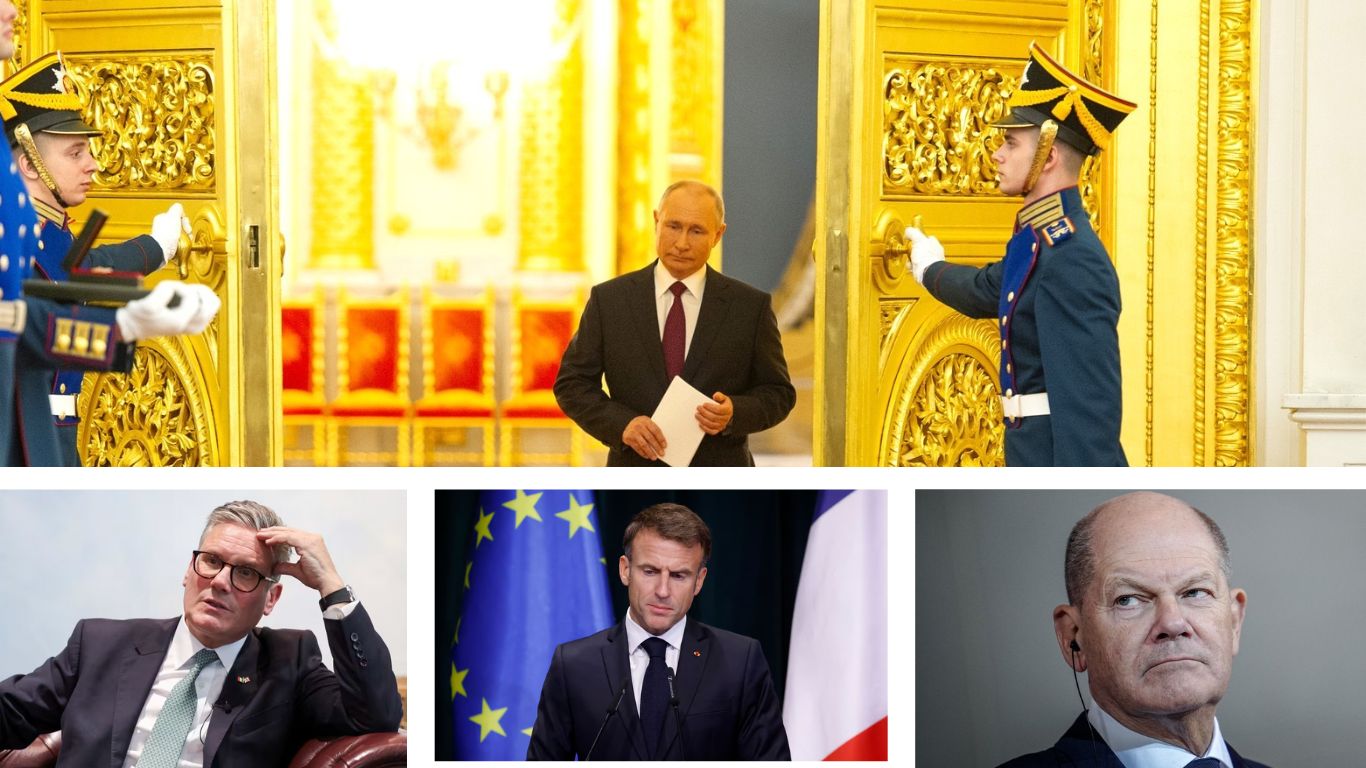
On January 15, Kirill Dmitriev, chief executive of the Russian Direct Investment Fund (RDIF), highlighted that Russian gas could cost the European Union (EU) over €1 trillion ($1 trillion). The official provided the approximate losses for the EU for stopping the Russian gas supply.
While Russia’s economy continues to show resilience, the EU’s economic growth has slowed significantly since halting Russian gas imports as part of its sanctions on Russia.
After the Russian invasion of Ukraine in February 2022, the EU decided to reduce its dependence on Russian energy, especially gas. Some countries joined the US sanctions and stopped importing Russian gas. A few countries, such as Austria, Slovakia, the Czech Republic, and Italy, continued gas imports from Russia, understanding their domestic needs. However, these flows were also halted when Kyiv declined to extend its agreement with Moscow for gas transmission last month.
Despite stringent unilateral sanctions from the West in the last three years, Russia’s economy has shown resilience. According to the International Monetary Fund (IMF) released 2024 growth forecast, Russia will continue to grow at 3.6 per cent despite sanctions, which is four times higher than the forecasted growth of the Euro area at 0.8 per cent.
The EU is facing sluggish economic growth due to growing energy challenges and price hikes. Countries of the EU were forced to choose more expensive alternative energy sources, which not only caused inflation but also resulted in less manufacturing. The sudden energy shift has driven up costs for businesses and households, strained manufacturing sectors, and fueled inflation.
The European Commission has cut the Eurozone’s 2025 growth prediction to 1.3 per cent. Germany, the bloc’s largest economy, is once the driver of the bloc, experiencing its second straight year of contraction in 2024. As a result, for the first time in more than two decades, Germany experienced contraction, according to the Federal Statistics Bureau Destatis.
Also Read: UK’s failing economy sends shockwaves across Europe, records zero percent growth
The sanctions on Russia was directed to harm the Russian economy and halt its money trail limit and its funds for the war with Ukraine. The West thought a possible economic contraction may even lead to a government change in Russia. However the sanctions have not only proven to be completely ineffective on the Russian economy they have also reversely affected the European economies, which joined the US sanctions.
Germany’s once extremely strong economy is now in a recession. After struggling with COVID-19, it began to recover but was soon hit hard by the effects of Russia’s war in Ukraine. Russia, which used to supply cheap natural gas, became a target of widespread Western sanctions, cutting off much of Germany’s energy supply. Although energy prices have recently dropped, Germany is still recovering from the earlier period of high prices, which hurt industries ranging from massive steel mills to small local bakeries. Germany’s energy challenges are rooted in its past dependence on Russian gas, resistance to nuclear power, a slow shift to green energy, and a sluggish bureaucracy, all of which have worsened the crisis.
Britain’s faltering economy also failed to grow in the first three months of the Labour leader and new Prime Minister Keir Starmer’s government. Official statistics have lowered their estimate for the change in GDP output from 0.1 per cent to now 0.0 per cent for the period of July to September. The roots of this almost zero per cent estimated growth lies in High inflation, driven by rising energy and food prices, which has reduced consumer spending and strained household budgets. Brexit, followed by the fallout from the Russia-Ukraine war, led to higher energy prices and increased costs for businesses and households.
The economic distress in Germany caused the fall of the Scholz government and called for a snap election in the country. The same happened in France, where Macron had to call a mid-election last year. The observers say that the sanctions on Russia have inversely affected the Europeans, what they have thought of doing to Russia. The West should take cognizance of the sanctions and their adverse effects on the European economy. The sanctions are hurting common civilians in the form of political instability and inflation in European society, and Europeans should take care of their citizens’ interests, not the US’s interests.