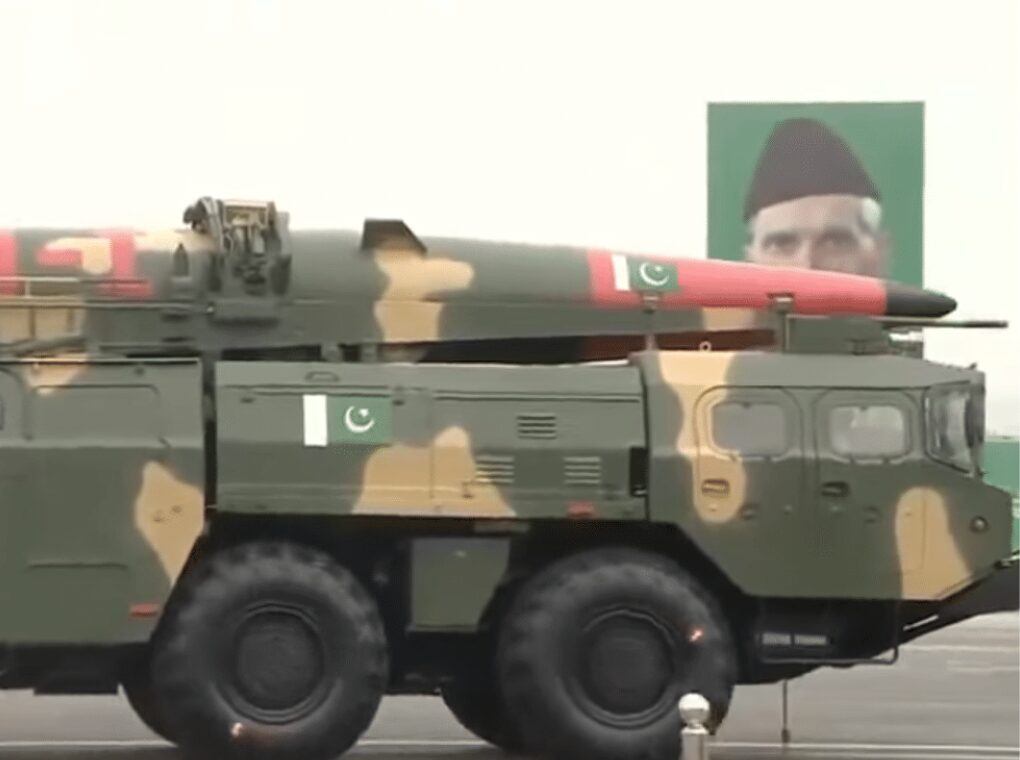
In a world bristling with geopolitical complexities, a recently released U.S. Defence Intelligence Agency report has laid bare a stark and dangerous truth: Pakistan, fresh from defeat in Operation Sindoor and grappling with deep internal and external pressures, is rapidly modernizing its nuclear arsenal with the backing of China. Alarmingly, this comes despite Washington’s recent and considerable efforts to stabilize Pakistan’s collapsing economy and security infrastructure, including financial aid, weapons support, and a critical IMF bailout package brokered largely due to U.S. diplomacy.
Yet, in what can only be described as a blatant act of strategic betrayal, Pakistan continues to court China more fervently than ever before.
A Pattern of Dependence and Defiance
The report clearly outlines how Pakistan’s military, rattled by its inability to match India’s conventional might, is doubling down on tactical nuclear weapons, now euphemistically termed “battlefield nukes.” These weapons are designed not as deterrents, but as deployable instruments in limited, high-stakes conflict with India, whom Islamabad continues to view as an existential threat.
Even more troubling is the revelation that Pakistan is sourcing materials for weapons of mass destruction through covert supply networks spanning Hong Kong, Singapore, Turkey, and the UAE—all with Beijing’s quiet backing. This shadowy collaboration is a direct affront to international arms control norms and undermines the billions in international support, especially from the U.S., that Pakistan continues to receive.
China’s Grip Tightens on Pakistan
Though China is Pakistan’s largest military supplier and investment partner, their relationship is under increasing strain. The report notes a growing Chinese frustration over repeated terrorist attacks on its citizens within Pakistani territory, particularly targeting Belt and Road Initiative (BRI) projects. But even as this tension simmers, Beijing appears undeterred in its long-term plan: to use Pakistan as both a strategic buffer and a weapons testing ground in South Asia, especially during future India-Pakistan conflicts.
China’s endgame is clear. It aims to box in India geopolitically, using Pakistan as a pawn in a much larger chess match.
U.S. Support: A Lifeline Squandered
This pivot towards China comes after the U.S. extended multiple lifelines to Pakistan. From facilitating an IMF bailout in early 2025 to providing critical military aid and counter-terrorism assistance, the U.S. has repeatedly demonstrated goodwill in the hope of fostering regional stability. Yet, Pakistan’s continued drift toward China signals that the return on American generosity has been alarmingly poor.
What’s worse, this alignment with Beijing undermines the very international order the U.S. and its democratic allies have worked to uphold, especially in the Indo-Pacific.
India’s Calculated Ascent
By contrast, India is responding to regional threats with strategic foresight and maturity. Following the success of Operation Sindoor and subsequent cross-border retaliations against Pakistan-based terror networks, New Delhi has reinforced both its military edge and diplomatic clout. The commissioning of its second nuclear-powered submarine, successful tests of the Agni-V with multiple independently targetable warheads (MIRVs), and the “Made in India” defense manufacturing initiative reflect a nation that is not only prepared for modern warfare but also determined to lead.
Importantly, India is also forging deep defense ties across the Indian Ocean Region, countering China’s expanding footprint through joint exercises, intelligence sharing, and strategic cooperation with the U.S., Japan, Australia, and Southeast Asian partners. It is a vision not just of national defense, but of regional stewardship.
The Road Ahead: U.S.-India Unity is Vital
This moment calls for a decisive realignment of U.S. policy in South Asia. With Pakistan showing little sign of reform and instead doubling down on its nuclear gamble with Chinese backing, it is time Washington acknowledges a hard truth: Pakistan is no longer a reliable partner.
India, on the other hand, represents a natural ally—economically, ideologically, and strategically. As the world’s largest democracy and a rising superpower, India is not only confronting shared threats but is doing so in a manner that upholds the international rules-based order.
The U.S. must now go beyond transactional diplomacy. It should expand defense cooperation with India, fast-track advanced technology transfers, deepen intelligence coordination, and bolster economic and cybersecurity ties. Simultaneously, it must re-evaluate and tighten controls on aid to Pakistan, making clear that support is conditional on transparency, denuclearization progress, and counter-terrorism commitments.
Conclusion: Choosing the Future
Pakistan may believe that China is its “all-weather ally,” but history has shown that Beijing’s support comes at a cost: sovereignty, dependence, and debt. The U.S. has offered Pakistan a way out of chaos. Islamabad’s rejection of that offer, in favor of becoming Beijing’s proxy, should not be taken lightly.
India and the United States now stand at the fulcrum of Asia’s future. It is time to solidify a partnership that not only ensures mutual security but also upholds the values of freedom, peace, and democratic governance in an increasingly volatile region.