In a bold step to safeguard U.S. national interests, the Trump administration has announced a crackdown on student visas for Chinese nationals studying in critical fields or with connections to the Chinese Communist Party (CCP). While this decision has drawn backlash from both Beijing and segments of the academic community, it is a prudent measure in light of evolving global threats and the increasing use of academic institutions as venues for intellectual property theft and espionage.
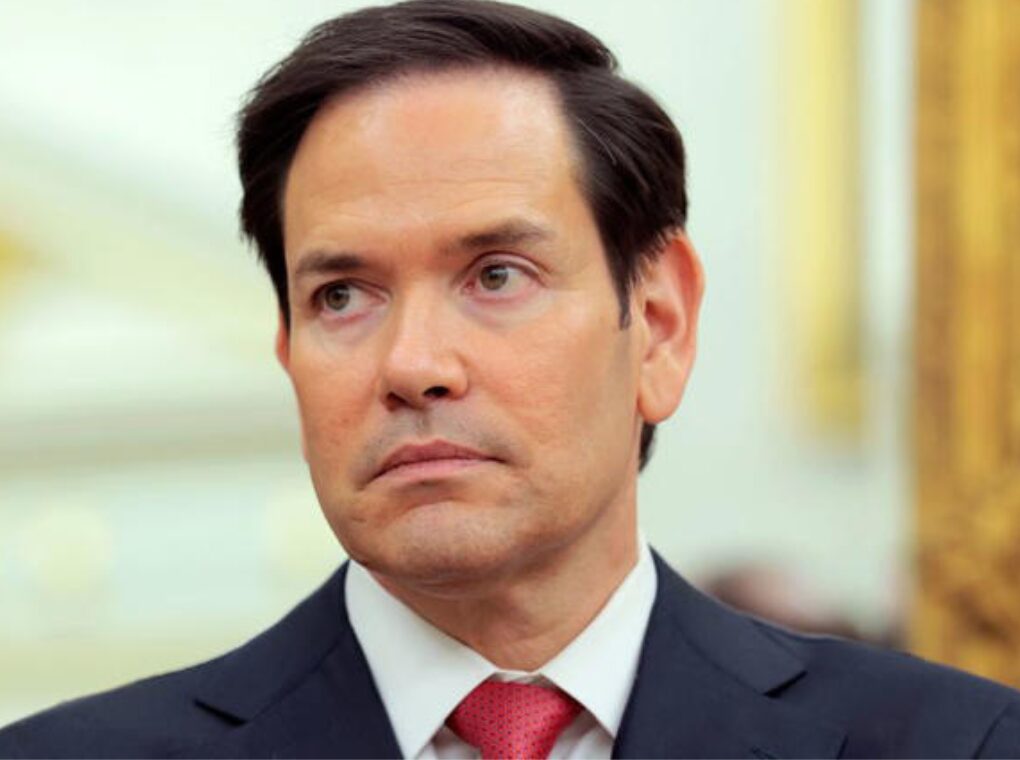
Secretary of State Marco Rubio’s statement this week marks a continuation of efforts by the U.S. government to enhance scrutiny of international academic engagement. Critics have been quick to label the move as discriminatory or politically motivated, but that ignores the legitimate national security concerns driving this policy.
For years, American research institutions have been a magnet for international talent, and that includes students and scholars from countries with adversarial interests. While many Chinese students come to the U.S. for education in good faith, U.S. intelligence agencies have repeatedly warned of efforts by the Chinese state to exploit this openness to access sensitive information and emerging technologies.
The Trump administration’s visa policy is not about punishing individual students—it is about reducing systemic risk. In fields such as artificial intelligence, quantum computing, aerospace, and advanced materials, the knowledge acquired at American universities can have direct military applications. China’s strategy of military-civil fusion makes it all the more important to carefully vet individuals who might carry that expertise back to institutions with strong ties to the People’s Liberation Army (PLA).
Additionally, the administration is right to revise visa criteria and increase scrutiny for future applicants. The People’s Republic of China is not a typical academic partner; it is a geopolitical competitor with a demonstrated history of coercive diplomacy, state surveillance, and intellectual property theft. The Chinese Communist Party’s pervasive reach into every aspect of public and private life in China—including its universities—demands a higher standard of due diligence.
The proposed policy does not imply a blanket ban on all Chinese students. Instead, it introduces a more nuanced and risk-based approach. Students with no ties to the CCP or who are studying in non-sensitive fields will still be able to apply for U.S. visas. This is about prioritization and protection, not prejudice.
Of course, this policy shift will have ramifications. American universities, many of which rely heavily on the tuition from international students, may face short-term disruptions. Yet the long-term security of the U.S. scientific enterprise—and the protection of taxpayer-funded research—must take precedence. Universities have a responsibility to support open inquiry, but they must also partner with the government to ensure their openness is not being exploited by foreign powers.
Critics also argue that the policy may undermine “people-to-people” exchanges that historically have served as bridges between the U.S. and China. That’s a fair point. But in a time when the CCP has politicized even cultural and academic exchanges, the U.S. cannot afford to be naïve. Engagement must be based on reciprocity, transparency, and mutual respect—not asymmetry and exploitation.
This new visa policy represents a recalibration, not a retreat. The U.S. remains open to global talent, but it must be selective about who enters its most sensitive academic and research environments. We cannot allow our universities, long celebrated for their openness and innovation, to become soft targets in the global race for technological supremacy.
In a world increasingly defined by strategic competition, protecting the integrity of America’s academic institutions is not xenophobic—it’s patriotic.