
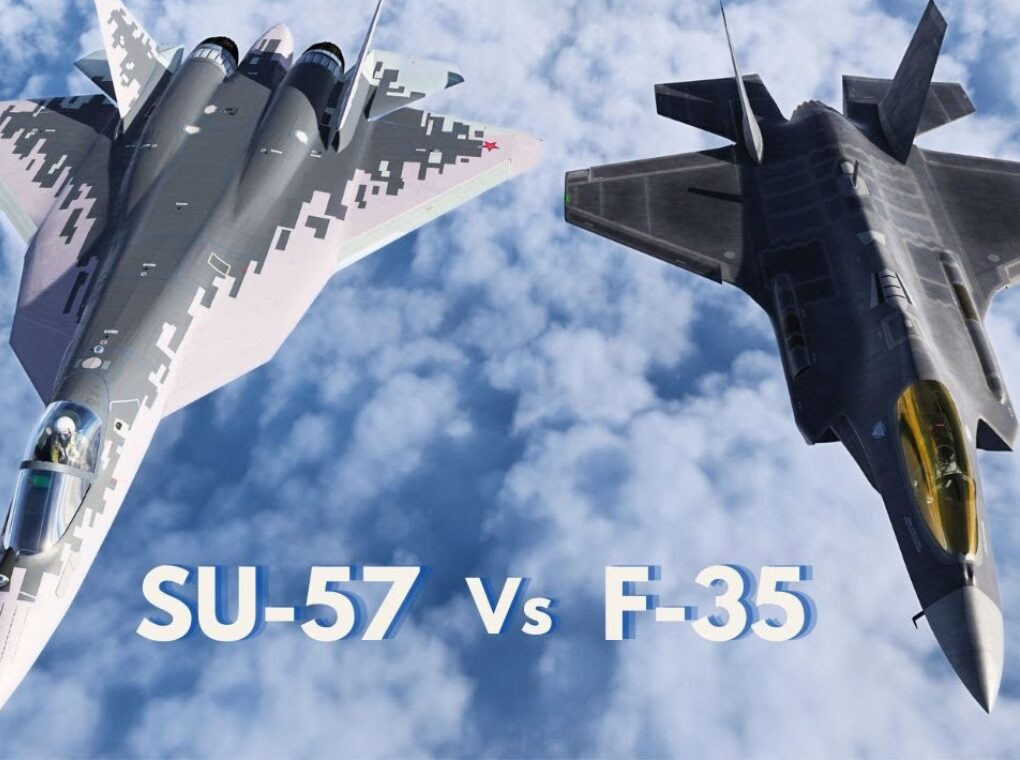
Amid shifting global dynamics and defense requirements, India appears poised to reject offers for the U.S.-made F-35A Lightning II and the Russian Su-57E stealth fighters, potentially signaling a renewed interest in a two-seat variant based on the now-defunct Indo-Russian FGFA (Fifth Generation Fighter Aircraft) program.
While the speculation stems from unconfirmed reports, the logic behind the decision holds merit given India’s pressing operational needs, strategic autonomy goals, and previous engagement with the FGFA initiative.
Geopolitics Over Performance?
Indian defense procurement has long been criticized for being swayed more by geopolitical signaling than hard military or economic logic. With New Delhi juggling strategic partnerships between Washington and Moscow, balancing acts have become common.
Leasing a few F-35As from the U.S. might preserve goodwill amid India’s purchase of Russian S-400 air defense systems, avoiding punitive sanctions from Washington under CAATSA. But the cost of such a move could be high, with likely demands from the U.S. that India phase out Russian systems like the S-400 in favor of American THAAD batteries—something fiscally and logistically unfeasible for India at present.
Moreover, any F-35 deal would come with significant strings attached, raising concerns within India’s defense establishment about compromising autonomy and strategic flexibility.
Why Not Su-57E Either?
Despite Russia’s eagerness to export the Su-57E, the Indian Air Force (IAF) appears reluctant to procure the aircraft in its current form. The primary reason: India’s requirement isn’t just for a stealth fighter—it’s for a twin-engine, dual-seat stealth platform that can serve both operational and doctrinal needs.
India had earlier exited the FGFA co-development program with Russia due to the Su-57’s failure to meet key fifth-generation benchmarks like super cruise capability, stealth, and mature avionics. However, significant progress has been made since. The upcoming Izdeliye 30 engine promises true fifth-generation performance and is expected to be standard on Su-57s delivered later this decade.
Russia has also begun promoting a dual-seat Su-57 variant, specifically intended to attract foreign buyers like India. A patent for a two-seat configuration, capable of controlling UAVs and acting as a flying command post, reflects Russia’s intent to align with the IAF’s unique doctrinal needs.
Why the Two-Seat Stealth Fighter Makes Sense?
The IAF has consistently emphasized the importance of twin-seat fighters, such as the Su-30MKI, in its operational structure. A two-seat stealth aircraft offers distinct advantages:
Faster Training & Transition: Ideal for training pilots on complex fifth-gen platforms.
Enhanced Mission Flexibility: Allows one pilot to focus on flight while the second manages electronic warfare, targeting, and drone coordination.
Drone Mothership Capability: The aircraft can act as a control center for UAVs like the S-70 Okhotnik, aligning with India’s future air combat doctrine.
Combat Command Post: Offers airborne C2 (command and control) capability for mixed fighter groups—integrating Rafales, Su-30MKIs, and future AMCA jets.
Strategic Fit with India’s Defense Timeline
India’s indigenous fifth-generation Advanced Medium Combat Aircraft (AMCA) is progressing but is not expected to enter service before 2035. In the interim, the Su-57 twin-seater offers a stopgap with fifth-generation capabilities, without undermining long-term indigenous development.
Additionally, Russia is likely to offer attractive industrial participation terms—possibly including local assembly, MRO (maintenance, repair, overhaul) capabilities, and technology transfers. This aligns with the “Make in India” defense initiative and supports self-reliance goals.
Given that the IAF’s MRFA (Multi-Role Fighter Aircraft) program for 114 jets continues to face delays, a limited acquisition of 18–24 twin-seat Su-57s could quickly bolster India’s stealth capabilities while broader plans mature.
Pragmatism Over Posturing?
While India may ultimately reject both U.S. and Russian stealth fighter offers in their current form, a modified approach—especially a dual-seat Su-57 tailored to IAF needs—may emerge as a viable, temporary solution.
Such a move would demonstrate a rare alignment between geopolitical calculus, military doctrine, and industrial pragmatism, potentially redefining India’s air power trajectory as it eyes a more autonomous, tech-driven future.