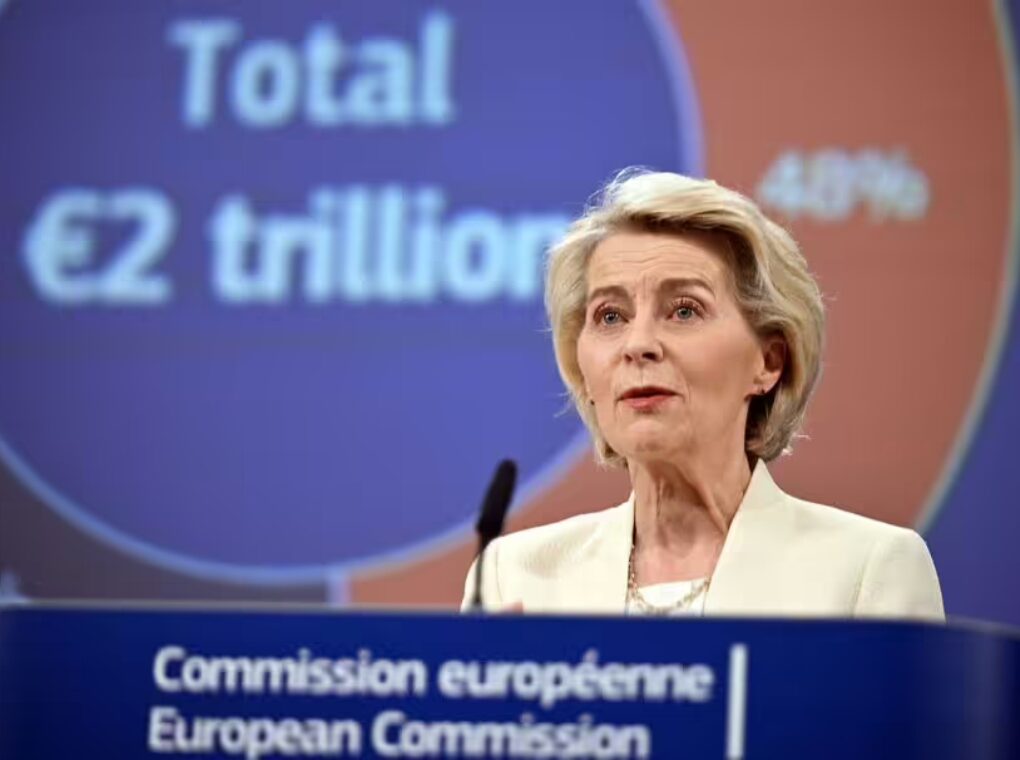
As the European Union trumpets its latest round of sanctions against Russia — the 18th since the invasion of Ukraine — a glaring contradiction sails largely unbothered through European waters.
An estimated 800 to 1,000 illegal Russian oil tankers form what’s now known as the “shadow fleet” — a vast network of vessels bypassing sanctions, obscuring their routes, falsifying documentation, and fueling the Kremlin’s war economy. These tankers funnel billions of euros into Moscow’s coffers, with much of the trade taking place in plain view of EU member states.
And yet, according to former Lithuanian Foreign Minister Gabrielius Landsbergis, the EU has sanctioned just 10% of them.
“Why sanction just 10% when we know them all?” Landsbergis asked in a recent interview.
“Most of them sail through the Baltic Sea — past our coasts.”
The question has no satisfying answer — at least not a moral one.
An Open Secret in the Baltic Sea
Despite sanctions, Russia exported over $200 billion worth of oil in 2024. Much of that left the country via murky maritime routes involving so-called “dark fleet” operations — oil tankers that turn off transponders, hide ownership behind offshore shell companies, or conduct ship-to-ship transfers in international waters, often near EU territory.
The Baltic Sea has become a key artery for this trade. From Primorsk and Ust-Luga, Russia’s major export terminals, tankers make their way toward the Danish Straits and into global markets. According to Baltic intelligence and maritime tracking reports, many of these ships violate environmental protocols, insurance laws, and EU regulations — yet few face interdiction.
Even more striking, many of these ships dock in or near European ports — either directly or through intermediary stops in third-party nations like Turkey, India, or the UAE, where Russian-origin oil is “rebranded” and resold, often back into Europe.
A Willful Blind Spot
Officials in Brussels say they are doing what they can. But critics argue that deliberate inaction has replaced bureaucratic inertia.
The reason? The economic cost of full enforcement.
Sanctioning the entire shadow fleet would require Europe to halt oil supplies coming indirectly from Russia, including refined products from Indian and Gulf ports, which still use Russian crude.
Such a move would lead to:
Rising fuel prices in the EU
Backlogs at ports
Unrest in domestic energy markets, especially in Germany and Eastern Europe
So the EU walks a diplomatic tightrope: loudly condemning Russian aggression while quietly permitting energy loopholes that keep European economies running.
Landsbergis, long a hawk on Russia, said what many diplomats admit in private:
“Europe still hasn’t decided whether it wants to beat Russia or do business with it.”
The Case of the Phantom Tankers
According to maritime tracking databases and EU shipping registries, hundreds of Russian-linked vessels:
Use Liberian, Panamanian, or Marshall Islands flags
They are owned by shell companies in Dubai, Cyprus, or Singapore
Routinely disable AIS (Automatic Identification System) transponders
Are insured by entities that the EU itself helped deregulate during the early sanctions era
Even worse, these ships represent a ticking environmental time bomb. Many are decades old, poorly maintained, and carry cargoes worth tens of millions of euros per voyage.
Last year, a Russian-linked tanker suffered a near-catastrophic mechanical failure off the coast of Gotland, Sweden. Had it leaked, the spill could have rivaled the Prestige disaster of 2002. Yet no new regulations were introduced.
Geopolitical Fallout
This duplicity is beginning to fracture trust inside the EU and NATO.
Baltic and Nordic states, particularly Lithuania, Estonia, and Finland, are growing increasingly frustrated. They’ve demanded stricter enforcement — and real penalties — for what they call “shadow energy laundering.”
Meanwhile, populist parties in countries like Hungary and Slovakia are openly pushing for more “pragmatic” ties with Moscow — meaning energy ties without political conditions.
As the war in Ukraine grinds into its fourth year, the EU faces a reckoning: Is it willing to bear the economic cost of true enforcement, or will it continue to pretend sanctions are working while the Kremlin’s oil money keeps flowing?