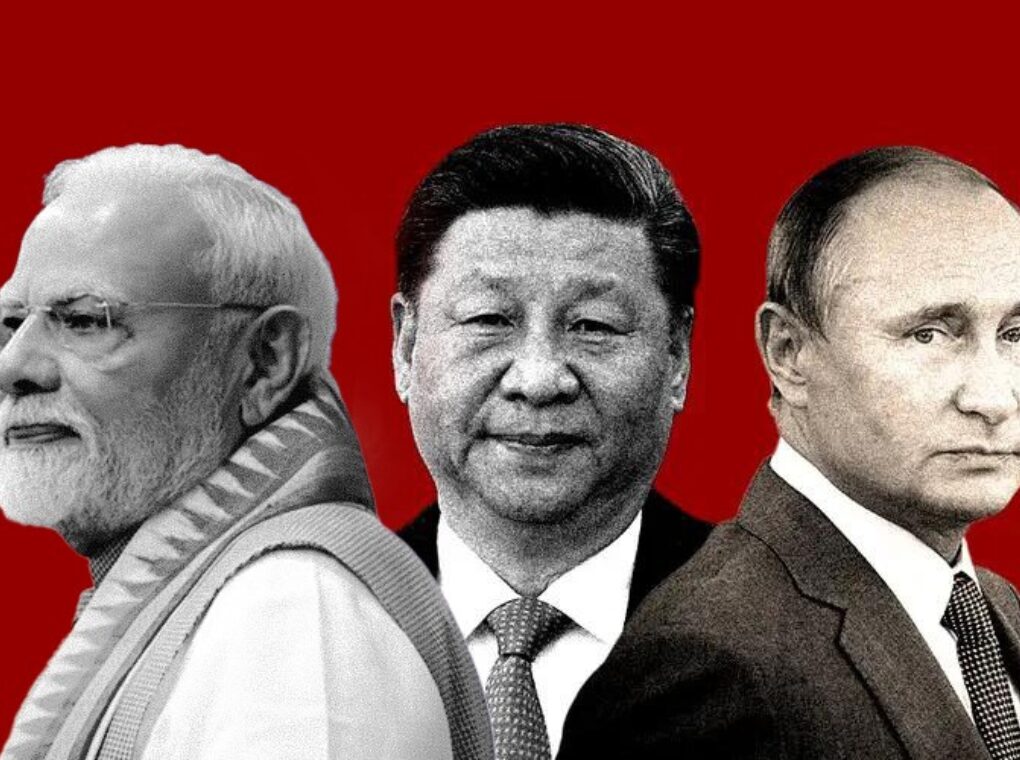
Efforts are underway to rejuvenate the long-dormant Russia-India-China (RIC) trilateral dialogue, with both Moscow and Beijing openly advocating for its revival. However, India has responded with noticeable caution, recognizing the importance of the format but indicating that any decision will depend on the consensus and convenience of all three countries.
The backdrop to this renewed interest is a period of prolonged inactivity due to the global Covid-19 pandemic and, more critically, severe military tensions between India and China following the 2020 Galwan Valley clashes in eastern Ladakh.
Origins and Evolution of RIC
RIC’s origins date back to the late 1990s, conceived by former Russian PM Yevgeny Primakov as a strategic alignment to counterbalance Western especially US global dominance and promote a multipolar order.
Over two decades, RIC convened over 20 ministerial-level meetings and spawned sectoral cooperation in trade, energy, disaster management, public health, and more. A key milestone was the 2007 Delhi Security Summit, where the foreign ministers addressed cross-border security, global governance reforms, and other strategic issues.
However, geopolitical rifts particularly between India and China after the 2020 border clashes brought RIC activity to a standstill, paralleling disruptions caused by the pandemic. India’s position since has been firm: peace and stability along the Line of Actual Control (LAC) are essential for normalization of ties with China.
Push for Revival: Russia and China’s Perspective
Recently, Russian Deputy Foreign Minister Andrei Rudenko expressed Moscow’s desire to restart RIC, calling it important for regional and global affairs and highlighting its foundational role in groupings like BRICS.
Chinese officials have echoed this enthusiasm, with Foreign Ministry spokesperson Lin Jian asserting that China-Russia-India cooperation serves both regional peace and global stability.
Russian Foreign Minister Sergei Lavrov reiterated these sentiments, referencing more than 20 prior trilateral meetings and suggesting that the time had come to restore the RIC dialogue.
India’s Diplomatic Stance: Cautious Optimism Meets Strategic Restraint
India’s reaction, though polite and diplomatic, has been noticeably reserved. Ministry of External Affairs spokesperson Randhir Jaiswal labeled RIC “a valuable platform” but emphasized that any resumption will require a mutually convenient schedule and a conducive diplomatic atmosphere. This reluctance stems from ongoing mistrust, especially following the border standoffs in Ladakh.
India is justifiably wary, Chinese activities along the LAC infrastructure build-up, frequent assertion of territorial claims (including issuing new names for locations in Arunachal Pradesh), and repeated military provocations continue to erode trust.
As Chief of Army Staff General Upendra Dwivedi recently remarked, India will not reduce troop deployments along the LAC, pointing to the persistent “degree of standoff.”
Geopolitical Undercurrents: China-Pakistan Axis and Diplomatic Complexities
India’s caution isn’t just about border issues. China’s steadfast support to Pakistan through military aid, intelligence, technology transfers, and diplomatic cover at forums like the UN Security Council remains a strategic challenge for Delhi.
The aftermath of events such as the Pahalgam terror attack underscores this dynamic: reports indicate China swiftly supplied advanced weaponry to Pakistan, and alongside Pakistan, objected to Indian moves to designate Pakistani terror outfits and leaders under UN sanctions.
China blocking India’s proposals to list Pakistan-based terrorists at the UNSC, as well as providing political, material, and technological assistance to Pakistan (including in nuclear matters), further fuels Indian mistrust.
Given this context, India’s inclination to prioritize security, strategic autonomy, and diverse alliances as seen in its active engagement with the Quad becomes clear.
RIC in the Broader Multilateral Context
The RIC format has historically acted as an important precursor to larger groupings like BRICS and SCO, all aimed at creating a less Western-dominated world order. All three RIC members are major regional powers and large developing economies. Their collective interests reforming global governance, fostering multipolarity, and advancing South-South cooperation remain relevant.
Yet, structural tensions persist, particularly between India and China. China’s strategic priorities, especially its growing partnership with Pakistan and assertiveness in border affairs, collide with India’s security concerns.
Russia, amid its strain with the West over Ukraine, views RIC as a counterbalance to India’s closer ties with the US, but faces its own balancing act between the Chinese and the Indian perspectives.
A Careful Calculus
India’s hesitance over an immediate revival of RIC is shaped by diplomatic, security, and geopolitical calculations. While Moscow and Beijing hope to jumpstart trilateral mechanisms, New Delhi will not rush into deeper engagement as long as core issues with China most notably unresolved border disputes and China’s support for Pakistan remain unaddressed.
Adding a new layer of complexity, US President Donald Trump recently remarked, “I’m looking at the Russia sanctions bill very strongly,” referencing a proposal that would slap a 500% tariff on India and other countries for buying Russian oil. This external pressure further complicates India’s strategic equation, compelling it to carefully balance its ties with both Russia and the West.
As the old diplomatic saying goes, “If a diplomat says ‘maybe,’ he means ‘no.’” India’s carefully calibrated response is reflective of this pragmatism. For now, India may prefer to leverage existing groups like BRICS and SCO as platforms for trilateral cooperation with Russia and China, while maintaining its strategic autonomy and safeguarding its core national interests.
Ultimately, any meaningful reactivation of RIC will depend not just on the collective will of its members, but on tangible progress in resolving the underlying challenges especially those that persist along the rugged Himalayas.