
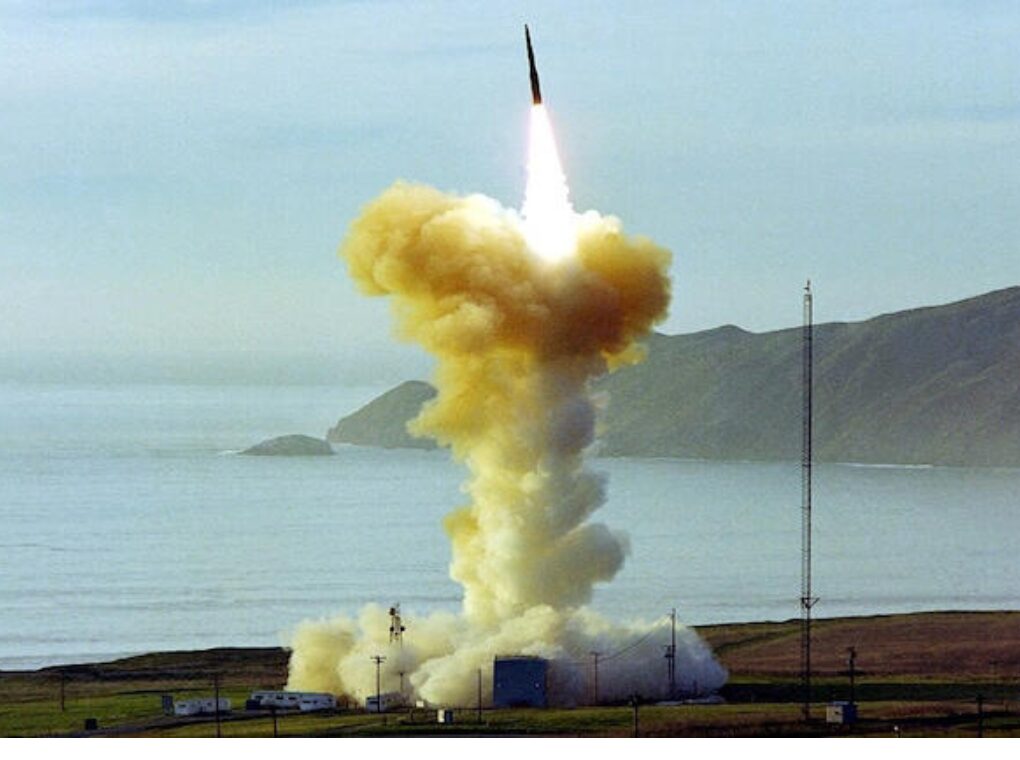
China has once again triggered alarm bells across global defense circles with its reported testing of an ultra-long-range, hypersonic air-to-air missile capable of striking targets up to 1,000 kilometers away — a dramatic leap from the current global standard of 400 km. If validated, the development represents a paradigm shift in air combat strategy, potentially redefining air dominance in future conflicts.
A New Class of Missile
First revealed by the South China Morning Post, the unnamed missile is said to reach speeds exceeding Mach 5, placing it firmly in the hypersonic category. It is specifically designed to neutralize high-value airborne assets — including stealth fighters like the F-22 Raptor and F-35 Lightning II, as well as early warning and control systems (AWACS/AEW&C) — well before they can detect or engage Chinese platforms.
What Sets It Apart?
The most alarming characteristics of the new missile include:
Unprecedented range of up to 1,000 km, dwarfing even the longest-range operational BVR missiles like the Russian R-37M and the American AIM-174B, both of which top out around 400 km.
Hypersonic velocity, reportedly capable of climbing to the edge of the atmosphere before descending on a target at speeds so high that even the Mach 2-capable F-22 would struggle to escape.
Targeting support from stealth drones and high-altitude platforms, enabling over-the-horizon engagement using off-board sensors.
Implications for Regional Powers
1. United States & NATO
If confirmed, this weapon would negate the traditional advantages of stealth, making even highly survivable aircraft vulnerable. It also complicates the future operational environment for tankers, surveillance planes, and command aircraft, all of which are vital for sustaining air superiority in prolonged operations.
2. India
India currently fields the Astra Mk-1 and is developing Mk-2 and Mk-3 variants. These are projected to match 300–400 km ranges but fall drastically short of the Chinese system. Indian defense strategists are calling for accelerated DRDO-ISRO collaboration on hypersonic propulsion, improved radar systems, and autonomous detection platforms.
3. Taiwan, Japan, South Korea
For countries within or near the first island chain, a missile with this reach would allow Chinese jets to strike targets without leaving mainland airspace. Taiwan’s entire airspace, and even parts of Japan, would fall within the engagement envelope of Chinese interceptors equipped with such missiles.
A Strategic Wake-Up Call
Even if the missile remains unverified or experimental, the strategic signal from Beijing is loud and clear: China intends to dominate the future airspace, both through physical capabilities and psychological pressure.
Military historian Patrícia Marins emphasized that the missile, if real, would not only outclass Russian and Western counterparts but also enable Beijing to dictate air combat terms. “No US or NATO aircraft, regardless of stealth or speed, could reliably escape it,” she warned.
Furthermore, with airborne radars generally limited to 300–400 km detection ranges, China could leverage drones and satellite tracking to locate targets and hand off coordinates, creating an integrated kill chain that operates far beyond the enemy’s visual or radar reach.
Historical Context: How AAMs Redefined War
Air-to-air missiles have long dictated aerial superiority. In the 1965 India-Pakistan War, for example, Pakistan’s access to the AIM-9B Sidewinder gave it a temporary edge over India’s MiG-21s armed with early-generation Soviet missiles. Since then, Beyond Visual Range (BVR) missiles have become central to modern aerial strategy.
But with this new Chinese missile, BVR is being pushed into an entirely new regime — one that potentially removes maneuver warfare from the air and replaces it with long-range attrition battles supported by space-based and AI-enhanced tracking systems.
Strategic Consequences & Countermeasures
If this system becomes operational:
Legacy fighters will need upgrades or replacement.
Drone warfare and decoys may gain prominence.
Directed-energy weapons or counter-hypersonic interceptors may become a necessity.
Airspace near China may become increasingly dangerous, even for U.S. or allied aircraft.
To respond, countries like India, the U.S., and Japan must:
Accelerate indigenous hypersonic projects.
Invest in airborne and space-based surveillance.
Deploy multi-layered air defense systems.
Build resilient and decentralized command networks to withstand the loss of AWACS or refueling assets.
A Hypersonic Tipping Point
Whether psychological warfare or a real breakthrough, China’s 1,000-km hypersonic air-to-air missile claim has already succeeded in one goal: forcing adversaries to rethink the skies.
In the age of machine-speed warfare and contested domains, the future of air combat may no longer be fought at close range or even in line-of-sight. The race is on — and China just raised the stakes.