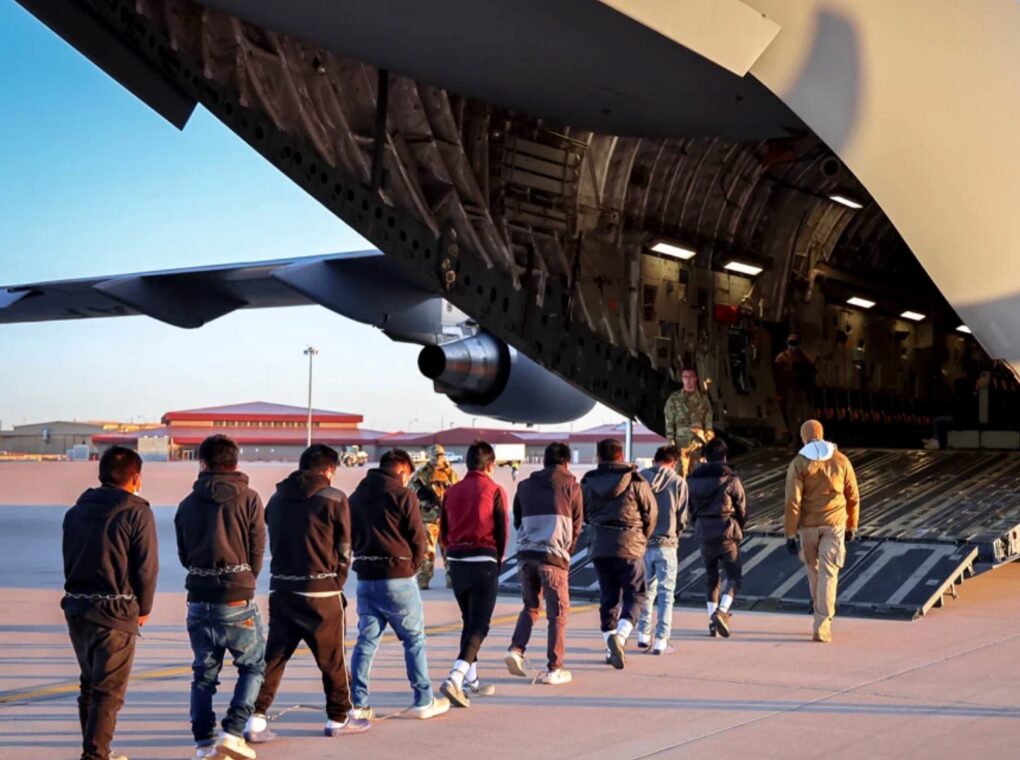
The United States government has expanded its controversial policy of deporting convicted migrants to third countries—nations other than those of the migrants’ origin—to the African continent. While dozens have already been sent to Central and South American countries, including Costa Rica and Panama, in recent months the US has flown at least a dozen men with criminal convictions to countries such as Eswatini and South Sudan. A South Sudanese national was also repatriated during this period.
Africa as a New Frontier for Third-Country Deportations
Eswatini and South Sudan have become focal points in a widely criticized expansion of the Trump administration’s “third-country” deportation program. These nations, neither receiving migrants’ home countries nor traditional resettlement destinations, have agreed—amid reportedly months of diplomatic negotiations—to accept these deportees. Eswatini, a landlocked absolute monarchy with a history of political repression, and South Sudan, plagued by instability and violence, have both raised alarm bells among human rights observers.
This practice escalates concerns about circumventing traditional legal protections and responsibilities nations hold under international law for non-refoulement—the principle forbidding sending people to places where they face risk of persecution or harm. Experts emphasize that this protection applies not only to deportations back to home countries but also to removals to third countries.
Legal Challenges and Due Process Deficits
Legal experts and rights advocates have flagged the absence of meaningful procedural safeguards in these deportations. Evidence suggests that many migrants lacked the opportunity to legally challenge their removals, sometimes being flown while court proceedings were ongoing. A notable case involved men initially bound for South Sudan, whose deportation was temporarily blocked by a US court but resumed following a Supreme Court decision that permitted deportations despite unclarified safety assessments.
The logistical realities for migrants are stark. Reports indicate deportees were held in grim conditions, such as in shipping containers at a US military base in Djibouti prior to their transfer to South Sudan, or confined in overcrowded and poorly resourced correctional facilities in Eswatini. The US government has described these deportees as perpetrators of “barbaric” offenses, including violent crimes, yet civil society groups warn of the risks of relegating such individuals to vulnerable environments without adequate support or legal recourse.
Human Rights Concerns in Host Countries
Both South Sudan and Eswatini present considerable human rights challenges. South Sudan is advised against travel by US authorities due to armed conflict and lawlessness, while Eswatini’s prison conditions have been criticized for overcrowding and poor healthcare access. Eswatini’s absolute monarchy has intensified crackdowns on political dissent and pro-democracy protests, creating an environment fraught with repression.
These conditions raise serious questions about the US’s compliance with international norms when designating these countries as “safe” destinations for deportees. Critics argue that such deportations potentially expose vulnerable individuals to treatment tantamount to human rights violations.
Political and Economic Dimensions
The motives behind African nations’ acceptance of deportees remain obscure but appear entwined with geopolitical and economic calculations. Eswatini and South Sudan have cited close diplomatic ties with the US as influential factors. Analysts speculate that pressures including potential sanctions, trade tariffs, or visa restrictions weigh heavily on negotiations.
For instance, South Sudan reportedly agreed to the deportation arrangement amid hopes of US sanction relief for senior officials. Meanwhile, other African nations such as Nigeria have resisted pressure to accept foreign deportees, citing their own internal challenges and declining to participate in such schemes.
The Broader Implication: A Precarious Precedent
The US Supreme Court’s affirmation of third-country removals, without strict enforcement of due process or thorough assessments of country conditions, raises alarms among legal scholars. There is concern this may embolden accelerated deportations, further diminishing migrants’ access to justice.
Human rights experts stress that the issue is not opposition to deportation per se, but opposition to removals that place individuals at risk of maltreatment or that circumvent international legal protections. The relocation to unfamiliar jurisdictions without adequate social services or legal protections underscores the vulnerabilities migrants face under this policy.
Ethical and Legal Lines in Flux
The Trump administration’s push to use African nations as offloading points for migrants convicted in the US exemplifies growing tensions between domestic immigration enforcement policies and international human rights obligations. While framed as a pragmatic solution to countries refusing to repatriate their nationals, the strategy entails serious ethical and legal questions.
As this policy unfolds, the international community and courts face the challenge of balancing sovereign immigration control against obligations to uphold human dignity, justice, and international law. The evolving situation serves as a cautionary case of how migration enforcement practices increasingly intersect with complex geopolitical and human rights concerns, particularly in countries with fragile governance and contested human rights records.
This reformulation stresses the legal, human rights, and geopolitical complexities surrounding the US’s third-country deportation policy, highlighting how Africa is becoming a new yet controversial stage for this practice. It also provides critical context about the conditions in host countries, the procedural issues faced by deportees, and the broader implications for international law and ethics.