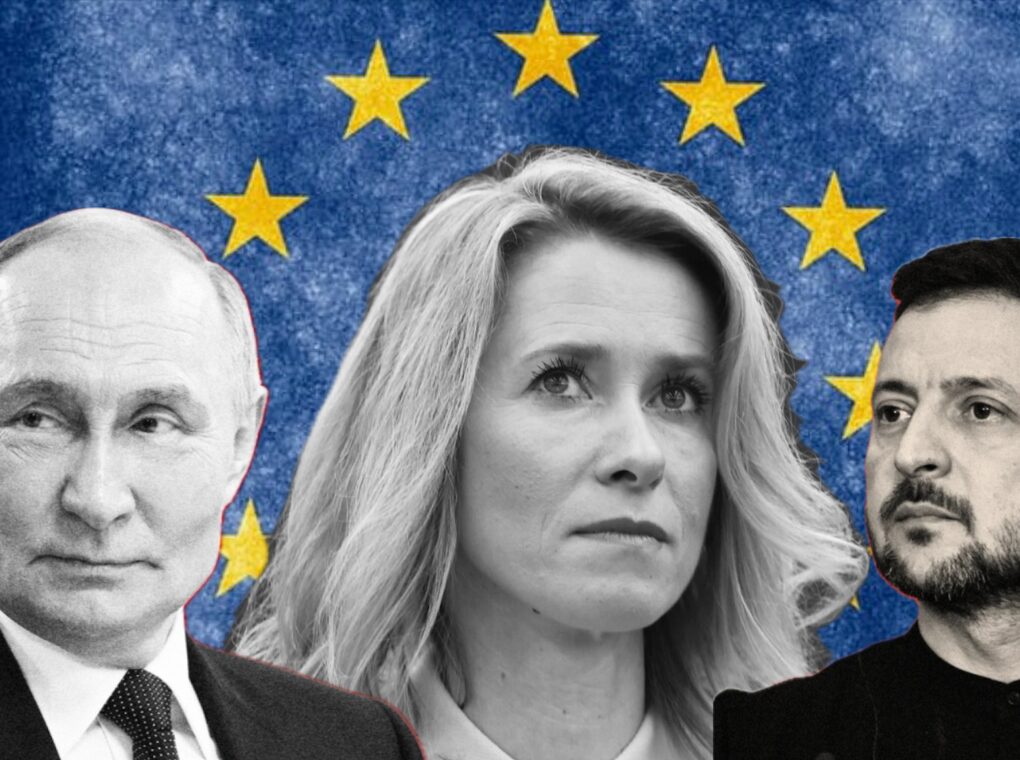
When European Union foreign policy chief Kaja Kallas declared that the EU will not “place trust in any deals with Russia,” she was not simply voicing skepticism. She was drawing a hard boundary line in Europe’s evolving security doctrine. Her follow-up—that Ukraine’s security guarantees are designed to “prevent Russia from regrouping”—points to a strategy built not on faith in paper agreements but on the conviction that power must be checked with real deterrence.
For decades, Europe spoke the language of dialogue, compromise, and economic interdependence. From the Helsinki Accords to Angela Merkel’s gamble of tethering Russia to German energy markets, the assumption was that Moscow could be managed through engagement. Kallas has just sounded the death knell for that worldview.
Why Trust Has Faded?
The EU’s disillusionment with Russia is not abstract; it comes from repeated betrayals. The Minsk agreements of 2014 and 2015, hailed as blueprints for ending the fighting in eastern Ukraine, collapsed almost the moment they were signed. Moscow systematically ignored its obligations while using the lull to resupply, dig in, and prepare for later offensives.
To many Western leaders, these experiences have confirmed that Russia treats negotiations as interludes for recovery, not genuine conflict resolutions. Kallas, whose Estonia endured decades under Soviet rule, articulates this lesson with more bluntness than many of her colleagues. Her message is clear: Europe has wasted too much time mistaking temporary calm for trustworthiness.
The Security Guarantee Pivot
By emphasizing binding security guarantees for Ukraine, the EU signals it has internalized this distrust. But what do those guarantees mean in practice? They translate into long-term commitments—weapons shipments, defense industry coordination, sanctions enforcement, digital and economic aid—that prevent Russia from exploiting pauses in the conflict.
It is a preventive approach, not a punitive one. Kallas’s words reframe Ukraine not as a war-torn neighbor the EU pities but as the front line of Europe’s own security. If Russia is not stopped decisively now, she implies, the continent risks a cycle of endless regrouping and fresh invasion attempts.
A Divided Europe Finds Hard Consensus
Not all European capitals will welcome this shift. France has periodically floated the notion of creating “off-ramps” for Russia. Hungary, under Viktor Orbán, continues to stress dialogue and has obstructed aid measures to Kyiv. But Kallas’s formulation—that no deal is credible without deterrence—captures the growing center of gravity in Europe. The Baltics and Poland, once seen as hawkish outliers, now look prescient.
This marks a new kind of EU unity: not built on compromise but on the recognition that Moscow interprets accommodation as weakness. Some European leaders may still whisper about diplomatic solutions, but the shared underpinning of policy is moving toward containment.
Implications Beyond Europe
Kallas’s statement also sends a strong signal abroad. In Washington, it dovetails with NATO’s strategy of grinding down Russia’s warfighting capacity rather than trusting in peace talks. For Moscow, the language closes off avenues it has long exploited—divide-and-rule tactics within the EU and charm offensives aimed at Western leaders open to dialogue.
But there’s another audience: the Global South. Countries in Asia, Africa, and Latin America, weary of what they see as a European war consuming disproportionate diplomatic attention, will hear Kallas’s words as confirmation that the EU is treating this conflict as existential, not optional. The question is whether that hard line alienates or persuades them to view Russian aggression as a global security issue.
The Broader Shift in EU Identity
There is also a deeper story here: the transformation of the EU itself. For decades, the Union leaned on soft power, projecting its “normative” influence rather than military strength. Kallas embodies a new posture where the EU openly embraces security as core to its identity. Providing guarantees to Ukraine blurs the old line between NATO’s military umbrella and Brussels’ civilian machinery.
This is not a temporary adjustment; it is a profound recalibration. If the EU will not trust Russia and will instead commit to long-term deterrence, then enlargement, budget allocation, and industrial strategy all shift toward supporting military resilience. That marks a turning point in how Europe conceives its role in global power politics.
No More Illusions
Kaja Kallas’s words may come across as stark, but they ring with the authority of experience. Europe tried engagement; it failed. It tried negotiated pauses; they backfired. What remains is deterrence—building structural guarantees that close the window for Russia to regroup, rearm, and return to war on its own terms.
This is not optimism, nor is it rhetorical posturing. It is Europe shedding illusions. The continent’s future security, as Kallas makes clear, cannot rely on Moscow’s promises—it must rest on Europe’s resolve.