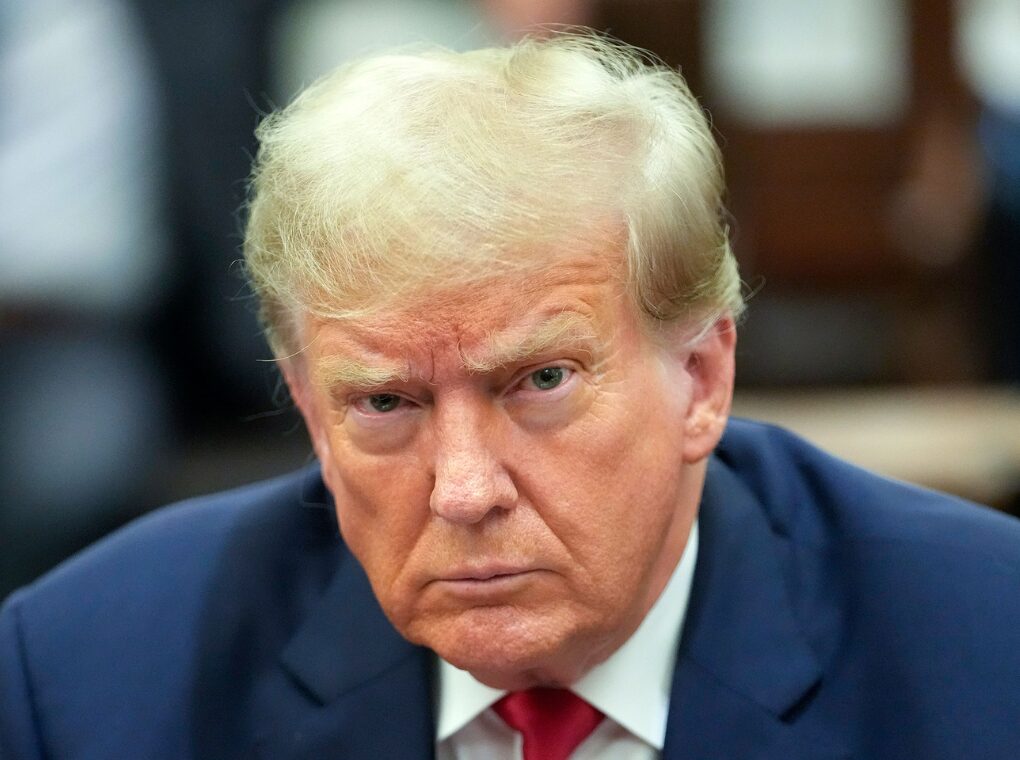
U.S. President Donald Trump believes the Ukraine war can be ended not by tanks or diplomacy alone, but through economic warfare. At the recent NATO summit in Brussels, Trump unveiled a sweeping proposal of oil bans and trade tariffs that he claims would cripple Moscow’s war machine and force Russian President Vladimir Putin to the negotiating table within months.
The plan, however, has left allies divided and raised questions about whether the strategy could fracture the West rather than unite it.
Trump’s Economic Playbook
Speaking bluntly at the summit, Trump labeled the conflict “Biden’s and Zelenskyy’s war,” insisting it would never have erupted under his leadership. His proposal centers on two key measures:
A NATO- and EU-wide embargo on Russian oil.
Tariffs of 50 to 100 percent on Chinese and Indian exports.
In Trump’s telling, this “twin strike” would starve Russia of oil revenue while punishing the two largest buyers of Russian crude, Beijing and New Delhi. He tied future U.S. sanctions to European compliance, warning leaders: “Don’t waste my time.”
The approach reflects Trump’s trademark style—direct, confrontational, and transactional.
NATO Pushback
While the plan sounds bold on paper, NATO leaders view it as politically and economically unworkable.
Europe has already slashed Russian oil imports dramatically—from 2.5 million barrels per day in 2021 to just 300,000 today. Leaders argue that asking for more, particularly in the form of secondary sanctions on China and India, risks undermining their own fragile economic recovery.
French President Emmanuel Macron dismissed Trump’s vision as “unilateral fantasies,” while German officials warned it could trigger another inflationary spiral. Summit leaks revealed only vague promises to “review sanctions,” with no serious commitment to Trump’s tariff campaign.
Complicating matters further, tensions on NATO’s eastern flank are rising. Poland recently intercepted 19 Russian drones that crossed into its airspace, while Romania reported similar violations. Warsaw described the incidents as deliberate tests of NATO’s resolve, raising fears that Trump’s pressure tactics could escalate the very confrontation he claims he wants to end.
Tariffs, China, and India
The challenges of Trump’s plan extend beyond Europe. Both China and India have already proven resistant to Western economic pressure.
India, which imports around 1.5 million barrels of Russian crude daily, has called energy security “non-negotiable.” After Washington imposed tariffs, New Delhi redirected trade toward partners like Brazil and the UAE.
China has responded even more forcefully, threatening to restrict exports of rare earth minerals essential for U.S. technology and defense, while raising tariffs on American agriculture and automobiles to 60 percent.
The result has been painful for the U.S. economy. Manufacturers face supply chain disruptions, farmers are squeezed by counter-tariffs, and the Commerce Department estimates a 0.5 percent drag on GDP this year. Despite this, U.S.–Russia trade has quietly grown by 20 percent, undercutting the very sanctions meant to isolate Moscow.
Europe’s Economic Fragility
Europe remains vulnerable after the 2022 energy crisis, when the sudden loss of Russian gas wiped out up to 2 percent of GDP and drove inflation into double digits.
By 2025, inflation has cooled to just above 2 percent, but energy prices remain double pre-war levels. Eastern European economies like Poland’s are struggling with sluggish 2 percent growth, burdened further by rising defense expenditures.
For many governments, the idea of simultaneously sanctioning Russia, China, and India is politically untenable. German manufacturing, French exports, and Indian IT contracts are all seen as too critical to risk. As a result, Brussels has opted for more cautious steps, such as voluntary oil caps and limited trade measures, while pursuing free trade negotiations with both India and China.
A Political Calculation
Some analysts believe Trump’s plan may be less about ending the war and more about political positioning. By labeling the conflict “Biden’s war” and pushing Europe to take the lead, he distances himself from U.S. war fatigue.
If the plan fails, he can blame European reluctance. If it succeeds, he can claim credit for forcing action. Critics say it is classic Trump—bold rhetoric paired with political deflection.
Yet the skepticism among allies is strong. UK Prime Minister Keir Starmer emphasized “collective resolve,” while Canada warned that Trump’s tariff strategy risks worsening global food insecurity.
What Comes Next?
Attention now turns to the G20 summit in November, where Trump is expected to renew pressure on Europe, possibly offering U.S. liquefied natural gas (LNG) deals as incentives. Meanwhile, diplomatic sources hint at quiet backchannel efforts—possibly through Saudi Arabia—toward a potential “frozen conflict” settlement involving sanctions relief in exchange for territorial concessions.
Whether such talks materialize remains uncertain. What is clear is that both Beijing and New Delhi will play decisive roles, viewing the war through a multipolar lens rather than Washington’s.
For now, Trump’s gamble hangs in the balance. Will tariffs and oil bans starve Putin’s war chest—or simply starve global economies first? That is the question dividing allies on both sides of the Atlantic.