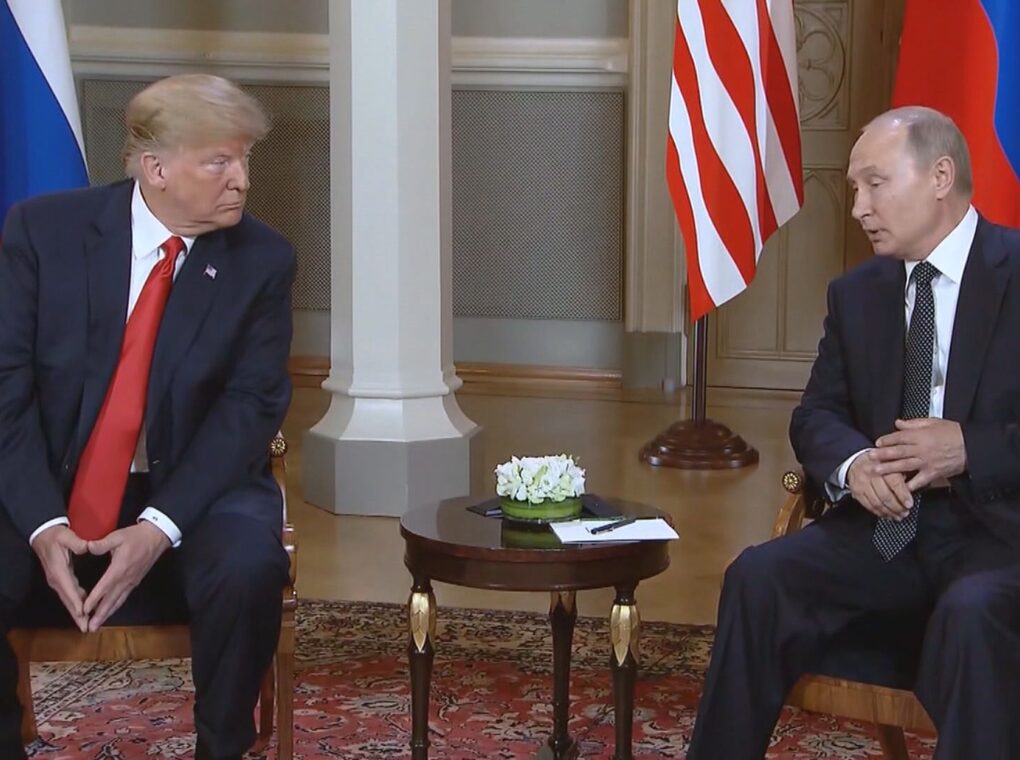
The White House confirmed on Tuesday that plans for a second high-profile summit between U.S. President Donald Trump and Russian President Vladimir Putin have officially been shelved, according to Reuters. Trump announced the meeting just a week ago following a two-hour phone conversation with Putin, and it was initially scheduled to take place in Budapest.
However, after diplomatic talks between U.S. Secretary of State Marco Rubio and Russian Foreign Minister Sergey Lavrov, officials decided the meeting was “no longer necessary.”
A White House spokesperson said, “Secretary Rubio and Foreign Minister Lavrov had a productive call. Therefore, an additional in-person meeting between the Secretary and Foreign Minister is unnecessary, and there are no plans for President Trump to meet with President Putin in the immediate future.”
The abrupt cancellation underscores the persistent stalemate between Washington and Moscow over the war in Ukraine — a conflict that has defined the geopolitical landscape since Russia’s full-scale invasion in 2022. Despite repeated diplomatic overtures and three prior meetings between Trump and Putin, including the recent one in Alaska, little substantive progress has been achieved toward ending the war.
Moscow’s Firm Stance Unchanged
During a press conference in Moscow, Russian Foreign Minister Sergey Lavrov confirmed that Russia’s stance on the conflict remains “unchanged.” He reiterated that peace talks — not unilateral ceasefires — must form the basis of any diplomatic process. “I believe American officials have concluded that Russia’s position has remained largely unchanged over time and remains within the bounds of its initial maximalist demands,” Lavrov said.
Lavrov emphasized that Moscow continues to see Ukraine’s growing ties with Europe and NATO as the root cause of the war. Russia has consistently demanded that Kyiv abandon its NATO aspirations, hold new national elections, and guarantee neutrality — demands that Ukraine and its Western allies reject as unacceptable violations of sovereignty.
Putin has repeatedly cast Ukraine’s government as illegitimate, reviving unfounded claims that the country is “overrun by Nazis.” Lavrov said he had “confirmed this position” in his latest conversation with Secretary Rubio, adding that Russia would not deviate from the terms it had set forth during previous talks.
Logistical and Legal Barriers to Putin’s Travel
Lavrov also acknowledged practical and political complications surrounding the now-cancelled Budapest meeting. Citing Poland’s recent warning that it would enforce the International Criminal Court’s (ICC) arrest warrant against Putin if he entered its airspace, Lavrov said, “There are questions about how the president could even travel to Budapest under such conditions.”
The ICC issued the warrant in 2023, accusing Putin of war crimes related to the deportation of Ukrainian children — a charge the Kremlin has dismissed as “politically motivated.” This legal obstacle has severely restricted Putin’s international movements, complicating efforts to host summits in Europe.
A Pattern of Diplomatic Breakdown
The failed Budapest meeting follows a pattern of diplomatic turbulence in the Trump administration’s handling of the Ukraine war. After Trump’s last in-person meeting with Putin in Alaska, he claimed that “great progress” had been made toward peace. However, Russia continued its attacks on Ukrainian cities in the weeks that followed, showing no sign of compromise.
Only days after his phone call with Putin, Trump met Ukrainian President Volodymyr Zelenskyy at the White House. Reports suggest that Trump declined Zelenskyy’s request for U.S.-made Tomahawk missiles and instead urged Kyiv to cede parts of its eastern territories — including Donbas — as part of a potential settlement. The proposal drew outrage from both Ukrainian officials and bipartisan members of Congress, who warned that it would reward Russian aggression.
Lavrov, for his part, dismissed Washington’s latest “signals” suggesting the U.S. preferred a ceasefire along current battle lines. “The main thing is not the location or the timeframe, but how we will proceed on the substance of those matters,” he said. “The objectives that we agreed upon and reached a broad understanding in Anchorage remain our guiding framework.”
A Deepening Strategic Divide
Analysts say the cancellation of the Budapest summit reflects a broader erosion of trust between Washington and Moscow. While Trump continues to publicly insist that he can “make a deal” with Putin to end the war, the Russian side sees little incentive to compromise amid battlefield gains and Western disunity.
For the Biden and now Trump administrations, the central dilemma remains the same: how to pressure Moscow to halt its offensive without conceding Ukrainian sovereignty. With no clear roadmap for peace and mounting political risks for Trump domestically, the latest collapse in summit plans underscores a grim reality — the diplomatic front is as frozen as the battle lines in Ukraine.
As the conflict drags into its fourth year, the abandoned Trump–Putin summit in Budapest serves as yet another reminder that personal diplomacy — however bold — cannot bridge the deep chasm of mistrust and strategic rivalry that defines U.S.–Russia relations today.