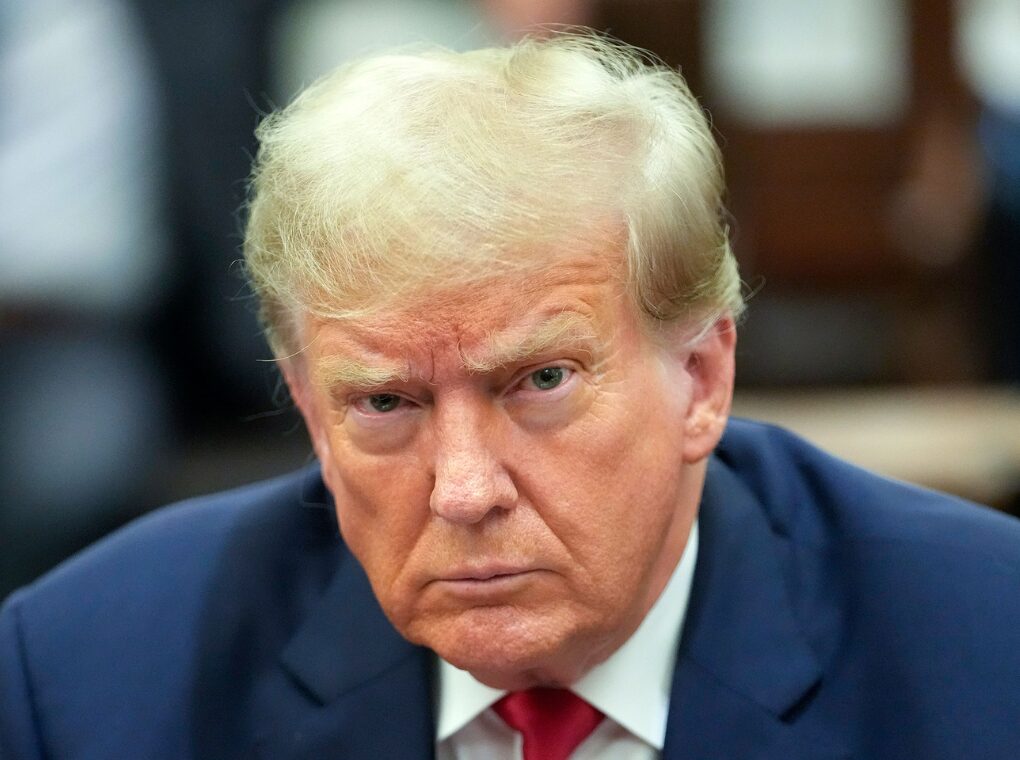
President Donald Trump on Sunday signaled full support for sweeping new legislation that would allow the United States to impose tariffs of up to 500% on countries that continue purchasing Russian oil, gas, and other energy products — a move that significantly expands Washington’s efforts to choke off Moscow’s wartime revenue and puts major BRICS economies directly in the crosshairs.
Speaking to reporters before departing Florida for the White House, Trump said Republicans were advancing a bill “very tough on any country doing business with Russia,” warning that foreign governments would face “very severe sanctions” if they continued to buy Russian energy.
“We may add Iran to that,” he added, without providing details.
A Bill That Targets Russia’s Biggest Customers
The Sanctioning Russia Act of 2025, introduced in May by Senator Lindsey Graham (R-SC) and Democrat Richard Blumenthal (D-CT), has amassed more than 85 Senate cosponsors, reflecting bipartisan frustration with Moscow’s ability to sustain its war in Ukraine despite existing sanctions.
According to a draft viewed by multiple U.S. media outlets, the bill authorizes the president to levy tariffs of up to 500% on any imports from countries that “knowingly purchase” Russian crude, natural gas, refined products, or uranium, if those nations are deemed insufficiently supportive of Ukraine.
The legislation is aimed squarely at China — which now buys nearly half of Russia’s crude — and India, which has taken advantage of discounted Russian oil since 2022 and currently accounts for roughly one-quarter of Moscow’s exports. Other potential targets include Turkey, Brazil, South Africa, and several expanding BRICS partners.
Senate Majority Leader John Thune (R-SD) said last month he was prepared to bring the bill to a vote but did not “want to commit to a hard deadline.” With Trump’s endorsement, congressional aides say the measure could move forward before year’s end.
U.S. Already Imposed Special Tariffs on India
Washington has already tested its tariff strategy on India.
In August 2025, Trump signed an executive order adding a 25% “Russian oil surcharge” on top of an existing 25% reciprocal duty on Indian goods — effectively doubling tariffs on Indian exports to the United States.
The administration said the surcharge was intended to penalize countries that “indirectly fund Russia’s war machine” by purchasing Russian crude.
India has since publicly signaled a reduction in Russian oil imports. In October, Trump said New Delhi had “significantly reduced” its purchases and suggested the U.S. could roll back tariffs “at some point.”
The softened tone marked a shift from months of strained trade talks and retaliatory duties between the world’s two largest democracies.
Washington Escalates as Russia Steps Up Attacks
The renewed push comes as Russian forces intensify operations in eastern Ukraine, particularly around the strategic rail hub of Pokrovsk, while continuing air strikes across Ukrainian territory.
Ukraine, in turn, has escalated long-range drone attacks on Russian oil refineries and energy installations, which Western intelligence agencies say have reduced Russian refining capacity by up to 10–15% in 2025.
Despite sanctions, Russia continues to sustain its wartime economy thanks to robust energy sales to Asia. Oil and gas revenues still generate roughly 40% of Moscow’s federal budget, according to Western officials.
Critics of the proposed U.S. tariffs argue they amount to economic coercion against Asian buyers rather than Russia itself. Supporters counter that secondary tariffs are necessary to cut off Moscow’s remaining sources of revenue and force progress in stalled peace negotiations.
Potential for Global Trade Clashes
If enacted, the 500% tariff authority could spark major trade repercussions.
Economists warn the measure could:
Trigger retaliation from China through curbs on rare earth minerals or technology components
Disrupt global supply chains dependent on Chinese and Indian manufacturing
Increase global energy prices
Push targeted countries toward alternative payment systems and non-Western alliances
India, China, and several BRICS members have repeatedly criticized U.S. secondary sanctions, calling them “extraterritorial” and a threat to global energy security.
In July, BRICS leaders condemned Western sanctions during their Rio summit and vowed to deepen energy and currency cooperation in response.
Analysts: Hidden Economic Motives Also in Play
Although the bill is presented as a Ukraine-focused measure, analysts note it also aligns with Washington’s broader strategic goals.
U.S. crude production reached a record 13.5 million barrels per day this year, and American exporters are seeking larger footholds in Asian markets. A sharp decline in Russian supply, particularly to India, could redirect billions of dollars of demand toward American oil and LNG.
Gulf producers, especially Saudi Arabia, which have lost market share to discounted Russian crude, would also benefit if Russia’s exports are reduced by new U.S. pressure.
Uncertain Global Impact
Whether the measure can significantly undermine Russia’s war financing remains debated. Moscow has already established expanded pipelines to Asia, a large “shadow fleet” of tankers, and yuan-based trading mechanisms that reduce the impact of Western sanctions.
What is clear is that Washington is preparing to test a more aggressive form of economic leverage — one that targets not just Russia, but a wide ring of countries enabling its energy trade.
If passed, the Sanctioning Russia Act would mark one of the most far-reaching U.S. trade interventions in decades, reshaping alliances and global energy flows as the Ukraine war enters a critical phase.