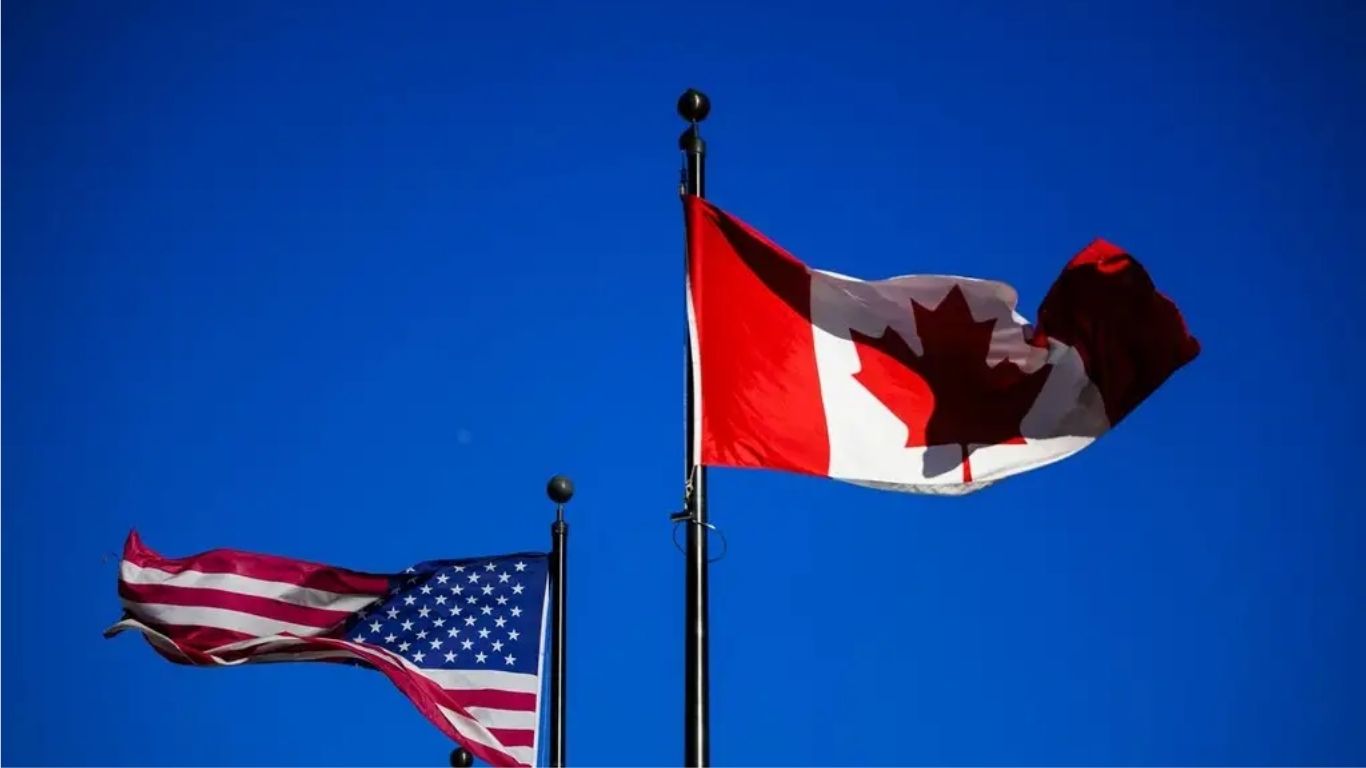
Canada is often projected as a stable, liberal, and peaceful country. However, behind this carefully maintained image, the country is facing deep social, political, and security challenges. Internally, Canada is fractured by separatist movements in Alberta and Quebec, ideological extremism such as Khalistani, and identity politics. Externally, it is losing strategic relevance and becoming increasingly vulnerable due to its dependence on the US. Taken together, these factors suggest that Canada is going through one of the most delicate phases in its modern history. Meanwhile, the US under President Trump wants to take over Canada.
This article will present our readers with an overview of Canada, both internally and externally, as well as its international perspective.
Internal Fractures and the Rise of Separatism
First and foremost, Canada is no longer a united political idea. Several regions increasingly question their place within the federation. Alberta, for instance, has seen growing calls for separation and a referendum. Many residents believe that federal policies ignore their economic interests, particularly in the energy sector. This sense of alienation has created a serious trust deficit between the province and Ottawa.
Similarly, Quebec’s separatist sentiment has never fully disappeared. A large section of French-speaking Quebecois continues to see itself as culturally and politically distinct from the rest of Canada. Even today, the idea of independence remains alive in provincial politics. As a result, Canada constantly struggles to balance national unity with regional identity.
At the same time, extremist and separatist groups have found space to operate. The Khalistani movement is a key example. This group, which seeks to create a separate state by breaking India’s territorial integrity, has a long and violent history. The 1985 Air India bombing, one of the deadliest aviation terror attacks before 9/11, was planned and executed by Khalistani extremists operating from Canada. Despite this history, Canada has often been accused of allowing such elements to function openly under the banner of free speech and vote-bank politics.
In addition to this, far-right extremism has also surfaced. Incidents involving Nazi symbols and associations, including controversial episodes within official spaces, have raised serious questions about institutional oversight and political judgment. Therefore, Canada today faces threats not from one ideology, but from multiple radical directions.
Political Leadership and Vote-Bank Governance
Secondly, political leadership has played a major role in deepening these divisions. Under the previous PM Justin Trudeau, governance has increasingly relied on identity politics rather than national cohesion. Instead of addressing security concerns decisively, the government has often appeared more focused on appeasing specific communities for electoral gains. And the same goes for the conservatives in the nation.
This approach has weakened Canada’s internal stability. When separatist slogans are tolerated and extremist figures are given political space, it sends a dangerous signal. Over time, this erodes public trust in institutions and fuels resentment among ordinary citizens who feel ignored.
Moreover, Canada is also struggling with severe social problems. Drug trafficking and the fentanyl crisis have devastated communities across the country. Organized crime networks continue to expand, while law enforcement responses remain inconsistent. As a result, social cohesion is breaking down alongside political unity.
Thus, leadership failure is not just about foreign policy or ideology. It is about the inability to enforce red lines, protect national interest, and maintain internal order.
External Vulnerability and Declining Global Relevance
Finally, Canada’s external position has become increasingly fragile. Geographically, the country is heavily dependent on the US. Economically, militarily, and strategically, Canada relies on Washington for security and trade. This dependence limits Canada’s ability to act independently on the global stage.
In recent years, voices in the US have openly questioned Canada’s strategic value. Political rhetoric about territorial expansion, including discussions around Greenland and influence over the Arctic, has amplified Canadian anxieties. While an outright takeover remains unlikely, the fact that such ideas circulate highlights Canada’s weakened leverage.
Internationally, Canada has also lost relevance. It is no longer seen as a decisive global player but rather as a reactive middle power. Its inability to control extremist activities within its borders has further damaged its credibility with key partners.
Canada’s situation is fragile. It is internally divided, socially strained, and externally dependent. Separatist movements, extremist groups, and weak leadership have together pushed the country into a fragile state. Unless Canada reasserts national unity, enforces security, and moves beyond vote-bank politics, its challenges will only deepen. What was once seen as a model democracy is now struggling to hold itself together.