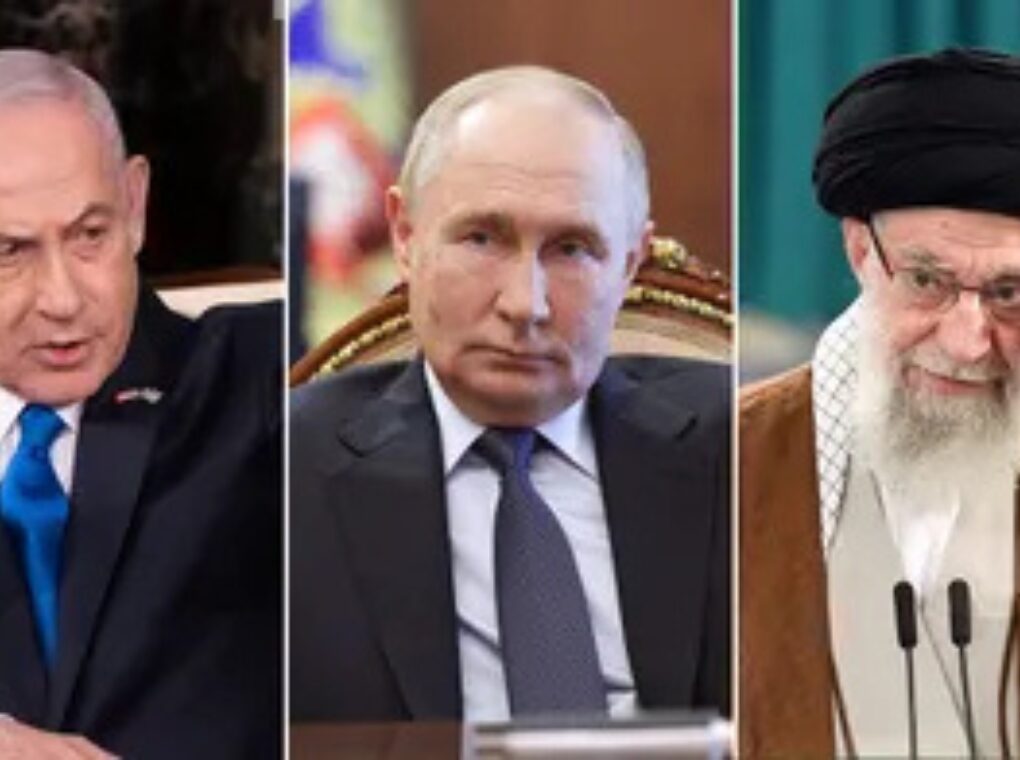
Amid escalating unrest in Iran and heightened military tensions across the Middle East, Israel and Iran quietly exchanged reassurances through Russia that neither side would launch a preemptive attack against the other, according to diplomats and regional officials familiar with the communications.
The unusual backchannel effort, revealed in mid-January 2026, underscores the extent to which regional and global powers are working behind the scenes to prevent a wider conflict at a time of extreme volatility.
According to multiple sources, the messages were exchanged days before nationwide protests erupted across Iran in late December 2025. Israeli officials conveyed to Tehran, through Russian intermediaries, that Israel would not strike Iranian targets unless it was attacked first. Iran responded in kind, stating that it too would refrain from initiating military action.
The exchange was notable given the longstanding hostility between the two countries and the fact that they had engaged in a brief but intense 12-day conflict in June 2025. While Israel and Iran have often communicated indirectly through intermediaries such as Oman or European states, Russia’s role as a go-between highlights Moscow’s continued relevance in Middle Eastern diplomacy despite its strained relations with the West.
Israel’s Strategic Calculations
Diplomats say Israel’s outreach was driven by a desire to avoid being perceived as escalating tensions with Iran at a moment when it was preparing for a significant military campaign against Hezbollah, the Iran-aligned militia in Lebanon. Israeli officials were concerned that renewed strikes on Iran could stretch military resources, provoke broader retaliation, or undermine international support.
This private diplomacy contrasted sharply with Israel’s public rhetoric in late 2025, when senior officials openly hinted at the possibility of renewed strikes against Iran to counter what they described as Tehran’s rapidly replenishing ballistic missile stockpile. The dual-track approach—public pressure combined with private restraint—reflects the complex balancing act Israel faces in managing deterrence while avoiding a regional war.
Iranian Caution and U.S. Concerns
Although Iranian officials reportedly responded positively to Israel’s assurances, they remained deeply skeptical of Israeli and U.S. intentions. According to officials familiar with Tehran’s thinking, Iran feared that even if Israel refrained from direct action, the United States might still carry out strikes in coordination with its ally.
These concerns were amplified by developments in early January 2026, as Iran faced one of the most severe internal crises in years. Protests erupted nationwide over economic collapse, currency devaluation, and political repression. Human rights organizations estimate that between 2,500 and 3,400 people have been killed in the government’s crackdown, with thousands more arrested amid internet blackouts and threats of mass executions.
U.S. President Donald Trump issued repeated warnings to Tehran, suggesting “very strong action” could follow if the killings continued. His statements revived memories of U.S. strikes on Iranian nuclear-related sites in June 2025, which occurred during the brief Israel-Iran conflict.
Regional Powers Step In
As fears of imminent U.S. military action grew, several regional powers moved decisively to prevent escalation. According to Israeli media reports and corroboration from international outlets, Turkey, Qatar, and Saudi Arabia delivered firm messages to Washington stating they would not permit the use of their airspace or military bases for strikes against Iran.
Qatar’s position was particularly significant, as it hosts the Al Udeid Air Base, the largest U.S. military installation in the Middle East and home to approximately 10,000 American troops. Denial of access complicated operational planning and, according to some reports, played a key role in delaying or derailing any immediate strike.
Oman, Egypt, and other Gulf states reportedly joined these diplomatic efforts, warning of severe consequences if the conflict widened. These included disruptions to global energy markets, attacks on Gulf infrastructure, and Iranian retaliation against U.S. bases across the region. Tehran had already warned host nations that any U.S. attack launched from their territory would make them legitimate targets.
Signs of De-escalation
By January 14–15, signs of de-escalation began to emerge. President Trump stated he had received assurances from “very important sources” that killings of protesters had stopped and that no executions were imminent, citing the postponement of a high-profile case. While he emphasized that all options remained on the table, U.S. military alert levels in the region were reportedly lowered, and some aircraft and personnel returned to base.
No strikes occurred, marking a temporary easing of tensions. The episode appeared consistent with the broader pattern of backchannel diplomacy, including the Israel-Iran reassurances conveyed via Russia.
Broader Implications
The developments highlight shifting regional dynamics. Gulf states that were once among Iran’s harshest critics are increasingly prioritizing stability over confrontation, driven by concerns over economic fallout, energy security, and domestic stability. Turkey’s opposition to military action reflects its efforts to balance NATO ties with regional interests.
For the United States, the episode underscores the constraints imposed by reliance on allied bases and regional cooperation. While hardliners in Washington criticized allies for limiting U.S. options, the absence of military action suggests that diplomatic restraint prevailed—at least for now.
As protests in Iran continue sporadically and the government maintains tight control, the risk of renewed escalation remains. Any significant crackdown, external provocation, or miscalculation could quickly reignite tensions. For the moment, however, a combination of discreet diplomacy and regional pressure has helped avert what could have become a far wider and more dangerous conflict.