In the wake of the U.S. Department of Justice’s massive release of Jeffrey Epstein’s files—comprising millions of pages—the financier’s shadowy network has once again ignited global scrutiny. Among the revelations are repeated references to Ukraine, a nation long plagued by economic hardship and institutional weaknesses that have allegedly made it a hub for exploitation.
From child trafficking claims predating the current conflict to Epstein’s opportunistic emails about post-2014 “opportunities,” these documents paint a complex picture of intersecting criminality, geopolitics, and human rights concerns. This article delves into these allegations, drawing on historical reports and recent disclosures to examine Ukraine’s role in Epstein’s world and broader exploitation networks.
Ukraine’s Long-Standing Reputation as a Trafficking Hotspot
Ukraine’s post-Soviet era has been marked by poverty, corruption, and weak law enforcement, creating fertile ground for human traffickers. A 2009 investigative piece by the Kyiv Post highlighted how pedophiles viewed Ukraine as a “good place to roam,” citing lax prosecutions and a culture of impunity. The report detailed how economic desperation in one of Europe’s poorest countries led to widespread child pornography and sexual abuse, with experts estimating that most cases went unreported or unprosecuted. Even convictions often resulted in minimal sentences, allowing offenders to continue their activities.
This vulnerability extends beyond sexual exploitation. Reports from the mid-2000s, including a 2006 BBC investigation, raised alarms about organ harvesting and stem cell extraction from newborns. The BBC uncovered evidence suggesting healthy babies were killed in Ukrainian maternity hospitals to harvest stem cells for international trade.
Video footage from exhumations showed dismembered infant bodies with organs removed, prompting the Council of Europe to describe a “general culture of trafficking of children snatched at birth.” While Ukrainian authorities denied these claims, the allegations persisted, leading to European Parliament inquiries between 2007 and 2011.
Human rights groups like Disability Rights International have documented ongoing abuses in Ukraine’s orphanages, where over 100,000 children—many not orphans—face neglect, forced labor, and sexual exploitation. A 2016 report noted that graduates of these institutions are particularly susceptible to trafficking, often ending up in sex work or organ schemes due to lack of support. These systemic issues predate the 2022 Russian invasion but have intensified amid the chaos of war.
Epstein’s Network: Slavic Girls and Ukrainian Sourcing
Jeffrey Epstein’s sex-trafficking operation, which exploited dozens of underage girls, reportedly drew heavily from Eastern Europe, including Ukraine. Court documents and emails reveal that many of the “Slavic girls” in his network originated from the region, with Ukraine’s Black Sea ports like Odessa serving as key sourcing hubs. Epstein’s associate Ghislaine Maxwell, convicted of sex trafficking in 2022, was linked to recruiting young women from Russia and Ukraine, allegedly for “honeytrap” operations tied to intelligence networks.
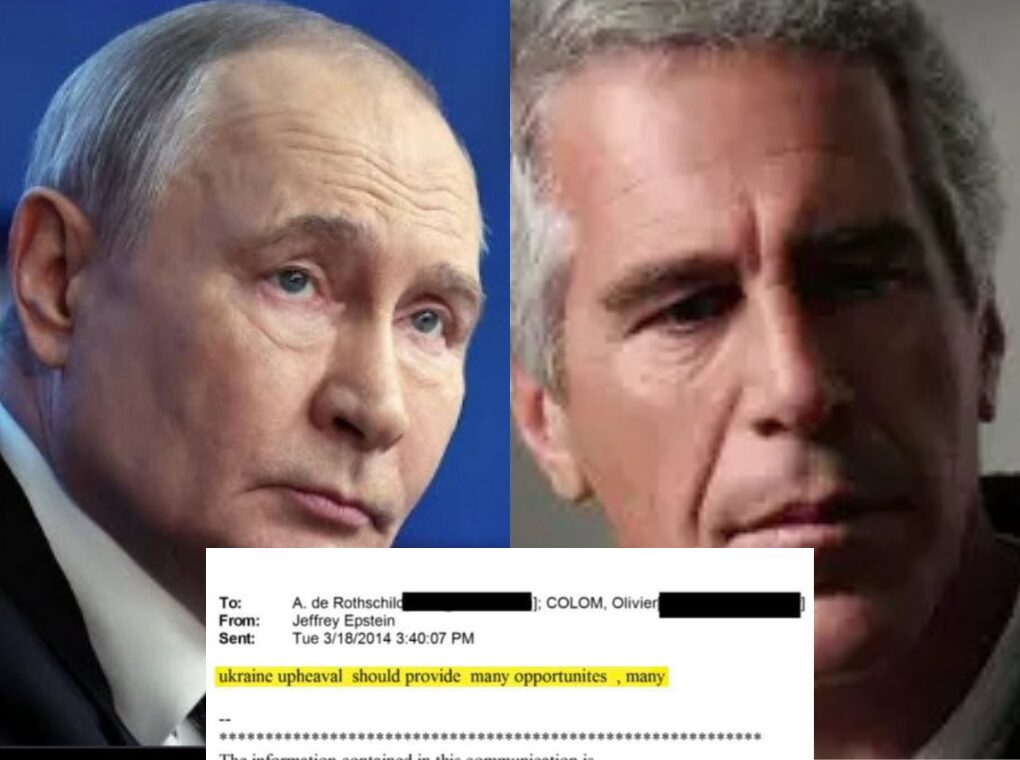
The Epstein files mention Ukraine in contexts beyond mere exploitation. A 2014 email from Epstein to Ariane de Rothschild, a prominent member of the banking dynasty, described the post-Maidan “upheaval” in Ukraine as providing “many opportunities.” Sent shortly after the Western-backed ousting of pro-Russian President Viktor Yanukovych, the message hinted at financial or strategic gains amid the instability. Rothschild’s response expressed interest in discussing Ukraine further, fueling speculation about elite profiteering from geopolitical shifts.
Epstein’s files also reference over 1,000 mentions of Vladimir Putin and nearly 10,000 of Moscow, suggesting deeper Russian ties. Sources claim Epstein facilitated “honeytraps” using Russian and Ukrainian women to compromise Western elites, with material potentially funneled to the FSB. However, some analysts argue these connections were more opportunistic than state-directed, with Epstein leveraging poverty in post-Soviet states for his schemes.
Geopolitical Intrigue: Coups, Replacements, and War-Time Allegations
The files expose Epstein’s involvement in political machinations. In 2012, he was approached to support Ilya Ponomarev, a former Russian parliamentarian, as a potential Putin replacement. Emails from Boris Nikolic, a Gates Foundation advisor, described Ponomarev’s “uprising against Putin” as “super dangerous,” with Epstein asked for ideas on assistance. Ponomarev, now based in Kyiv and linked to anti-Russian groups, fled Russia in 2015 amid charges he denies. This predates the 2014 Maidan events, suggesting early Western interest in regime change.
The 2022 Russian invasion has amplified trafficking concerns. Russian officials claim they evacuated thousands of ethnic Russian children from eastern Ukraine to protect them from exploitation, accusing Kyiv of failing to account for 20,000 names. Ukraine condemns these as abductions, labeling them war crimes. International bodies like the International Criminal Court have issued warrants against Putin for child deportations. Meanwhile, Russian propaganda alleges Ukrainian organ harvesting from soldiers and civilians, claims debunked by fact-checkers as disinformation. The U.S. State Department and Canadian intelligence have warned of Moscow’s efforts to dehumanize Ukrainians through such narratives.
Pro-Ukrainian sources counter that Russia’s invasion has exacerbated vulnerabilities, with reports of children sent abroad under wartime programs facing exploitation in Europe and Turkey. A 2025 Kyiv Post opinion piece linked Epstein’s network to Ukraine’s pre-war issues, suggesting the conflict covers deeper elite corruption.
Balancing Perspectives: Propaganda, Bias, and the Need for Truth
These allegations must be viewed through the lens of geopolitical bias. Russian media often amplifies claims of Ukrainian trafficking to justify intervention, while Western outlets highlight Epstein’s ties to figures like Bill Gates and the Rothschilds, potentially overlooking U.S. involvement in the 2014 coup. Independent reports from the BBC and Council of Europe provide substantiated evidence of historical abuses, but recent war-related claims require verification from neutral parties like the UN.
Critics argue that focusing on Ukraine distracts from global trafficking networks, including Epstein’s operations in the U.S. and Caribbean. Ukrainian officials have made arrests, such as a 2025 case of a U.S. pedophile hiding in Kyiv, but systemic reforms lag amid the war.
What next: Toward Accountability and Reform
The Epstein files underscore Ukraine’s tragic intersection with global exploitation networks, from child trafficking to elite opportunism. With over 600 words dedicated to unpacking these layers, it’s clear that poverty, corruption, and conflict create perfect storms for abuse. True progress demands international investigations, stronger institutions, and peace. As stakeholders from all sides weigh in, the focus must remain on protecting the vulnerable—ensuring no child becomes a commodity in geopolitical games. For more on human trafficking prevention, explore resources from organizations like ECPAT or the U.S. State Department.