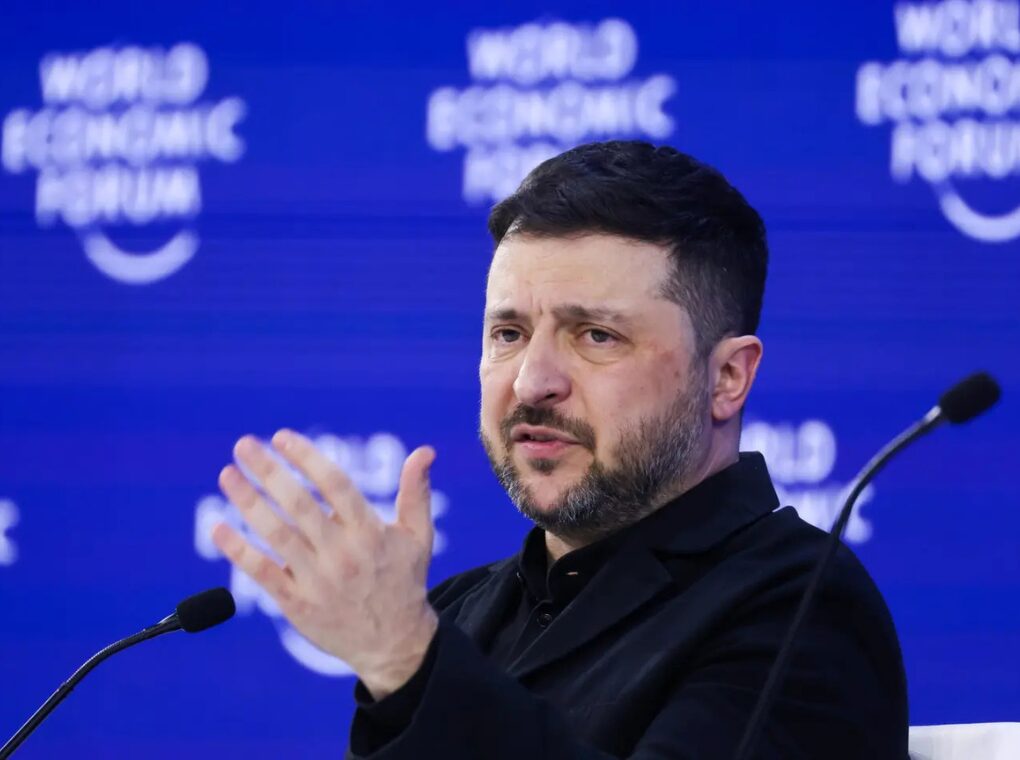
A new geopolitical controversy is intensifying the global debate surrounding the Ukraine war. But this time, the focus of criticism is not on Moscow. Instead, attention has shifted toward Washington after Ukrainian President Volodymyr Zelenskyy strongly criticized a recent U.S. decision regarding Russian oil sanctions.
Zelenskyy has warned that a temporary waiver issued by the United States could end up strengthening Russia’s war machine. According to the Ukrainian leader, the move could allow Moscow to generate as much as $10 billion in additional revenue, money that he argues could ultimately be used to finance weapons production and drone attacks against Ukraine.
“This certainly does not help peace,” Zelenskyy said during a press conference in Paris alongside French President Emmanuel Macron.
The controversy has triggered an important question among analysts and policymakers: Is this a strategic misstep by the United States, or a necessary economic decision in the face of a broader global crisis?
What the U.S. Waiver Actually Allows
On March 12, the U.S. Treasury Department announced a temporary 30-day waiver on certain sanctions involving Russian oil shipments. However, according to U.S. officials, the measure is extremely limited in scope.
The waiver applies only to cargo that had already been loaded onto vessels before March 12. Those shipments are now allowed to be delivered and sold until April 11. Importantly, the policy does not permit new oil shipments from Russia.
In practical terms, the waiver does not reopen Russia’s oil trade with the global market. Instead, it allows a backlog of oil cargo already at sea to reach its intended buyers without violating sanctions rules.
U.S. officials argue that the decision is a temporary measure designed to stabilize global energy markets rather than a policy shift toward Russia.
The Middle East Conflict and Global Oil Markets
According to Western analysts, the motivation behind the waiver is linked to developments far away from Ukraine—specifically the escalating tensions in the Persian Gulf.
The ongoing confrontation involving the United States, Israel, and Iran has disrupted global energy markets. Shipping routes near the Strait of Hormuz—one of the world’s most critical oil transit corridors—have become increasingly unstable.
Nearly 20 percent of the world’s oil supply passes through this narrow waterway. Any disruption to traffic in the region has immediate consequences for global energy prices.
Recent instability in the region has already pushed oil prices above $100 per barrel, triggering concerns about inflation, supply shortages, and potential economic slowdown.
For Western governments already facing economic pressure domestically, the possibility of a prolonged energy shock poses a serious risk. The limited sanctions waiver, officials say, is meant to ease market pressure by allowing existing Russian oil shipments to reach buyers and stabilize supply.
European Reactions and Political Tensions
Despite Washington’s explanation, the decision has triggered criticism from several European leaders.
German Chancellor Friedrich Merz expressed concern that the move could send the wrong signal regarding Western unity against Russia. He stated that six members of the G7 had opposed easing restrictions on Russian energy exports during discussions with U.S. President Donald Trump.
European officials argue that Russia’s energy exports remain a major source of funding for its military operations. Even a modest increase in oil revenues, they warn, could potentially support Russia’s weapons production and drone manufacturing capabilities.
Rising Oil Prices Already Benefiting Russia
However, some analysts note that Russia may already be benefiting from current market conditions regardless of the sanctions waiver.
Higher global oil prices naturally increase profits for major energy exporters, and Russia remains one of the world’s largest suppliers of crude oil. In some cases, Russian crude has reportedly traded at higher prices due to tightening global supply conditions.
This means the ongoing Middle East tensions may already be boosting Russia’s energy revenues independently of any sanctions relief.
The situation highlights a broader geopolitical paradox. Efforts to manage one global crisis can sometimes produce unintended consequences in another.
Ukraine’s Strategy Beyond the Battlefield
At the same time, Ukraine is attempting to leverage its battlefield experience as a strategic advantage.
After years of intense drone warfare, Ukrainian forces have developed significant expertise in counter-drone technology and defense systems. Zelenskyy recently revealed that six countries have requested Ukraine’s assistance in drone combat operations, and Ukrainian teams have reportedly been sent abroad to share their operational experience.
Kyiv hopes to position itself not only as a recipient of Western military aid but also as a provider of valuable defense expertise.
A Complex Global Balancing Act
The debate over the sanction’s waiver highlights growing tensions within the Western alliance as multiple global crises unfold simultaneously.
The war in Ukraine continues to demand attention and resources, while rising instability in the Middle East is threatening global energy markets.
For Washington, balancing these competing pressures has become increasingly complicated.
For Kyiv, any decision that appears to ease economic pressure on Moscow raises alarm.
And for the wider international community, the situation underscores a difficult reality: in today’s interconnected world, geopolitical conflicts, energy markets, and economic stability are deeply intertwined.
Decisions made to address one crisis can quickly influence another—sometimes in unexpected ways that extend far beyond the battlefield.