

A growing global shortage of helium—an essential industrial gas critical to semiconductor manufacturing—is beginning to disrupt technology supply chains, raising concerns across industries from electronics to automobiles. The shortage, largely triggered by escalating tensions in the Middle East, has forced companies to reassess production strategies and scramble for alternative sources.
Why Helium Matters in Tech Manufacturing
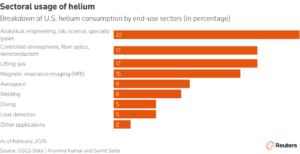
Helium may be best known for inflating balloons, but in the high-tech world, it plays a far more crucial role. The gas is widely used in semiconductor fabrication, particularly in cooling systems, leak detection, and maintaining ultra-clean manufacturing environments. These processes are vital for producing advanced microchips that power everything from smartphones and laptops to electric vehicles and defense systems.
Without a stable supply of helium, chipmakers face operational challenges that can slow down or even halt production lines.
Middle East Conflict Tightens Supply
The current shortage is closely linked to geopolitical instability in the Middle East—a region that accounts for a significant share of global helium production. Qatar alone contributes roughly one-third of the world’s helium supply, making it a critical node in the global supply chain.
Helium is primarily extracted as a byproduct of natural gas processing, meaning its availability is inherently tied to energy production and export logistics. Disruptions in transport routes, export facilities, or regional stability can quickly ripple through global markets.
Industry executives report that the ongoing conflict has led to logistical bottlenecks, delayed shipments, and price surges, further tightening availability.
Semiconductor Industry Feels the Pressure
The semiconductor sector is among the hardest hit. Companies are already facing difficult choices, including slowing production or prioritizing high-value products to conserve helium supplies.
At major industry gatherings such as Semicon China, executives have raised alarms about the potential for widespread disruption. Supply chain experts warn that if the shortage persists, it could trigger cascading effects across multiple industries.
Manufacturers are particularly concerned about the lack of immediate substitutes for helium in many critical processes. While some firms are exploring recycling technologies or alternative gases, these solutions are not yet scalable enough to offset current shortages.
Broader Supply Chain Impact
The helium crunch is not limited to chipmaking. Its effects are spilling over into other sectors, including automotive manufacturing, where semiconductors are essential for modern vehicles.
Additionally, supply chains connected to the Middle East are experiencing delays in raw materials and components. For instance, disruptions linked to Israel have extended delivery timelines for certain high-tech inputs, further compounding the problem.
Companies reliant on just-in-time manufacturing are particularly vulnerable, as even minor delays can lead to production bottlenecks and increased costs.
Global Search for Alternatives
In response to the shortage, companies are actively seeking alternative helium sources. The United States, one of the world’s leading producers, has emerged as a potential supplier to fill the gap. However, scaling up exports and redirecting supply chains takes time and infrastructure adjustments.
Some firms are also investing in helium recycling systems, which capture and reuse gas during manufacturing processes. While promising, these technologies require significant upfront investment and are not yet widely adopted.
Rising Costs and Consumer Impact
As helium prices surge, the increased costs are expected to be passed down the supply chain. This could lead to higher prices for consumer electronics, automobiles, and other tech-dependent products.
The timing is particularly challenging, as global demand for semiconductors continues to grow amid rapid advancements in artificial intelligence, 5G networks, and electric mobility.
Outlook: A Fragile Supply Chain
Experts warn that the helium shortage underscores the fragility of global supply chains, especially those dependent on geographically concentrated resources. Without diversification and strategic reserves, industries remain vulnerable to geopolitical shocks.
If the Middle East conflict continues or escalates, the helium shortage could deepen, potentially leading to more severe production cuts and broader economic impacts.
For now, companies are hoping for a swift resolution while taking short-term measures to mitigate risks. But the situation has already highlighted a critical vulnerability in the backbone of modern technology—and one that may take years to fully address.