
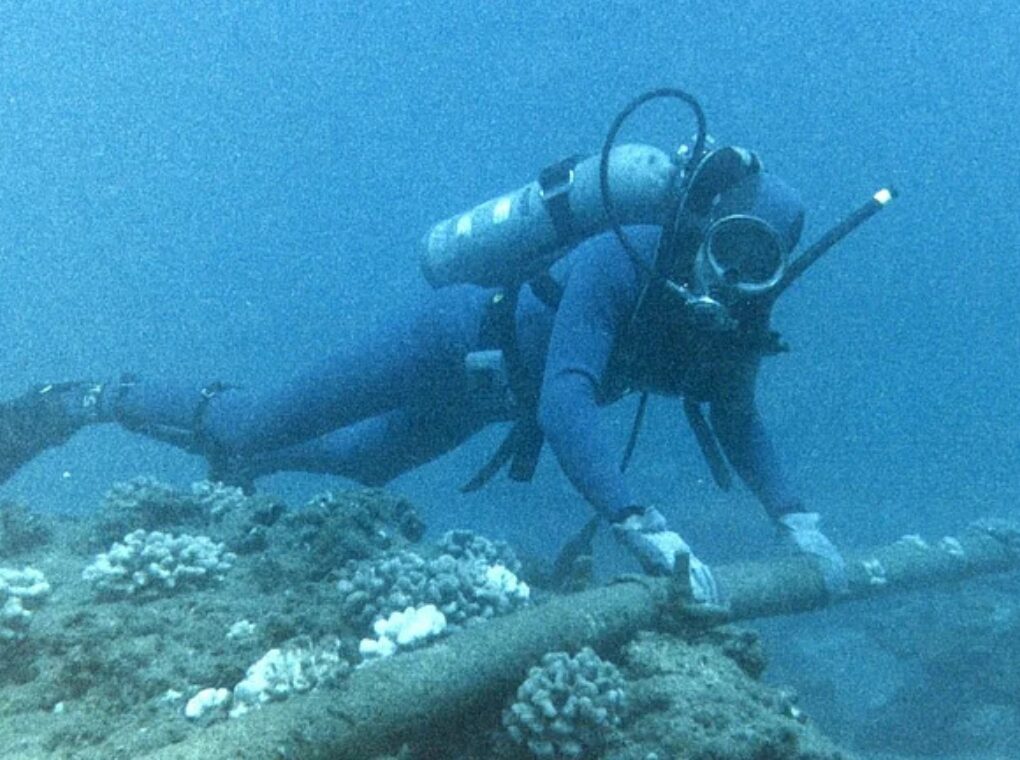
Tensions in West Asia have taken a new and alarming turn as Iran signals a potential threat to critical undersea internet infrastructure running through the Strait of Hormuz and the Red Sea—two of the world’s most vital digital and energy corridors. While no cables have been damaged so far, the warning alone has sent ripples through global markets, telecom operators, and governments.
At the heart of the concern lies a little-known but crucial fact: nearly 95 to 97 percent of global internet traffic travels through subsea fiber-optic cables, not satellites. These cables form the backbone of international data exchange, supporting everything from financial transactions and cloud computing to artificial intelligence systems and real-time communication.
Why These Cables Matter
The undersea cable networks running through the Middle East connect Asia, Europe, and Africa, making them indispensable to the global digital economy. Systems such as SEA-ME-WE, AAE-1, FLAG, and Europe India Gateway are not just regional links—they are high-capacity data highways enabling seamless connectivity between continents.
Any disruption to these cables could have immediate and widespread consequences. Financial markets rely on ultra-low latency connections for trading. Cloud service providers depend on uninterrupted data flows to maintain operations. Even brief outages can lead to billions in losses.
Historical precedents highlight the scale of the risk. In 2008, multiple cable cuts near Egypt disrupted up to 80 percent of internet connectivity between the Middle East and Europe. The outage took weeks to repair. More recently, in 2024, accidental damage to Red Sea cables caused prolonged disruptions that lasted months.
Threat Without Action—A Strategic Signal?
Iran’s latest warning suggests that “critical infrastructure” in the region could be targeted if hostilities escalate. However, analysts believe that deliberate sabotage of subsea cables remains unlikely due to the high risks involved.
Such an action would not only disrupt global systems but also impact Iran’s own connectivity. More importantly, it could trigger immediate military retaliation from Western naval forces already present in the region.
Instead, experts argue that the threat itself is a form of asymmetric warfare. By raising the possibility of disruption, Iran introduces uncertainty into global systems. Telecom operators are already rerouting traffic, while insurance costs for subsea infrastructure are rising.
This “fear factor” creates friction in the global digital ecosystem without requiring any physical damage—an effective tactic in modern hybrid warfare.
Satellite Internet Gains Momentum
As vulnerabilities in subsea infrastructure come into focus, satellite-based internet solutions are emerging as a resilient alternative. Services like Starlink, operated by SpaceX, are increasingly being deployed in high-risk regions.
Unlike undersea cables, satellite networks do not rely on fixed physical infrastructure. Instead, they use constellations of low-Earth orbit satellites to deliver internet connectivity directly to users.
Recent reports suggest that Starlink has already been deployed on commercial shipping vessels navigating conflict-prone waters near Hormuz. Despite attempts at electronic interference, the system has demonstrated resilience through adaptive technologies such as beamforming and software updates.
This shift could mark a turning point in global connectivity, with satellite internet acting as a critical backup—or even a long-term alternative—to traditional cable networks.
India’s Emerging Role
Amid the uncertainty, India is positioning itself as a potential alternative hub for global data traffic. With its rapidly expanding digital infrastructure and strategic geographic location, the country could play a key role in rerouting data flows if Middle Eastern corridors become unstable.
Government sources indicate that Indian telecom operators have been asked to prepare contingency plans for handling increased international traffic. This includes strengthening domestic networks and enhancing connectivity with Europe and Southeast Asia.
India’s growing investments in data centers and cloud infrastructure further bolster its credentials as a reliable digital gateway. In a scenario where traditional routes are compromised, India could emerge as a critical node in the global internet architecture.
A Chokepoint of Global Consequence
The situation underscores the strategic importance of the Strait of Hormuz—not just for energy supplies but also for digital connectivity. The narrow waterway already handles around 20 percent of the world’s oil and liquefied natural gas shipments. Now, it is also central to the flow of global data.
This convergence of energy, technology, and geopolitics makes the region one of the most critical chokepoints in the world. Any disruption—real or perceived—has far-reaching implications.
While no undersea cables have been cut, the mere threat has exposed the fragility of the infrastructure that powers the modern digital economy. It has also accelerated discussions around resilience, redundancy, and alternative technologies.
In today’s interconnected world, warfare is no longer confined to land, air, or sea. It extends to the invisible networks beneath the ocean floor—and increasingly, to the satellites orbiting above it.
As tensions continue to evolve, the global community will be watching closely—not just for military developments, but for signals that could impact the very foundation of the internet.