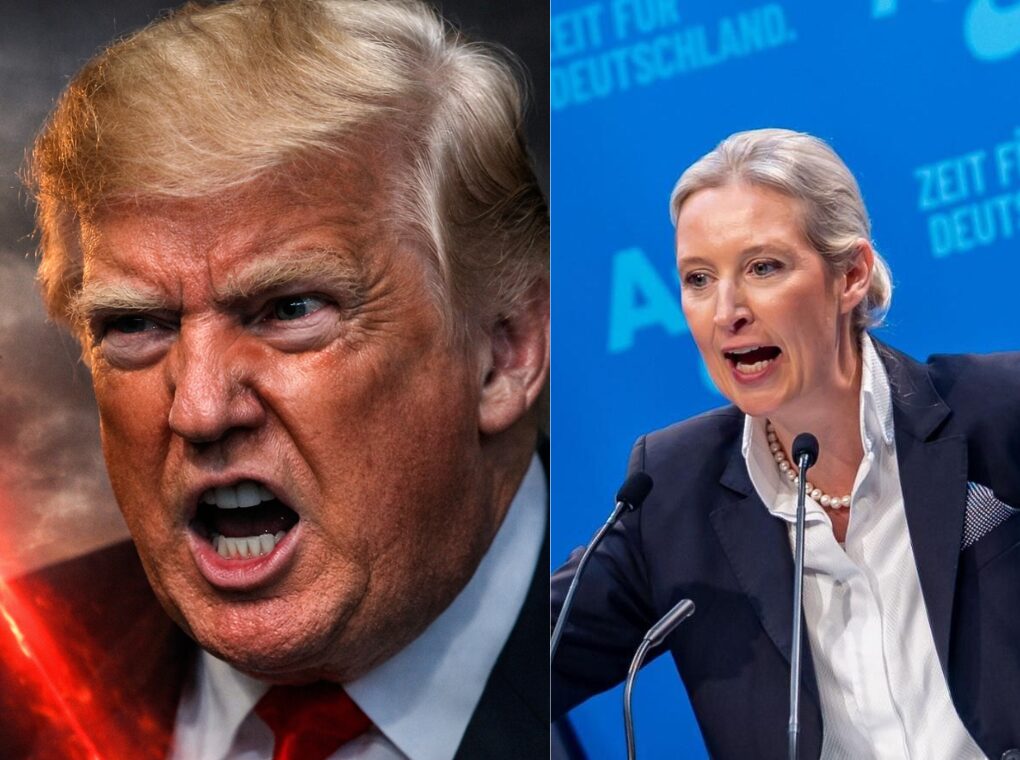
The North Atlantic alliance is facing one of its most serious internal crises in decades, as Germany’s right-wing Alternative for Germany (AfD) has demanded the withdrawal of American troops from German soil. The call comes at a time of escalating tensions between Donald Trump and key NATO allies over the ongoing Iran war, raising fresh questions about the future cohesion of the alliance.
AfD co-leader Tino Chrupalla has openly urged Berlin to remove both US forces and nuclear weapons stationed in the country. He argued that Germany must pursue an “independent” foreign policy, free from Washington’s influence. His remarks reflect a growing political sentiment within parts of Europe that question long-standing security arrangements under NATO.
US Military Presence in Germany Under Scrutiny
Germany currently hosts nearly 40,000 American troops and several major military installations, including the strategically vital Ramstein Air Base. The base has reportedly been used as a hub for coordinating US drone and missile operations in the Middle East, particularly in the Iran conflict.
This has made Germany increasingly vulnerable to geopolitical fallout. Critics argue that such involvement risks turning the country into a potential target for retaliation. The concerns have been echoed by German Chancellor Friedrich Merz, who accused the US of escalating the conflict rather than working toward de-escalation.
Trump vs NATO: A Growing Divide
The current crisis has been intensified by repeated criticisms from President Trump, who has accused NATO members of failing to support US-led military efforts against Iran. Trump has gone as far as calling the alliance a “paper tiger” and threatening to reconsider US security commitments if member states do not increase defence spending.
A major flashpoint has been NATO’s refusal to invoke collective defence under Article 5 for the Iran conflict. Historically invoked only once after the 9/11 attacks, Article 5 remains the cornerstone of NATO’s unity. However, European nations have resisted applying it in this case, arguing that the Iran war does not directly threaten Europe’s security.
For Europe, the primary concern remains Russia’s actions in Ukraine. In contrast, the US views Iran’s nuclear ambitions and regional influence as the more urgent threat. This divergence in threat perception has widened the strategic gap between Washington and its allies.
Strategic Priorities Clash: Iran vs Ukraine
The transatlantic divide is further deepened by disagreements over global priorities. While European countries continue to focus on the Ukraine war and Russia’s aggression, the Trump administration has shifted its strategic focus toward the Middle East and the Indo-Pacific.
US Secretary of State Marco Rubio recently criticized European nations for refusing to support US operations in Iran, even as Washington has played a leading role in aiding Ukraine. His remarks underscore growing frustration within the US over what it sees as an imbalance in burden-sharing.
At the same time, reports that the US may redeploy air defence systems from Ukraine to the Middle East have alarmed European leaders. Such a move could weaken Ukraine’s defence capabilities and deepen mistrust between NATO partners.
Rising Calls for European Strategic Autonomy
The AfD’s demand for US troop withdrawal is part of a broader debate within Europe about strategic autonomy. Several analysts and policymakers have argued that Europe must reduce its dependence on the United States and build its own defence capabilities.
Some experts warn that NATO is already showing signs of fragmentation. Differences over military priorities, resource constraints, and political divisions are straining the alliance. The simultaneous pressures of the Ukraine war and the Iran conflict have further exposed these vulnerabilities.
Is NATO Losing Its Cohesion?
Despite these tensions, NATO is unlikely to collapse in the immediate future. However, its unity and effectiveness are increasingly under question. The alliance, once bound by a shared Cold War purpose, now struggles with divergent geopolitical interests among its members.
The Trump administration’s pivot away from Europe, combined with Europe’s reluctance to engage in Middle Eastern conflicts, suggests that the transatlantic alliance is entering a new phase. While NATO may continue to exist formally, its ability to act as a unified military bloc is diminishing.
The AfD’s call for US troop withdrawal from Germany highlights a deeper and more structural crisis within NATO. As disagreements between the US and European allies intensify over Iran, Ukraine, and defence spending, the alliance’s long-term future appears uncertain.
What is increasingly clear is that NATO no longer operates with a single, unified vision. Unless these internal divisions are addressed, the world’s most powerful military alliance could face a gradual but significant decline in cohesion and relevance.