The world’s most powerful and longstanding military alliance is facing a moment of serious strain. In a dramatic geopolitical shift, key European powers — including France, Spain, Italy, and the United Kingdom — have refused to support the United States in potential military operations linked to Iran.
This coordinated resistance marks a rare and significant divergence within the transatlantic alliance, raising concerns about the future cohesion of NATO.
Europe Signals “Not Our War”
For the first time in years, several major European nations are openly distancing themselves from Washington’s military posture in the Middle East. France has denied US military aircraft access to its airspace for operations connected to Israel. Italy has blocked the use of key NATO bases, while Spain has voiced strong opposition to any involvement. Even the United Kingdom, traditionally one of Washington’s closest allies, appears to be taking a more cautious stance.
The message from Europe is clear: this is not their war.
Spanish Prime Minister Pedro Sánchez reinforced this position by invoking the legacy of the Iraq War. He reminded audiences that past interventions based on disputed intelligence led to long-term instability, signaling that Europe is unwilling to repeat what many consider a strategic mistake.
This shift reflects broader domestic and political realities within Europe, where public opinion largely favors de-escalation and diplomatic engagement over military intervention.
Trump Reacts as Transatlantic Tensions Rise
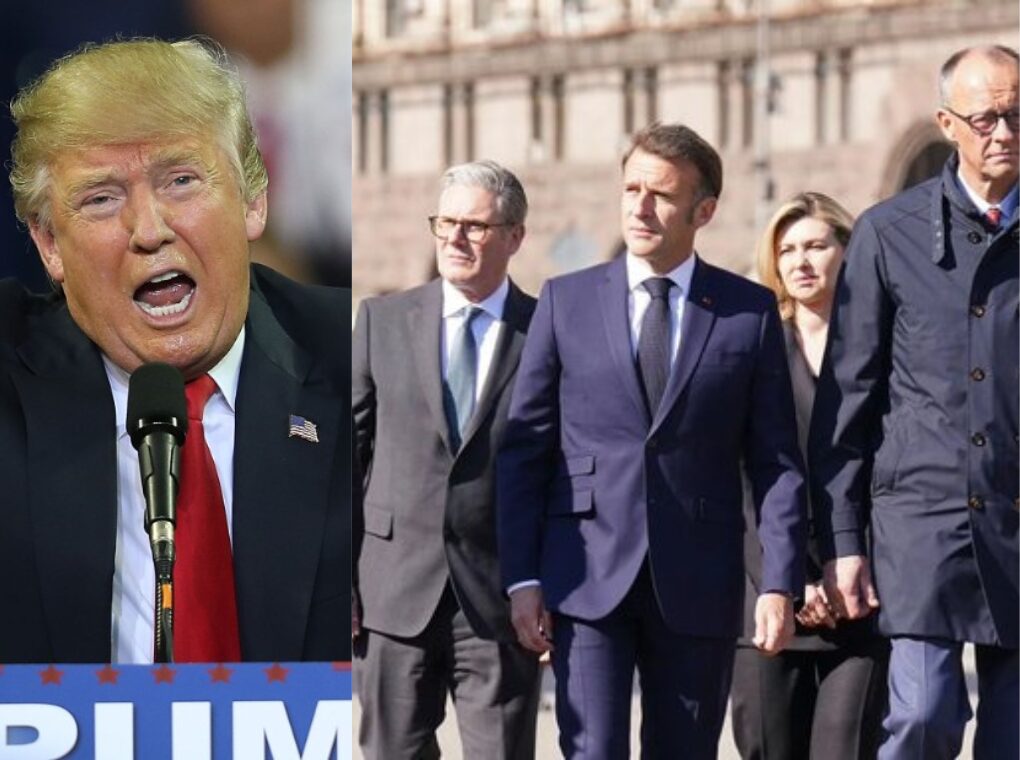
The response from Washington has been swift and sharp. US President Donald Trump publicly criticized France, calling its stance “very unhelpful” and warning that the United States would “remember” the decision.
Such remarks highlight a deeper issue — a growing trust deficit between the United States and its European allies. What may appear as a tactical disagreement is increasingly being viewed as a strategic divergence.
Adding to the pressure, US Secretary of State Marco Rubio has criticized NATO partners for what he described as uneven burden-sharing. From Washington’s perspective, allies are failing to step up during a critical global security challenge. However, European leaders frame their stance as one of prudence, aimed at preventing further escalation in an already volatile region.
Fallout Extends to Israel–France Relations
The diplomatic ripple effects have extended beyond the US-Europe divide. Israel has reportedly responded by halting defense procurement from France. The move, backed by Prime Minister Benjamin Netanyahu, underscores growing frustration with Paris’s position.
France’s refusal to facilitate US military operations is said to have been a tipping point, potentially affecting long-term defense cooperation, including joint projects and advanced weapons deals. This development signals a broader reshaping of international defense relationships as geopolitical tensions intensify.
Poland Prioritizes Regional Security
Another significant development came from Poland, a key NATO member on the alliance’s eastern flank. Warsaw declined a US request to deploy its Patriot missile defense systems to the Middle East.
Defense Minister Władysław Kosiniak-Kamysz emphasized that Poland’s priority is safeguarding its own territory and NATO’s eastern borders. With ongoing concerns related to Russia and the Russia-Ukraine War, Polish leadership views any reduction in domestic air defense capability as a strategic risk.
Prime Minister Donald Tusk echoed this stance, reinforcing that national and regional security obligations outweigh involvement in distant conflicts.
NATO Unity Under Growing Pressure
These developments collectively raise a critical question: is NATO still unified in its strategic outlook?
The alliance, founded on the principle of collective defense, is now facing divergent threat perceptions. While the United States is focused on countering Iran and securing Middle Eastern stability, European nations are increasingly preoccupied with the security challenges posed by Russia and the war in Ukraine.
This divergence is creating parallel strategic priorities within the alliance — a development that could weaken coordinated responses to global crises.
Adding to concerns are reports suggesting strains in intelligence-sharing, particularly involving the United Kingdom. While not officially confirmed, such developments, if true, could signal a deeper erosion of trust, given that intelligence cooperation forms the backbone of modern military alliances.
A Turning Point in Global Geopolitics?
As tensions continue to evolve, the United States may seek alternative logistical routes and new partners to sustain its strategic objectives. Meanwhile, European nations appear more inclined toward diplomacy, with emerging signs that engagement is yielding limited openings.
Recent signals from Iran indicating receptiveness to dialogue with European countries suggest that diplomatic channels may still play a role in de-escalation.
What remains undeniable is that the geopolitical landscape is shifting. Longstanding alliances are being tested, and the balance between collective security and national interest is being recalibrated.
This moment is not just about Iran — it is about the future of global alliances. If current divisions deepen, they could mark the beginning of a broader realignment, where strategic autonomy increasingly defines the actions of major powers.
Whether this is a temporary disagreement or the early stages of a structural transformation in global order remains to be seen.